ITB Alumna Leads BPS RI, Encourages Students to Build a Data-Driven Indonesia and Strengthen Research Downstreaming
By Ahza Asadel Hananda Putra - Teknik Pangan, 2021
Editor M. Naufal Hafizh, S.S.
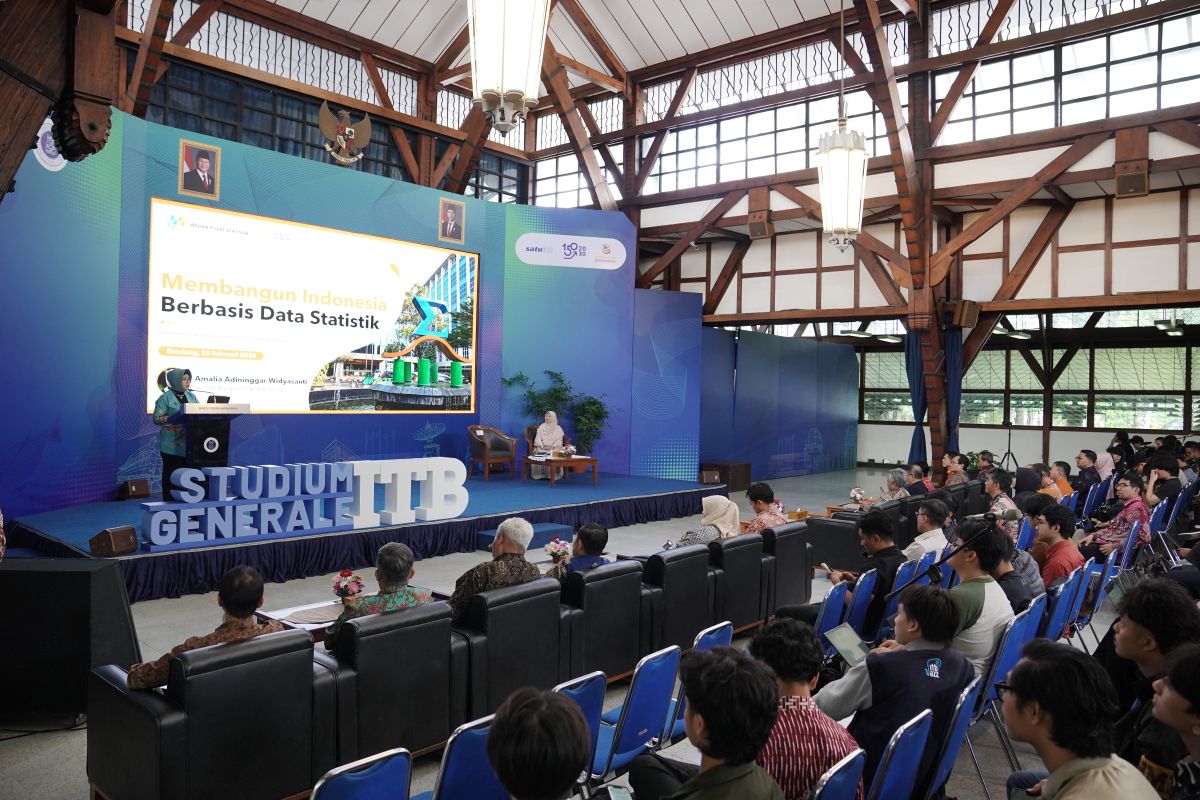
BANDUNG, itb.ac.id – The Head of Badan Pusat Statistik (BPS), Amalia Adininggar Widyasanti, ST, M.Si., PhD., encouraged students of Institut Teknologi Bandung (ITB) to help build a data-driven Indonesia as the foundation for public policy and national economic growth.
The message was delivered during a Studium Generale titled “Building a Data-Driven Indonesia as the Foundation of Public Policy” held at Aula Barat, ITB Ganesha Campus, on Wednesday (25/2/2026). Amalia Adininggar Widyasanti is an alumna of ITB’s Chemical Engineering program, Class of 1990.
ITB Rector, Prof. Dr. Ir. Tatacipta Dirgantara, M.T., welcomed the Head of BPS and emphasized the importance of data in the digital era. According to him, data has become a strategic asset that determines the direction of policymaking.
"Data is something that comes at a high price. We need valid data so that the policies decided are truly beneficial and impactful. Through the presence of the Head of BPS, we hope students gain new insights into how data is provided and presented as meaningful information for decision-making," said Prof. Tata.
In her presentation, the Head of BPS stressed that statistics are not merely a collection of numbers but serve as the basis for development policy interventions.
"Statistics are not merely numbers; there is meaning behind them. The government requires precise interventions through data for Indonesia’s future development," she stated.
As part of strengthening data literacy, ITB and BPS have established a “Statistics Corner” at the ITB Library. This facility can be utilized by students to support research and final projects. She also introduced the AllStats application, which allows the public to access official national statistical data directly via smartphone.
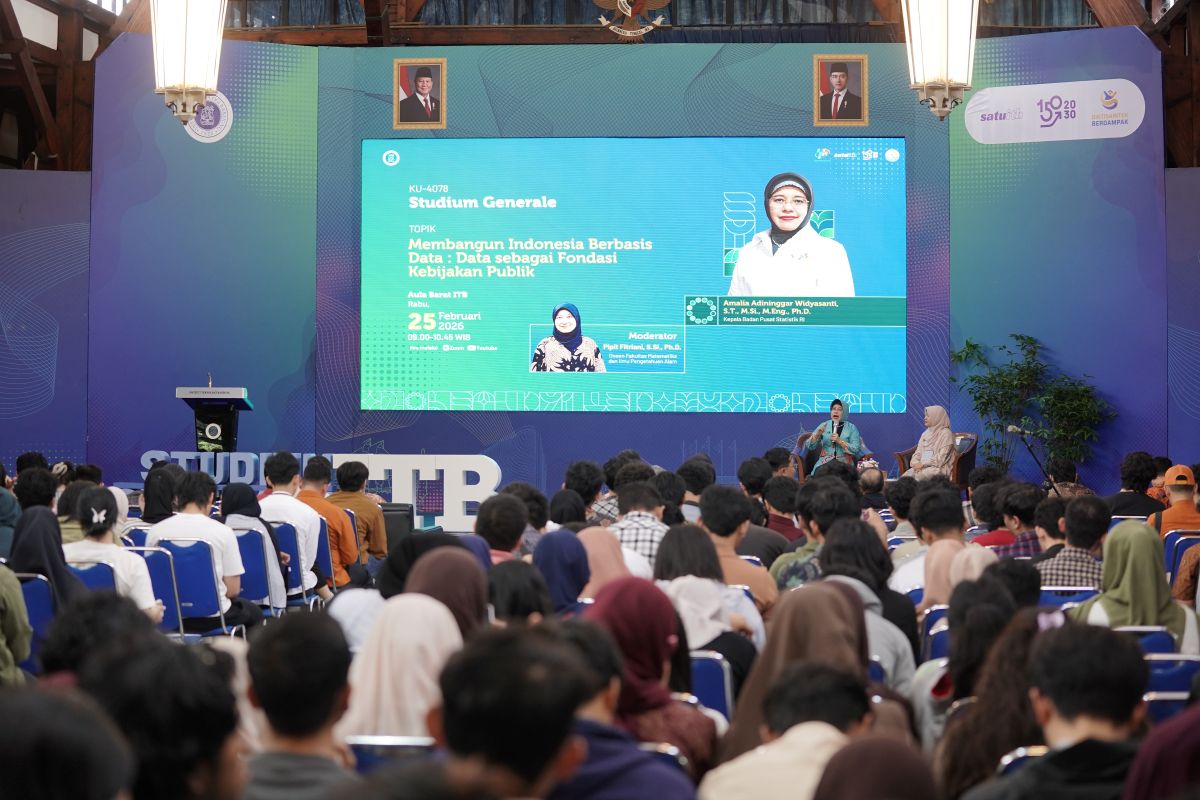
On that occasion, she also presented Indonesia’s economic growth achievement in 2025, which reached 5.11 percent. According to her, this growth was supported by the manufacturing sector, including nickel downstreaming as well as the chemical, pharmaceutical, and cosmetics industries.
She noted that one of the key factors that enables a country to become developed is an industrialization strategy supported by strong connectivity between university research centers and industry.
"Innovation will drive high productivity if university research can be commercialized and directly applied in industry," she said.
During the public lecture, attended by approximately 1,300 students both offline and online from the Ganesha, Jatinangor, and Cirebon campuses, BPS also announced plans for the 2026 Economic Census (SE).
"The Economic Census is a major agenda conducted once every 10 years. We are opening opportunities for ITB students to join, whether for internship experience or to make a tangible contribution in mapping the national economic landscape. This is a golden opportunity to directly observe digital and economic activities in the field," she said.
Through this Studium Generale, ITB and BPS reaffirmed their commitment to strengthening the role of higher education institutions as centers of knowledge development that deliver real impact for the nation. Through collaboration with Statistics Indonesia, ITB seeks to foster a generation that not only excels academically but is also capable of leveraging data and research as the foundation for decision-making, industrial innovation, and strategic contributions to evidence-based national development.
.jpg)
.jpeg)
.jpg)
.png)
.jpg)
.jpg)