ITB Technology Innovation Turns Plastic Waste into Environmentally Friendly Paving Blocks
By -
Editor M. Naufal Hafizh, S.S.

BANDUNG, itb.ac.id — Institut Teknologi Bandung (ITB), through the Ganesha Operation Plastic (GaneOpTic) team, has developed a technology that converts plastic waste into environmentally friendly paving blocks. In addition to reducing waste accumulation, the innovation supports local infrastructure needs and demonstrates how technology can address real challenges faced by communities.
The technology was implemented in Pulau Balai Village, one of the islands in the Banyak Islands, Aceh Singkil Regency, in 2025. In this coastal area, plastic waste has become a major community concern, alongside damaged roads and limited infrastructure. Through an appropriate technology approach, the ITB team introduced a solution designed to address both issues.
Collaborative Team from Multiple Universities
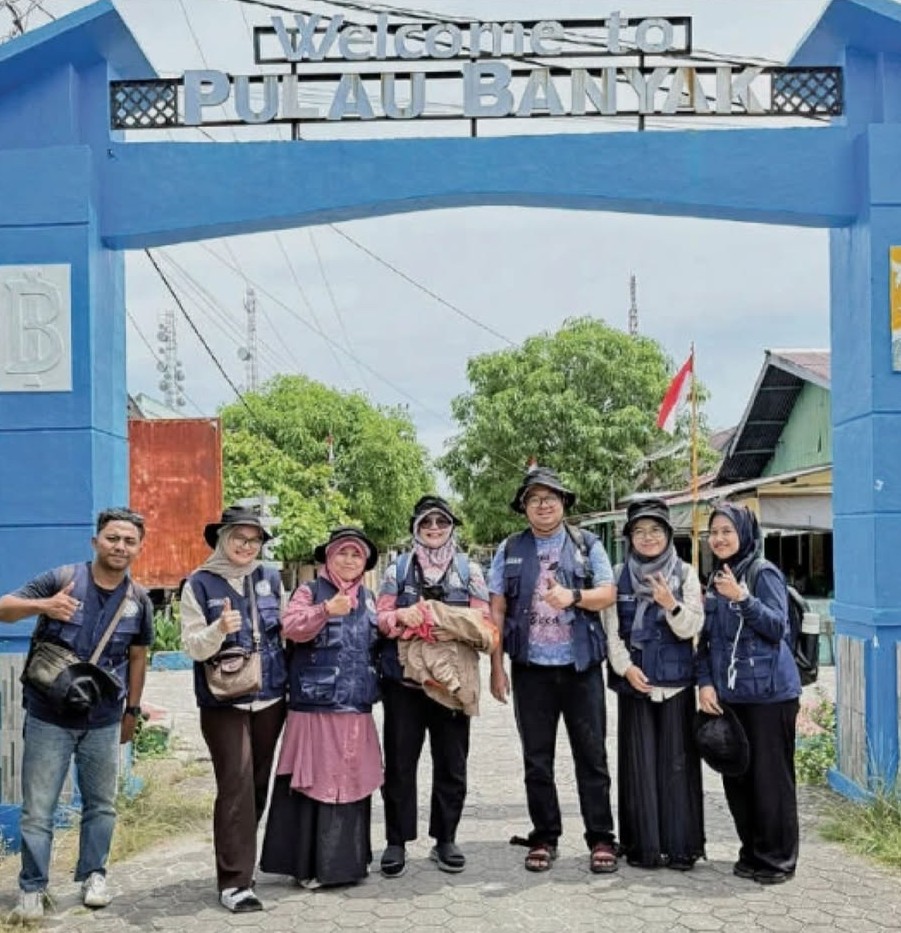
The program was carried out by the ITB GaneOpTic team, led by Dr. Megawati Zunita, S.Si., M.Si., from ITB’s Chemical Engineering Study Program. It also involved researchers and students from several universities, including Universitas Muhammadiyah Riau (UMRI), Universitas Insan Budi Utomo (UIBU), and Universitas Malikussaleh (Unimal).
The activities took place from August 18 to 20, 2025. During the program, the team handed over a plastic-melting unit, delivered educational sessions on plastic recycling, waste-free oceans, and community empowerment, and guided residents through the process of producing paving blocks from plastic waste.
“The large volume of plastic waste carried by ocean currents has accumulated along the coast of Pulau Balai, a small island within the Banyak Islands in Aceh Singkil Regency. The ITB team introduced an applied technology for producing paving blocks from plastic waste, while also addressing the need for pedestrian infrastructure, which remains a challenge in the area,” Dr. Megawati said.
Technology Implemented in Aceh Singkil Regency
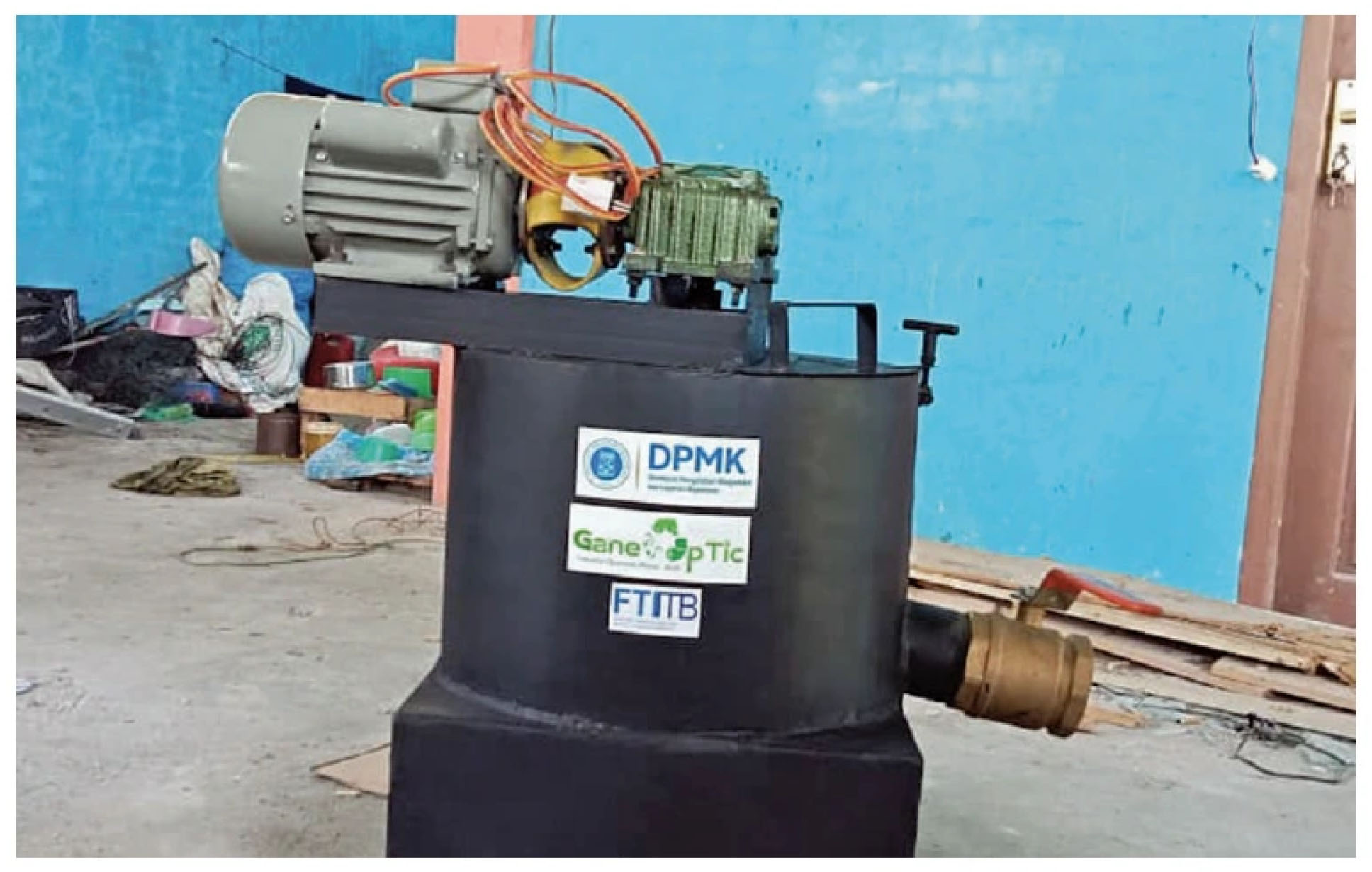
The implementation of the technology was prompted by conditions in Pulau Balai. According to data from the Aceh Singkil Regency Environmental Agency, plastic waste accumulation in Pulau Banyak District reaches 668 tons per year. Plastic is the second-largest category of waste, accounting for 22 percent of the total.
This situation requires particular attention because Pulau Balai has significant marine tourism potential but continues to face challenges in waste management and infrastructure maintenance.
Through the community service program, the GaneOpTic team provided a plastic-melting unit to process plastic waste into paving blocks. Residents were directly introduced to each stage of the production process, including sorting and drying the plastic, melting it at a specified temperature, pouring it into molds, and cooling it until the paving blocks were ready for use.
An Environmental Solution that Supports Road Improvement
The technology offers a solution for reducing plastic waste while producing recycled construction materials that can be used for pedestrian paths, public facilities, and other areas intended for light use.
According to Dr. Megawati, paving blocks made from recycled plastic are particularly suitable for coastal areas because they offer several advantages.
“They are resistant to corrosion caused by seawater, do not crack due to sulfate reactions, are more adaptable to temperature changes, and are relatively lighter than conventional concrete paving blocks,” she said.
She added that, with the appropriate formulation and production process, the paving blocks can also meet quality standards for use on neighborhood roads and in light-vehicle parking areas.
Paving Blocks Offer Potential for Village-Based Enterprises
Paving blocks made from plastic waste also have economic potential. In addition to being used by local residents, the products could be developed into a village-based business and marketed to other villages with similar infrastructure needs.
This potential means that the program serves not merely as a training activity, but also as an initial step toward greater village self-reliance.
.jpeg)
.jpg)
.jpg)
.jpg)