ITB Studium Generale Highlights Career-Building Strategies from Character to Consistency
By Merryta Kusumawati - Teknik Geodesi dan Geomatika, 2025
Editor M. Naufal Hafizh, S.S.
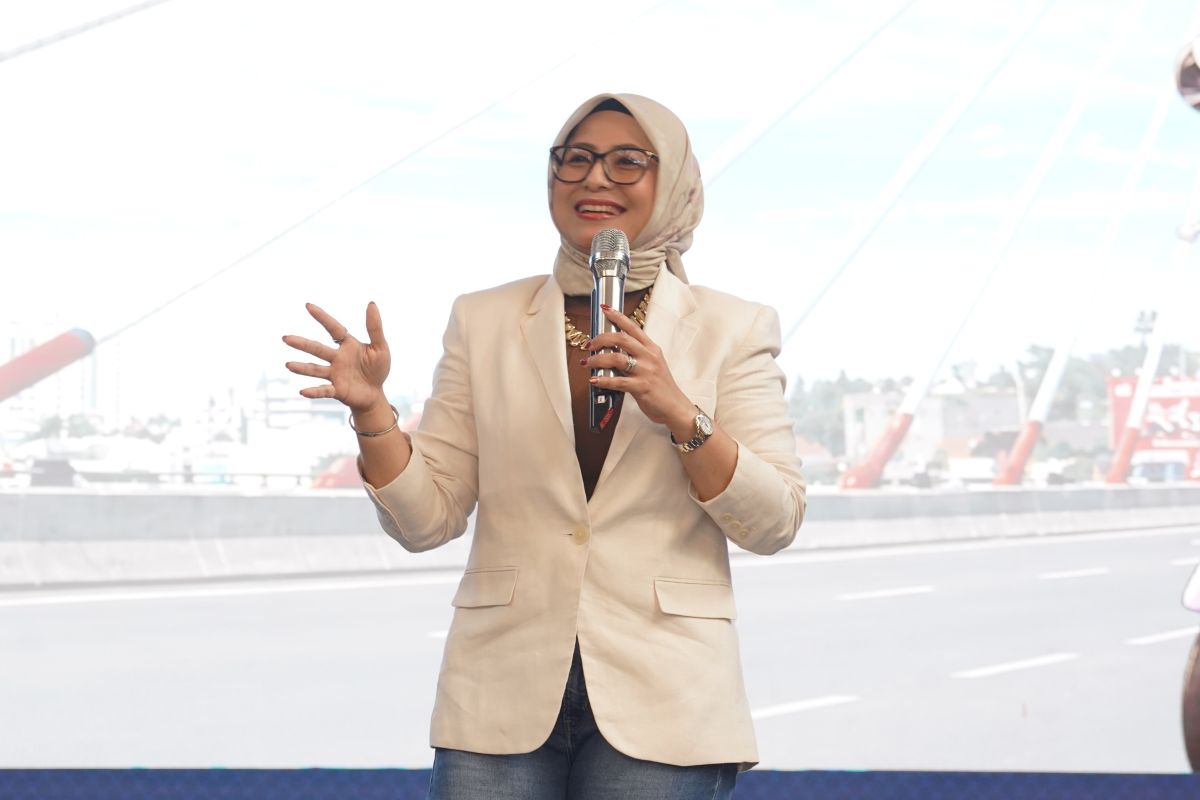
BANDUNG, itb.ac.id - Director of Human Capital & Compliance of PT Bank Mandiri (Persero) Tbk., Eka Fitria, encouraged students of Institut Teknologi Bandung (ITB) to prepare themselves more comprehensively for an increasingly dynamic world of work. According to her, academic excellence and technical competence are important assets, but they are not sufficient to respond to the challenges of future industries.
Building a Career through the Right Organization
In her presentation, Eka Fitria shared that the world of work requires individuals who are not only skilled in one technical field, but also able to learn across disciplines and adapt to different roles. She explained that talent management programs such as ODP are designed to develop future leaders with intellectual capacity, individual competence, and readiness to face organizational challenges.
Eka also reminded students not to choose their first organization solely based on financial considerations. She said the first organization should serve as a learning space that shapes mindset, work ethic, leadership, and long-term career resilience.
“Your first organization is not merely a paycheck,” she said.
She added that a good organization is one that has adaptability, a culture of continuous learning, a healthy feedback system, clear performance management, and concern for human capital development. Such an organization, she said, can become a meaningful platform for young talents to grow in a structured and sustainable way.
Personal Quality as a Talent Differentiator
In addition to discussing the importance of organizations, Eka emphasized that personal quality is a key factor that differentiates individuals in the workplace. She stated that ITB graduates already have a competitive advantage because they have gone through a strong academic process. However, when entering industry, technical ability must be complemented by resilience, consistency, resourcefulness, courage to learn new things, and the ability to create real impact.
Several students shared that the keys to success include grit, internal motivation, problem-solving ability, mental toughness, and openness to trying new things. Eka then emphasized that success does not come only from personal ability, but also from how individuals make use of their environment, networks, and learning opportunities.
She also highlighted the importance of consistency. According to her, many young talents have strong potential but are held back by a lack of consistency when facing difficulties. Therefore, students need to build productive habits that can support their long-term career journey.
“Degrees can open doors, but habits will determine how far you will go,” she said.
Personal Branding Is Not Merely Self-Image
Eka also discussed the importance of personal branding. She emphasized that personal branding is not merely about how someone presents themselves on social media or labels themselves. Strong personal branding, she said, is built through character, work results, contribution, and the impact felt by others.
She encouraged students to actively join organizations, take internships, develop real projects, expand networks with seniors and alumni, and strengthen practical skills beyond the academic curriculum. These activities are important so that students do not only have a degree, but also a portfolio, experience, and a track record of contribution.
“What speaks about our success is not ourselves, but other people who feel the impact of what we do,” she said.
According to Eka, students need to start creating their own differentiating value during their university years. That way, when entering the workforce, they will not merely become part of a crowd of high-achieving graduates, but will also have a professional identity that is recognizable through their quality and contribution.
Preparing to Contribute in the Workplace
Eka further emphasized that students need to design their future careers consciously from university. According to her, success is not only determined by academic ability, but also by the ability to choose the right environment for growth.
She explained that a first organization should become a place of learning that helps young talents continue to grow, understand professional work culture, and develop long-term ways of thinking. A strong organization, she added, is one that is adaptive, has a talent development system, maintains a feedback culture, and is able to ensure sustainability.
Eka also underlined the importance of combining human capability and technology in facing industrial change. Technology, she said, should be seen as a tool to strengthen human contribution, not merely as a replacement for people.
Through the Studium Generale, ITB students were encouraged not only to pursue their first job, but also to choose a place of growth that can shape their character, competence, and readiness as future leaders. The event is expected to broaden students’ perspectives on career development, personal growth, and meaningful contribution to Indonesia.
.jpeg)
.jpg)
.jpg)
.jpg)
.jpg)