ITB Develops “Chicken Apartment” in West Bandung Regency to Promote Organic Waste Management
By Anggun Nindita -
Editor Muhammad Efriza Pandia
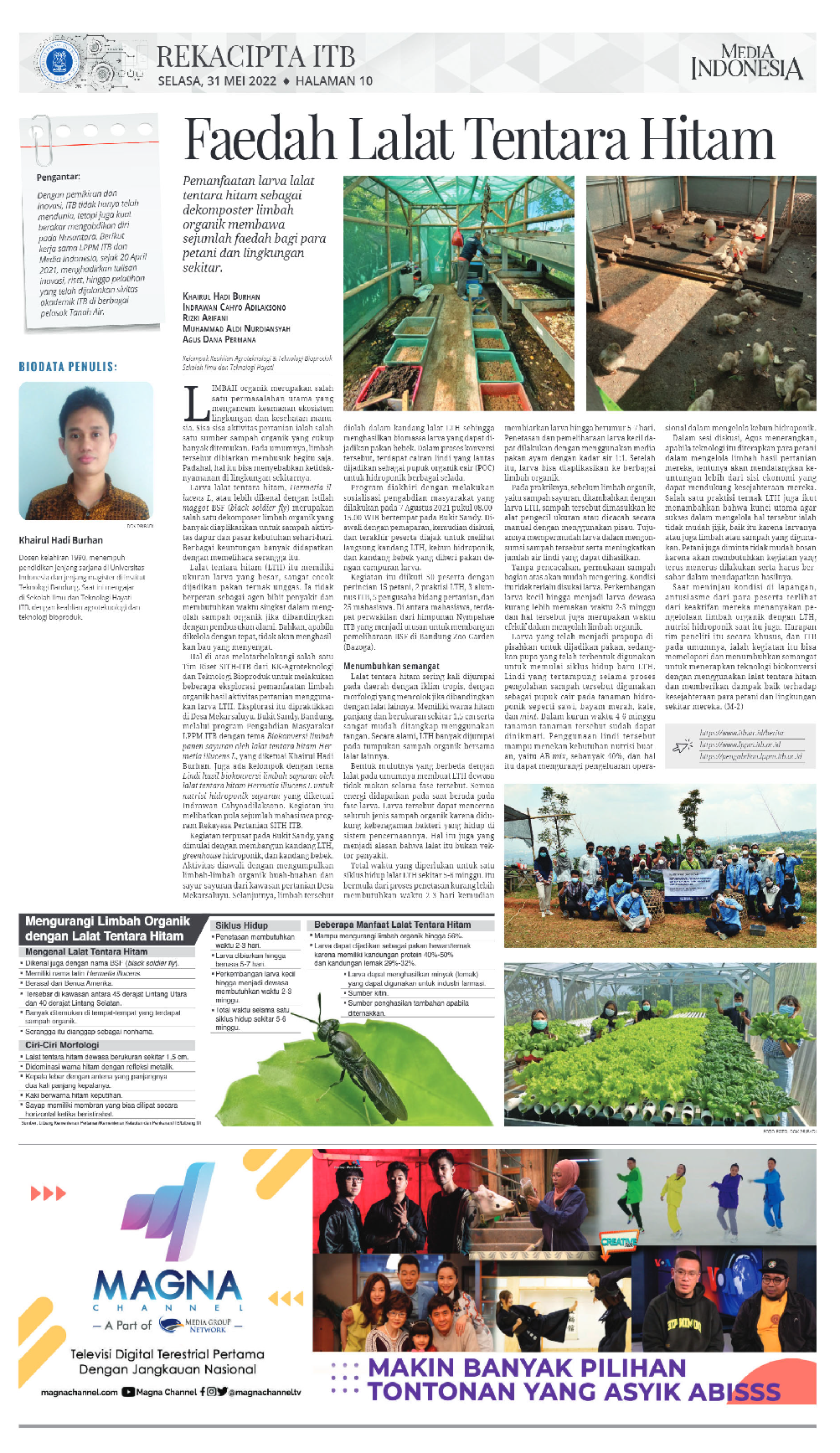
WEST BANDUNG, itb.ac.id — Organic waste does not always have to end up as discarded material. With proper management, it can be transformed into a resource that generates environmental, food, and economic benefits for communities. Institut Teknologi Bandung (ITB) is putting this idea into practice through an organic waste processing system based on Black Soldier Fly (BSF) larvae, integrated with egg-laying chicken farming.
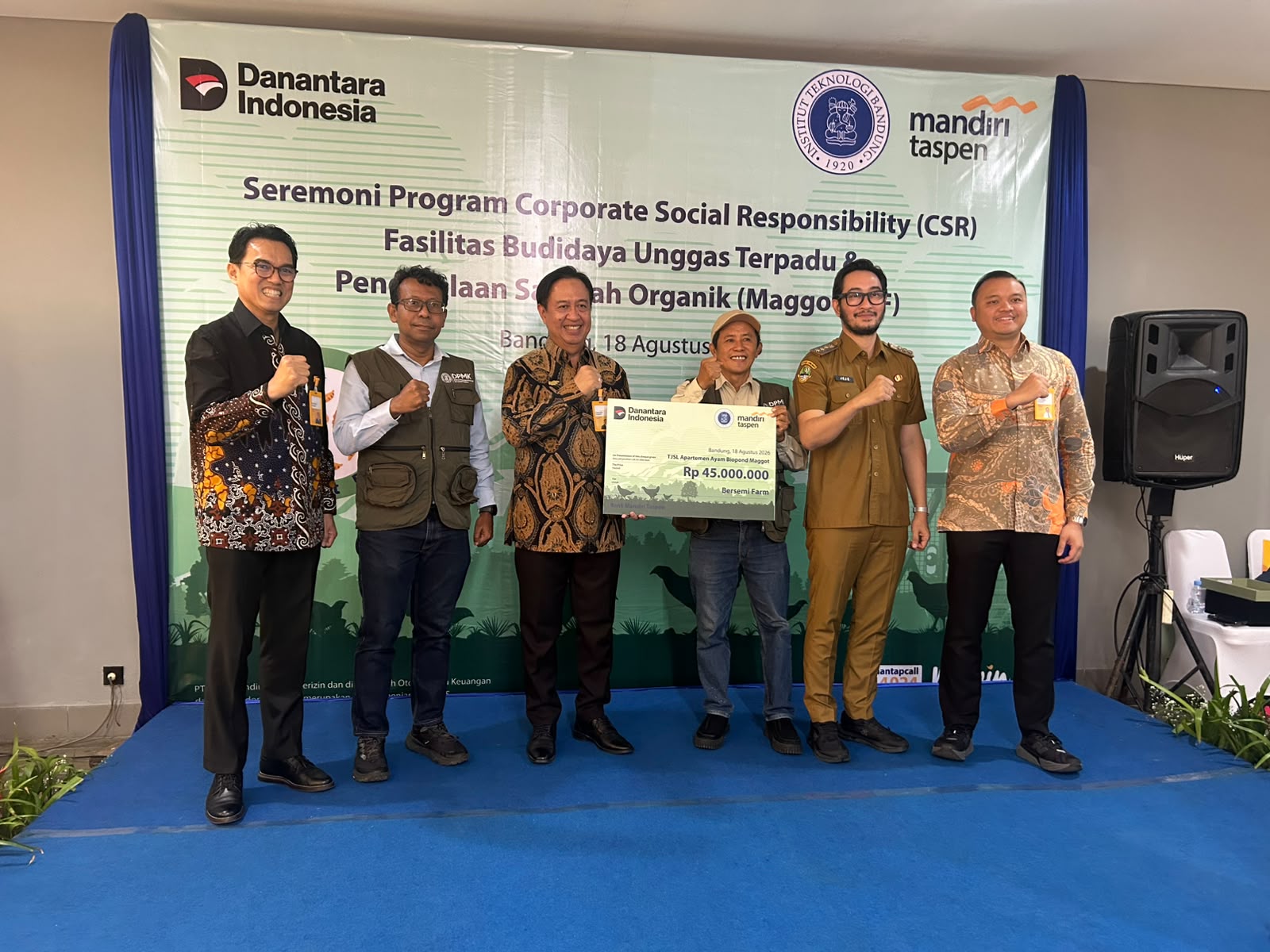
The innovation, known as the “Chicken Apartment,” is currently being implemented in Dago Giri, West Bandung Regency. Its development is a collaboration between ITB, PT Bank Mandiri Taspen, and the West Bandung Regency Government to establish a simple, economically valuable organic waste management model that can be adapted to community needs.
The program is led by ITB lecturer Dr.rer.nat. Linus Ampang Pasasa, M.S., under the Bottom Up 1 scheme of ITB’s Directorate of Community Service and Expertise (DPMK). The scheme provides a platform for ITB lecturers to develop community service initiatives based on real-world problems and needs identified in the field.
ITB has previously implemented similar concepts in several areas of Bandung, including Pasirlayung and Tamansari. In Pasirlayung, ITB developed an integrated organic waste management model combining BSF larvae cultivation, egg-laying chickens, fish ponds, and a waste bank. In Tamansari, meanwhile, the Chicken Apartment–Maggot concept was developed as a four-level vertical structure capable of processing approximately 200–250 kilograms of kitchen organic waste per day.
Processing Waste in Limited Spaces
The Chicken Apartment concept was developed to address the challenge of organic waste management while responding to limited land availability, particularly in urban areas and densely populated neighborhoods.
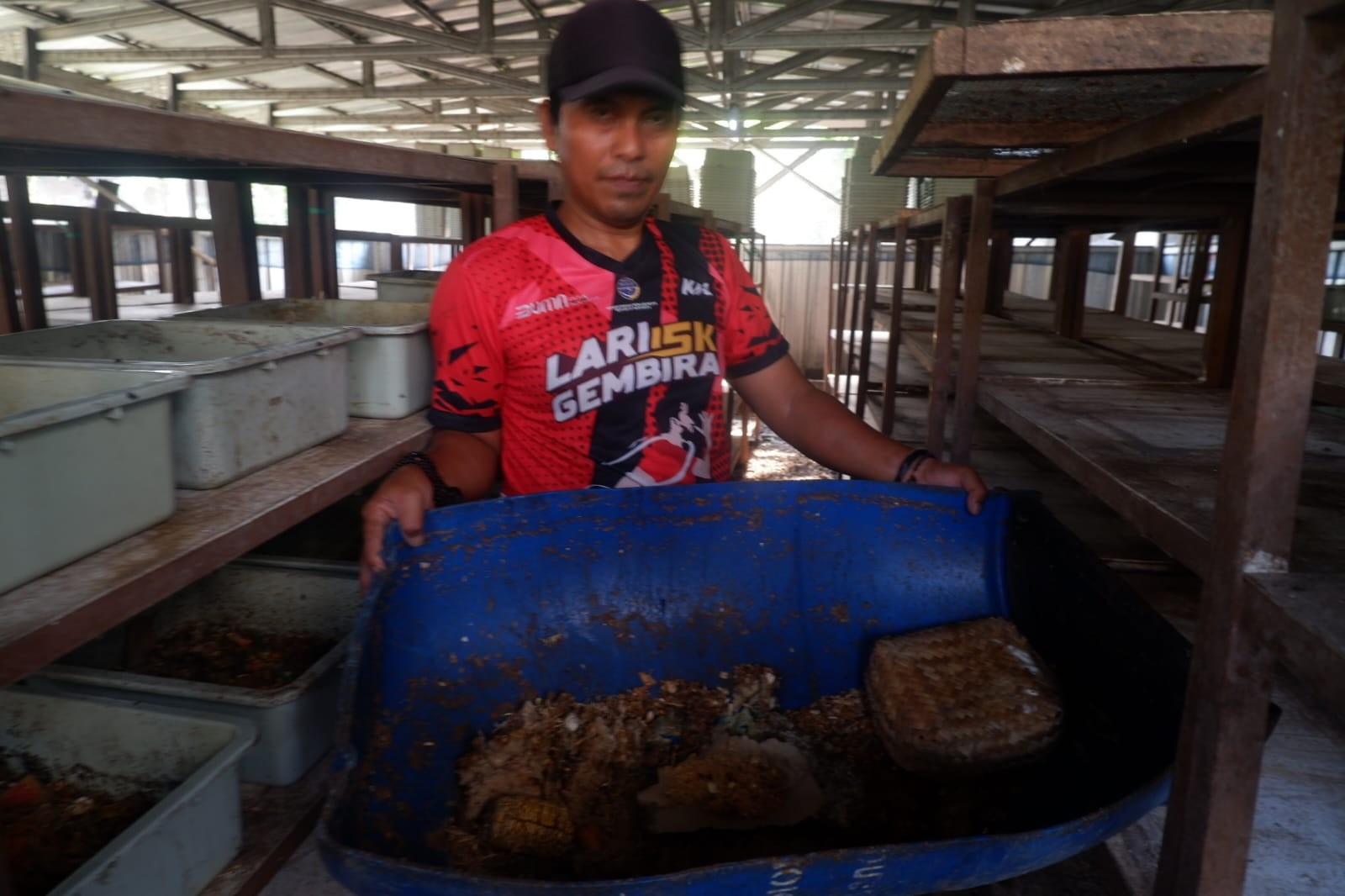
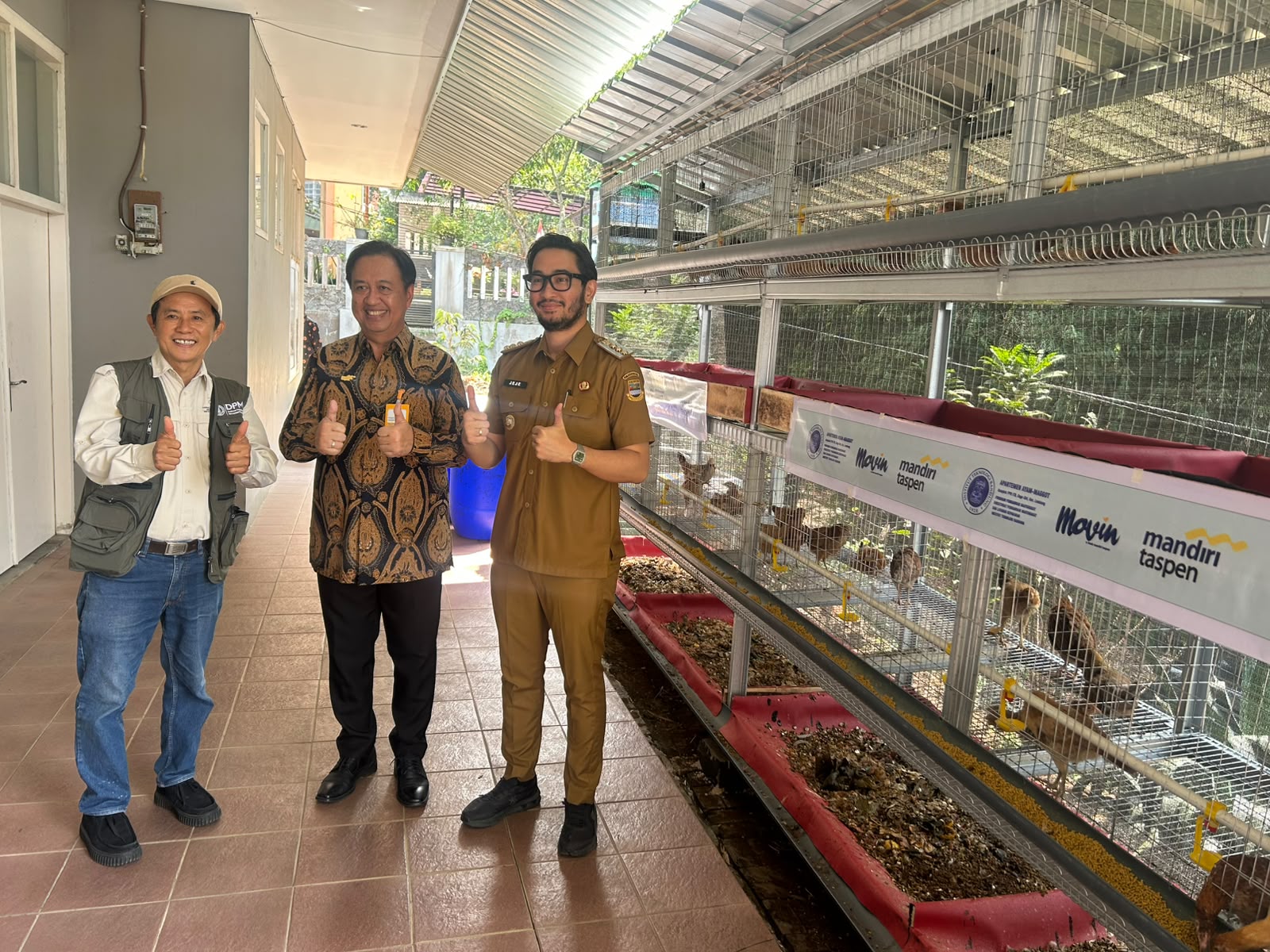
The installation is designed vertically, measuring approximately 1 × 6 meters. It consists of several sections that integrate chicken farming with BSF larvae cultivation. Sorted organic waste is used as a food source for the larvae, which can later be used as feed for the chickens.
According to Dr. Linus, the system can decompose organic waste within a relatively short period. Under suitable conditions, waste introduced into the system can be broken down in approximately two days. Its processing capacity can reach around 250 kilograms of organic waste per day, depending on the number of units and the availability of waste supplies.
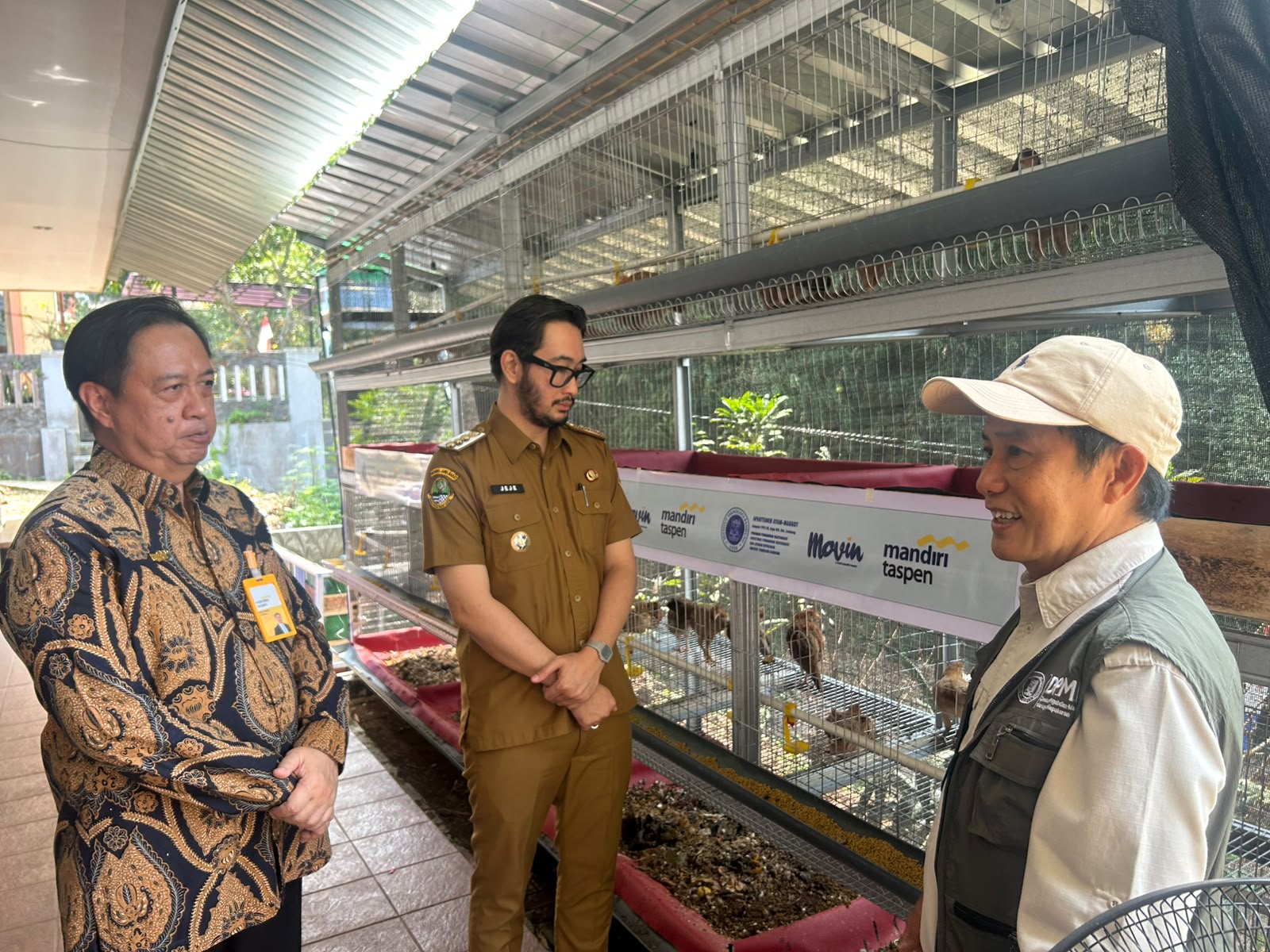
“When we put waste into this system, it can be decomposed within two days,” Linus said on Tuesday (August 18, 2026).
In addition to household waste, the system also has the potential to process organic waste generated by hotels, restaurants, and cafés (HORECA). The more organic waste that is separated at the source, the greater the amount of material that can be reused within the system.
Beyond reducing waste, the system also produces useful outputs in the form of BSF larvae and chicken eggs. The larvae can be used as a source of chicken feed, while the eggs can be consumed, sold to support the operating costs of community management groups, or distributed through social programs.
“The eggs can be sold to help cover the costs of managing the facility, or distributed to support stunting prevention programs through community health centers and other initiatives. It ultimately depends on how the system is managed,” Linus said.
From ITB Innovation to a Replicable Model
The development of the system in West Bandung demonstrates how innovations originating in an academic environment can be expanded through collaboration with government, communities, and private-sector partners.
West Bandung Regent Jeje Ritchie Ismail said the Chicken Apartment–Maggot initiative offers an alternative approach to addressing waste-related challenges in the region. According to him, effective waste management requires collaboration among various stakeholders, including government, academia, communities, and the banking sector.
Jeje expressed hope that the model developed with ITB would not remain merely a pilot project but could be expanded to other areas across West Bandung.
“Through this collaboration, I hope that in the future it can be expanded to all subdistricts in West Bandung,” Jeje said in Dago Giri on Tuesday (August 18, 2026).
He further expressed his hope that the program could eventually be implemented across all 16 subdistricts and 165 villages in West Bandung Regency. Its expansion would be supported by training programs designed to equip local communities with the skills needed to turn organic waste into economically valuable products.
For ITB, the potential for replication highlights the importance of developing appropriate technologies that can be adapted to local community conditions. Previously, the ITB team also expressed hopes that community-based organic waste management models implemented in Tamansari and Lebak Siliwangi could be replicated in other areas, including across West Java.
Building an Economic Cycle from Waste
At its core, the innovation goes beyond waste-processing technology. It seeks to establish a broader cycle of resource utilization.
Sorted organic waste is used as feed for BSF larvae. The larvae are then used as chicken feed, while the chickens produce eggs that provide nutritional and economic benefits. Through this approach, materials previously regarded as waste can be reintegrated into a productive cycle.
The model also creates opportunities for community participation in waste management from the source. Residents can contribute by separating and supplying organic waste, managing the facilities, and utilizing or marketing the products generated by the system.
Support from PT Bank Mandiri Taspen further strengthens the community empowerment aspect of the program. In addition to recognizing BSF-based waste processing as a productive activity, Bank Mandiri Taspen also sees opportunities for retirees to participate in environmental management and productive economic activities. Its support includes training, mentoring, and financing tailored to business development needs.
The collaboration brings together ITB’s academic innovation with practical needs within the community. At the same time, experiences from Pasirlayung and Tamansari demonstrate that BSF-based organic waste management models can be adapted to suit the characteristics of different locations.
Through ITB DPMK’s Bottom Up scheme, Dr. Linus’ innovation serves as an example of how ideas developed within universities can be transformed into appropriate solutions and implemented together with communities. The development of the Chicken Apartment in West Bandung also broadens opportunities for collaboration in promoting more sustainable waste management practices.
Moving forward, the model is expected not only to help reduce the volume of organic waste but also to create opportunities for community empowerment while generating products with both nutritional and economic value.
.jpeg)
.jpg)
.png)
.jpeg)