ITB Invites the Public to Explore Bandung’s History and Shape Its Future through Above Bandung
By Anggun Nindita
Editor Anggun Nindita
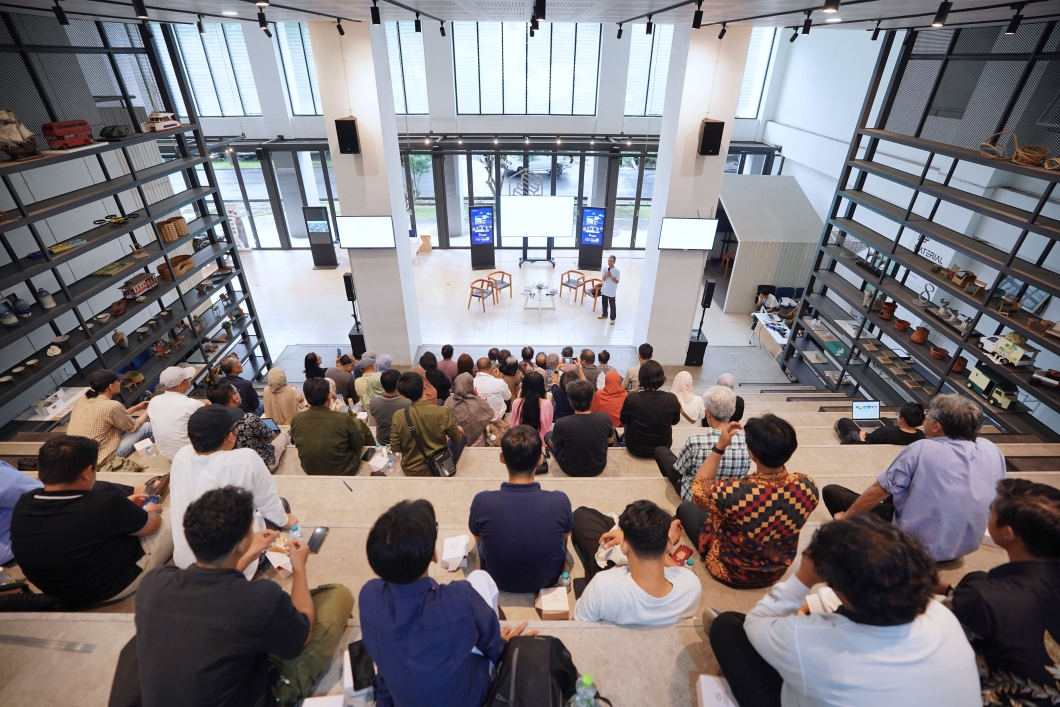
BANDUNG, itb.ac.id – Bandung’s transformation over time offers valuable lessons for its future urban development. Institut Teknologi Bandung (ITB), through the ITB Museum, invited the public to rediscover Bandung’s history, urban transformation, and rich cultural heritage through a discussion entitled “Greater Bandung: Then and Now” and the launch of the book Above Bandung: Then and Now. The event was held at the Design Center of ITB’s Faculty of Art and Design (FSRD), on the first floor of the CADL Building, ITB Ganesha Campus, on Friday (20 November 2026).
As the ITB Museum’s inaugural public program since its opening in late July 2026, the event brought together perspectives from photography, history, culture, and urban planning. It encouraged the public to explore Bandung’s historical development while reflecting on various urban challenges, ranging from changes in land use and the availability of green open spaces to the preservation of historic districts.
ITB’s Vice Rector for Communication, Partnership, Alumni Affairs, and Administration, Dr. A. Rikrik Kusmara, S.Sn., M.Sn., expressed his appreciation to the author of Above Bandung, Raditya Darian S., for his contribution to documenting the city’s development. His research findings, aerial photographs, and historical archives related to Bandung and ITB were also donated to enrich the collections of the ITB Museum and ITB Library.
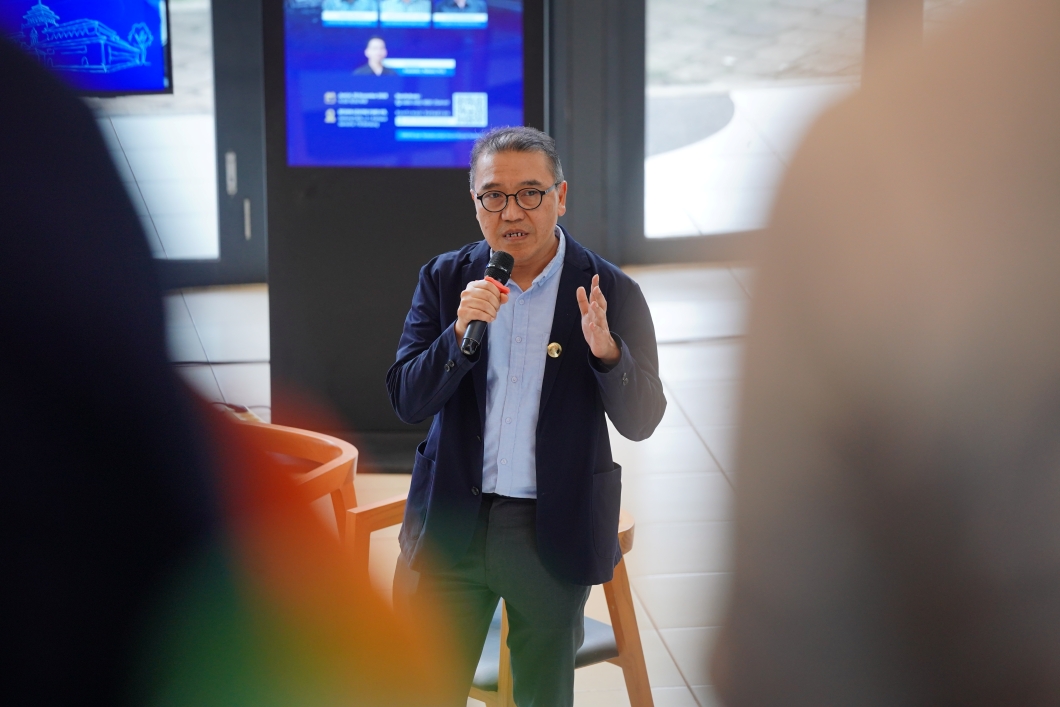
“This public program represents a step towards expanding the role of the ITB Museum, not only as a place to preserve and exhibit historical collections, but also as a space for learning, exchanging ideas, and sharing knowledge with the public,” he said.
Documenting Bandung’s Transformation from Above
The author of Above Bandung: Then and Now, Raditya Darian S., introduced an approach to exploring urban history by comparing historical and contemporary aerial photographs. The book combines photographic archives from the colonial era with contemporary images captured using aerial photography technology, including unmanned aerial vehicles (drones).
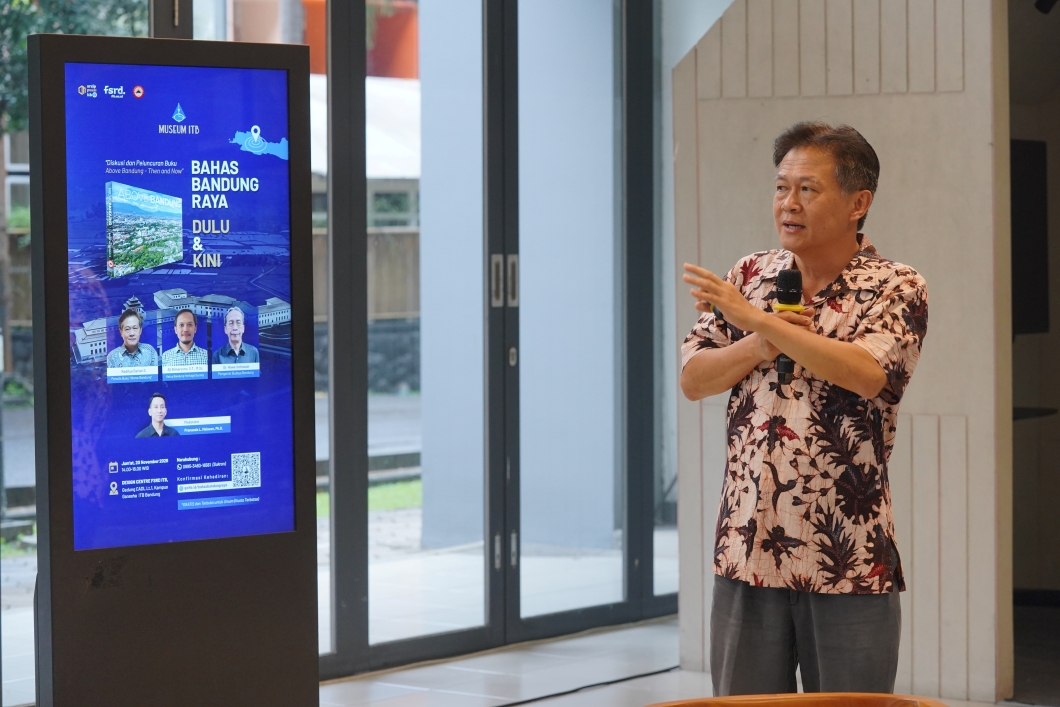
In preparing the book, Raditya explored historical archives from several institutions in the Netherlands, including Leiden University Libraries, the Nationaal Archief (National Archives of the Netherlands), and the Netherlands Institute of Military History (NIMH).
“By comparing these photographs, readers can observe changes in residential areas, historic buildings, infrastructure, open spaces, and the development of the city center,” he said.
The book enriches the visual documentation of Bandung’s history, presenting it in a format that is accessible to a broad audience.
Understanding the City through Memory and Vision
Bandung cultural observer Dr. Hawe Setiawan noted that the book enriches the existing body of literature on Bandung, which encompasses historical works, literature, sketches, and architectural documentation.
Hawe connected the perspective of observing landscapes from above with the tradition of landscape observation recorded in Bujangga Manik, a 16th-century Old Sundanese manuscript.
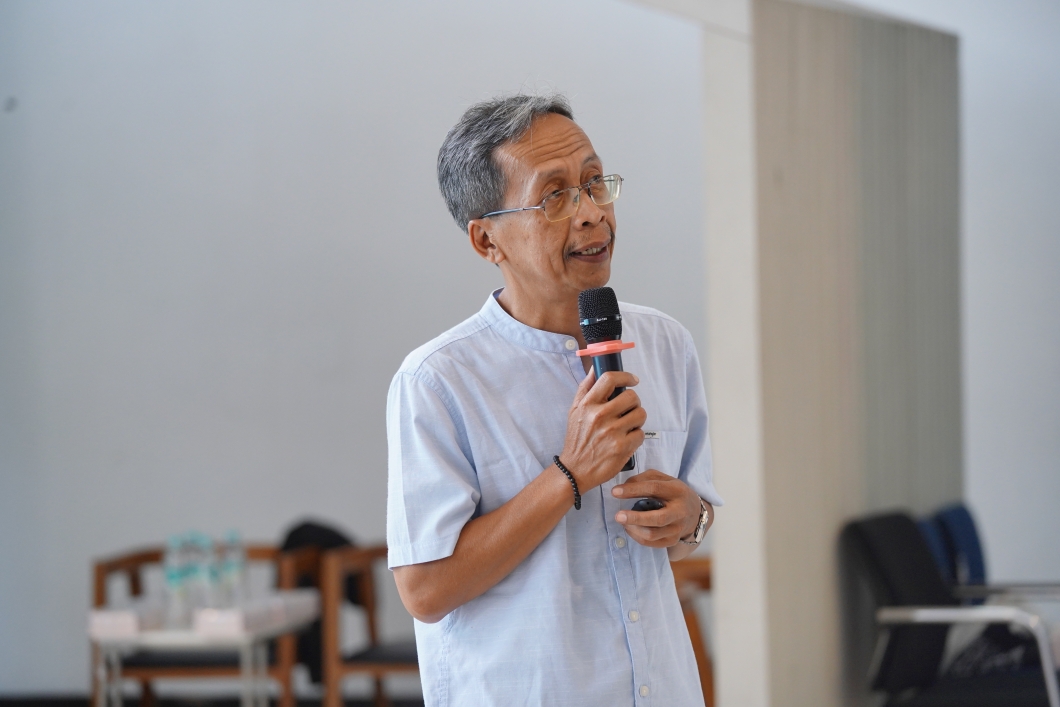
“This demonstrates that efforts to document geographical areas had taken place long before the advent of photographic technology,” he remarked.
He also encouraged the inclusion of broader environmental contexts in photograph captions, such as mountain landscapes, green open spaces, water reserves, and changes in land use.
“In this way, visual documentation serves not only as a means of remembering the past, but also as a tool for understanding changes in the urban environment,” he explained.
Preserving Bandung’s Identity amid Urban Development
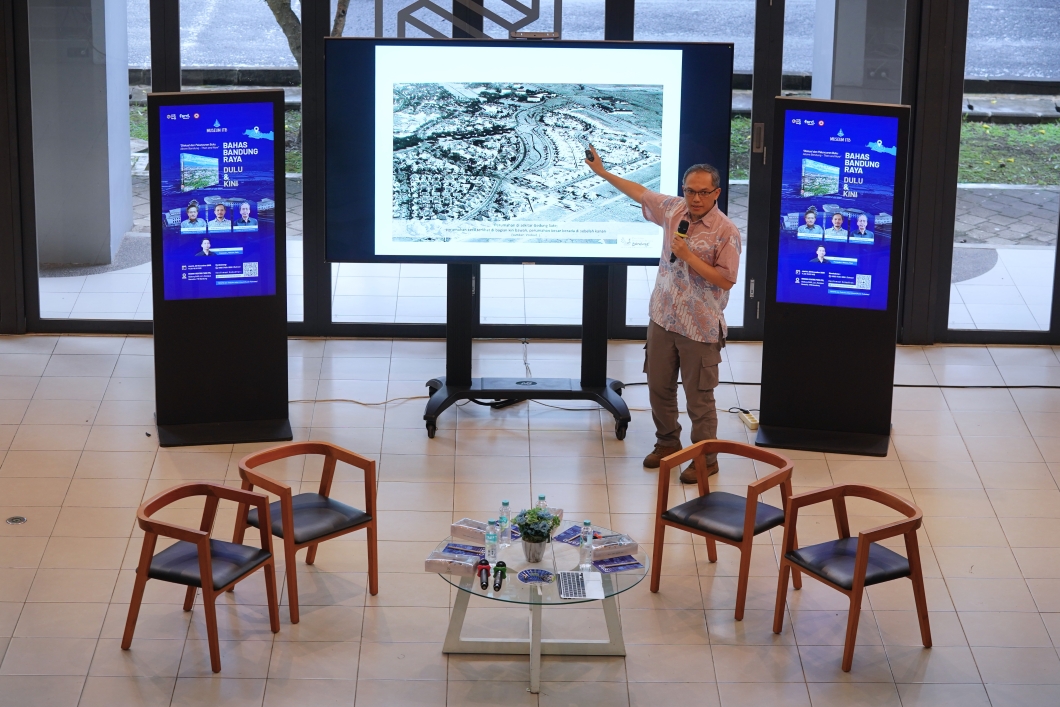
Meanwhile, Chairman of the Bandung Heritage Society, Aji Bimarsono, S.T., M.Sc., outlined Bandung’s development since the early 19th century, including the establishment of educational, administrative, commercial, and residential districts, as well as public spaces that helped shape the city’s character.
Several iconic districts and buildings, including Braga, Gempol, Gedung Sate, and the ITB campus, formerly home to the Technische Hoogeschool te Bandoeng, have played significant roles in this historical development.
“The city’s architectural heritage, parks, and infrastructure possess not only aesthetic value but also embody the history and cultural identity of its people,” he said.
“Urban growth and increasingly dense development pose challenges to the preservation of Bandung’s cultural heritage. Physical changes to historic districts may erode the character and cultural significance that have evolved over decades or even centuries,” he added.
To address these challenges, Aji proposed developing new urban areas integrated with public transportation systems. Meanwhile, development within historic districts should continue to adhere to cultural heritage conservation principles.
“This approach offers an alternative for meeting development needs without sacrificing the city’s identity,” he said.
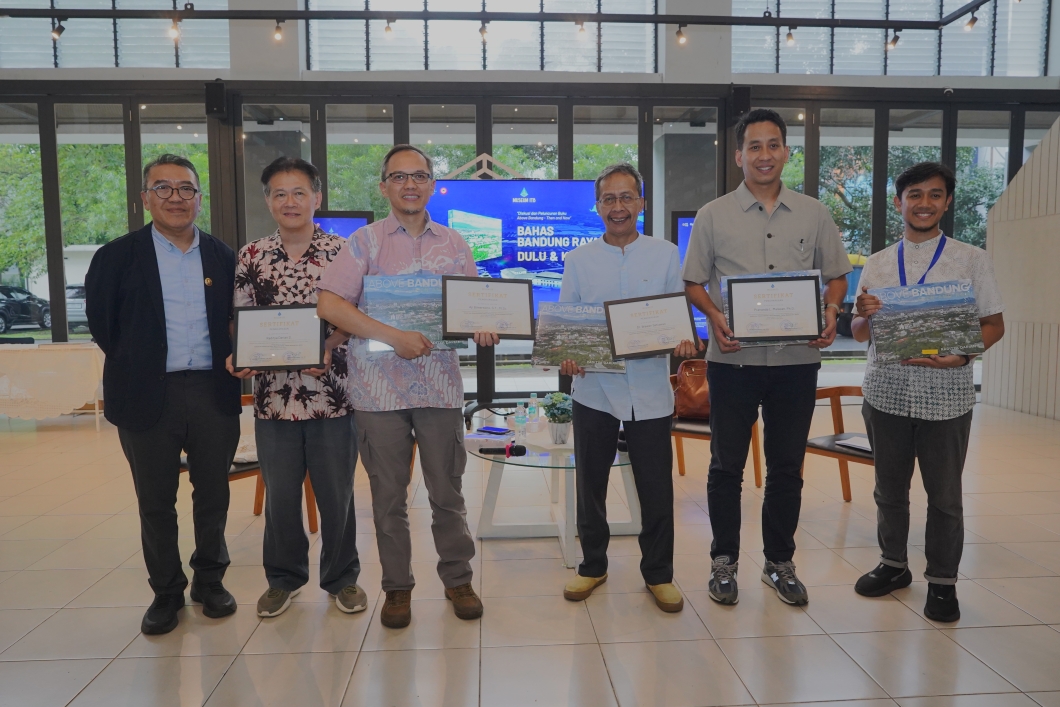
Through the discussion, moderated by Prananda Luffiansyah Malasan, Ph.D., a lecturer from the Human and Industrial Product Design Research Group at ITB’s Faculty of Art and Design (FSRD), the ITB Museum highlighted history as a source of knowledge relevant to both present and future generations.
By bringing together historical documentation, photographic technology, cultural studies, and urban planning, the event seeks to raise public awareness of the importance of preserving cultural heritage while contributing to a more livable, sustainable, and people-centered Bandung that retains its distinctive identity amid ongoing urban transformation.