Next-Generation Nuclear Energy: ITB Researcher Explores Safety, Technology, and Indonesia’s Path to Energy Independence
By -
Editor M. Naufal Hafizh, S.S.
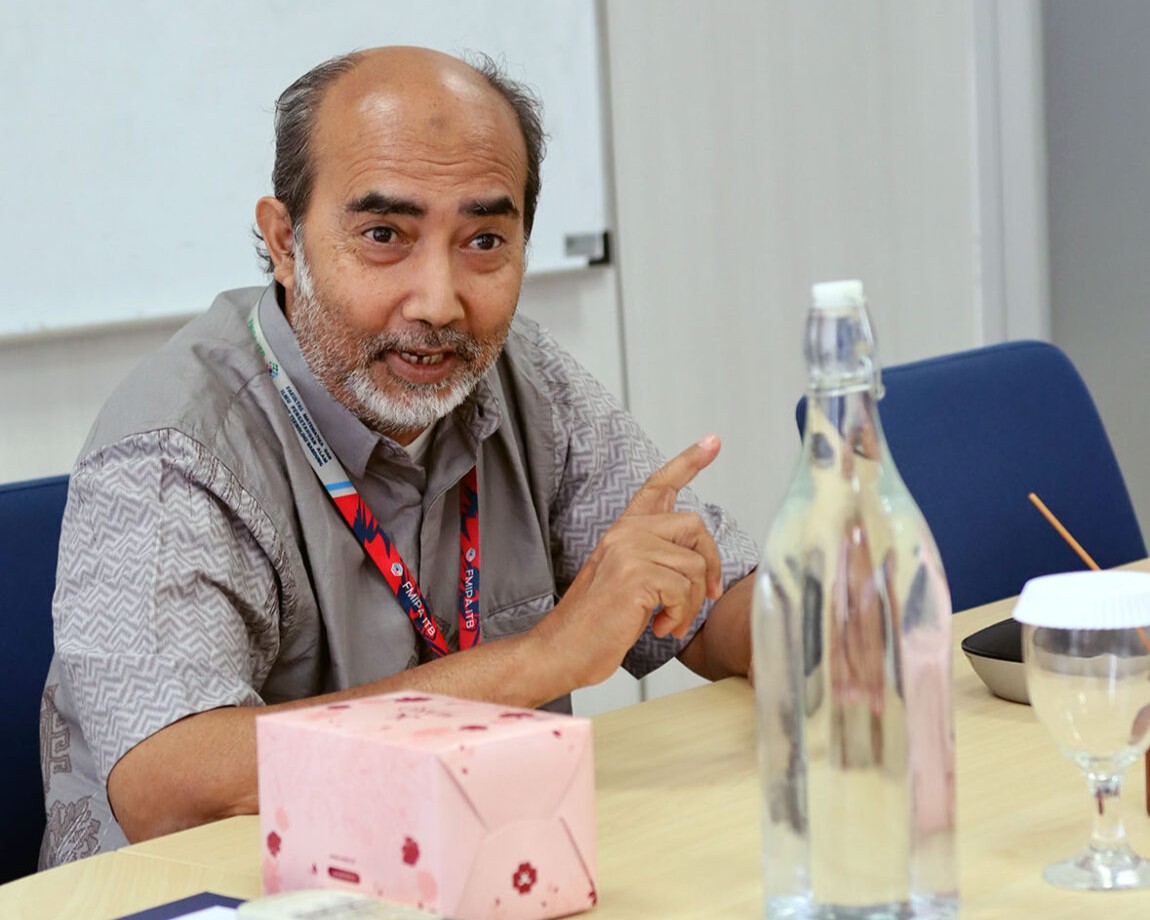
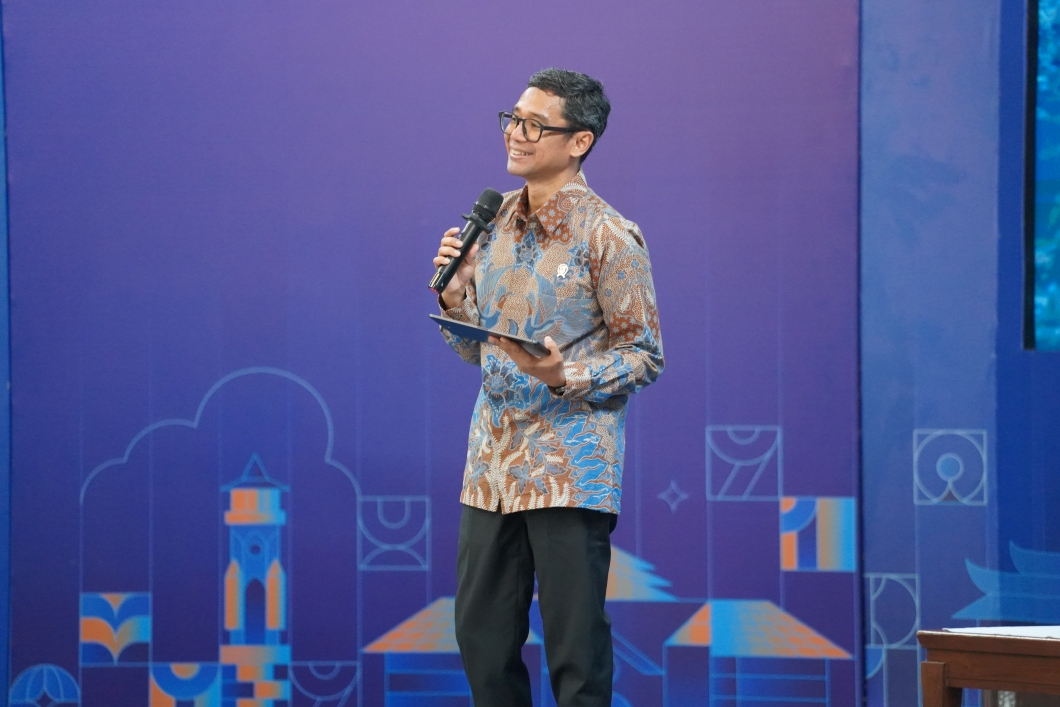
Prof. Dr. Zaki Su’ud, M.Eng. (DRI ITB)
BANDUNG, itb.ac.id – Institut Teknologi Bandung (ITB), through research conducted by Prof. Dr. Zaki Su’ud, M.Eng., is developing a nuclear reactor concept known as Modified CANDLE (MCANDLE), aimed at improving fuel efficiency and extending reactor operating life. The research represents one of ITB’s contributions to addressing the challenges of providing reliable, low-carbon energy while reducing Indonesia’s dependence on foreign nuclear technology.
The development of next-generation nuclear technology has the potential to help meet public electricity needs, particularly in archipelagic regions with varying power grid capacities. In addition to supporting the transition toward low-carbon energy, this technology offers opportunities to strengthen national engineering and manufacturing capabilities, as well as industrial competitiveness.
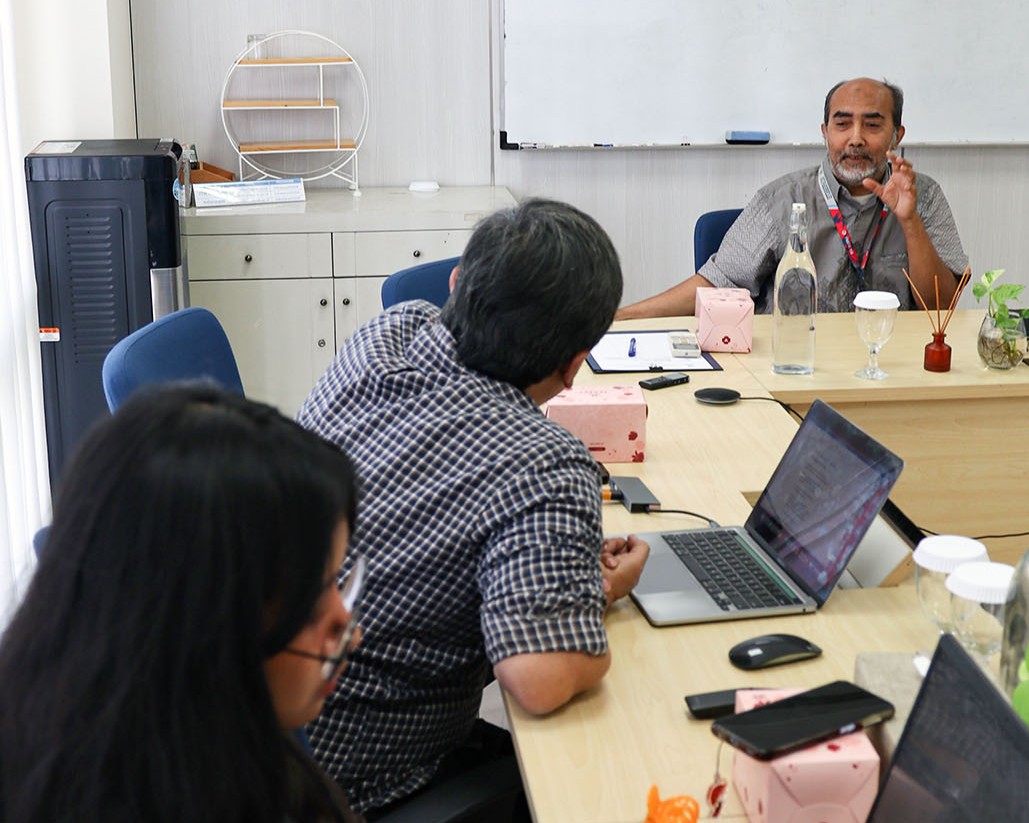
Prof. Zaki, a professor in the Nuclear Physics and Biophysics Research Group at ITB’s Faculty of Mathematics and Natural Sciences (FMIPA), discussed these opportunities during a Technological Outlook interview with ITB’s Directorate of Research and Innovation (DRI) on Wednesday (16 September 2026) at the Center for Research and Community Services (CRCS), ITB Ganesha Campus.
According to him, the development of nuclear power plants in Indonesia should be approached as a long-term technological program that prioritizes safety while strengthening national human resources and industrial capabilities.
Developing Long-Life Nuclear Reactors
MCANDLE is an adaptation of the CANDLE concept (Constant Axial Shape of Neutron Flux, Nuclide Densities and Power Shape During Life of Energy Production), originally developed by Prof. Hiroshi Sekimoto.
One of the objectives of Prof. Zaki’s research is to develop a reactor concept that reduces dependence on uranium enrichment and explores the potential use of natural uranium as nuclear fuel.
The research also focuses on developing long-life reactors, a reactor concept designed to operate for extended periods without routine on-site refueling.
Various aspects have been studied, including fuel characteristics, cooling systems, and the potential reuse of spent fuel from conventional nuclear reactors.
However, the development still faces several challenges, particularly the need for materials capable of withstanding radiation, high temperatures, and reactor operating conditions over extended periods.
Safety as the Foundation of Nuclear Technology Development
The advancement of nuclear technology has always been accompanied by continuous safety assessments. The accidents at Three Mile Island, Chernobyl, and Fukushima Daiichi provided important lessons that have driven improvements in reactor design, regulations, and safety systems.
One of the key developments in next-generation nuclear technology is the application of inherent and passive safety systems. These approaches enable certain safety functions to operate without relying entirely on active equipment or operator intervention.
The Fukushima Daiichi accident in 2011 highlighted the importance of systems capable of removing decay heat even after a reactor has been shut down.
Passive safety features are increasingly incorporated into Generation III and III+ reactors. Meanwhile, Generation IV reactor development pursues broader objectives, including improved safety, fuel efficiency, resource sustainability, waste management, and resistance to nuclear proliferation.
Technological advancements must be accompanied by strong and independent regulatory oversight. In Indonesia, nuclear regulatory functions are carried out by the Nuclear Energy Regulatory Agency (BAPETEN).
The Potential of Nuclear Energy to Meet Indonesia’s Electricity Needs
Solar and wind energy have developed rapidly as part of efforts to reduce carbon emissions. However, electricity generation from these sources depends on natural conditions.
Nuclear power plants have different characteristics, as they can generate low-carbon electricity continuously with high capacity factors. This makes nuclear energy one of the options for developing low-carbon energy systems.
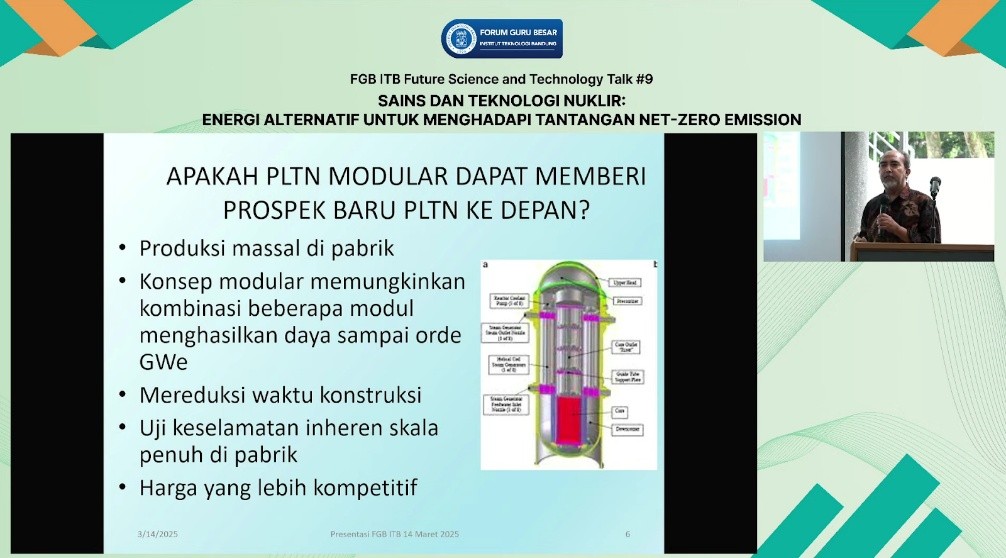
One technology receiving considerable attention is the small modular reactor (SMR). Compared with conventional nuclear power plants, SMRs have smaller generating capacities and are designed using a modular approach.
These characteristics make SMRs particularly relevant for further study in Indonesia, an archipelagic country with varying electricity demands and power grid capacities across its islands.
Another alternative is the floating nuclear power plant, which allows a power generation facility to be installed on a floating structure to serve specific regions. Nevertheless, its implementation requires rigorous assessments of safety, security, maritime conditions, licensing, and emergency preparedness.
Preparing Indonesia for Nuclear Power Development
According to Prof. Zaki, developing nuclear power plants involves more than simply purchasing reactor technology. Indonesia needs to establish institutional frameworks, regulatory bodies, operators, a strong safety culture, supporting infrastructure, emergency preparedness systems, and arrangements for nuclear fuel and radioactive waste management.
Site evaluation is also a critical stage, given Indonesia’s diverse geological characteristics. Technology selection must take various safety considerations into account, including the ability of cooling systems to function under emergency conditions.
Furthermore, nuclear power plant development requires qualified professionals and coordination among institutions to ensure sustainable technological development.
Strengthening Industrial Independence Beyond Technology Acquisition
Investing in nuclear power plants requires substantial financial resources and involves complex supply chains. Prof. Zaki therefore emphasized the importance of incorporating technology transfer and increasing local content from the earliest stages of development.
Key nuclear power plant components must meet exceptionally high safety and quality standards. As a result, many of these components may initially need to be sourced from experienced suppliers.
Nevertheless, domestic industries can begin contributing through civil construction, structural engineering, metal fabrication, the supply of certain mechanical components, and various non-nuclear systems.
“If we merely purchase the technology, the benefits will be limited. However, if nuclear power plant development becomes a means of strengthening our industrial and technological capabilities, its impact could be much greater,” Prof. Zaki said.
In the long term, such involvement could strengthen Indonesia’s engineering and manufacturing capabilities while creating opportunities for domestic industries to participate in global nuclear supply chains.
Multidisciplinary Collaboration for Indonesia’s Energy Future
The development of nuclear power plants requires expertise across multiple disciplines. Site assessments, for example, involve geology, geophysics, volcanology, geotechnical engineering, hydrology, meteorology, and oceanography.
Meanwhile, reactor technology development involves nuclear physics, mechanical engineering, materials science, instrumentation, control systems, and electrical engineering. Construction and operation also require expertise in civil engineering, manufacturing, safety, regulation, environmental science, and socioeconomic studies.
ITB has opportunities to contribute through its expertise across these disciplines. Such development requires a long-term program involving the government, regulators, research institutions, industries, and prospective power plant operators.
Ultimately, the development of nuclear energy in Indonesia is not merely about constructing power plants. It is also about building a national technological ecosystem that prioritizes safety, scientific and technological expertise, and industrial independence.
Source: Direktorat Riset dan Inovasi (DRI) ITB, Buletin Simpul 3P Vol. 39, Edisi September 2026