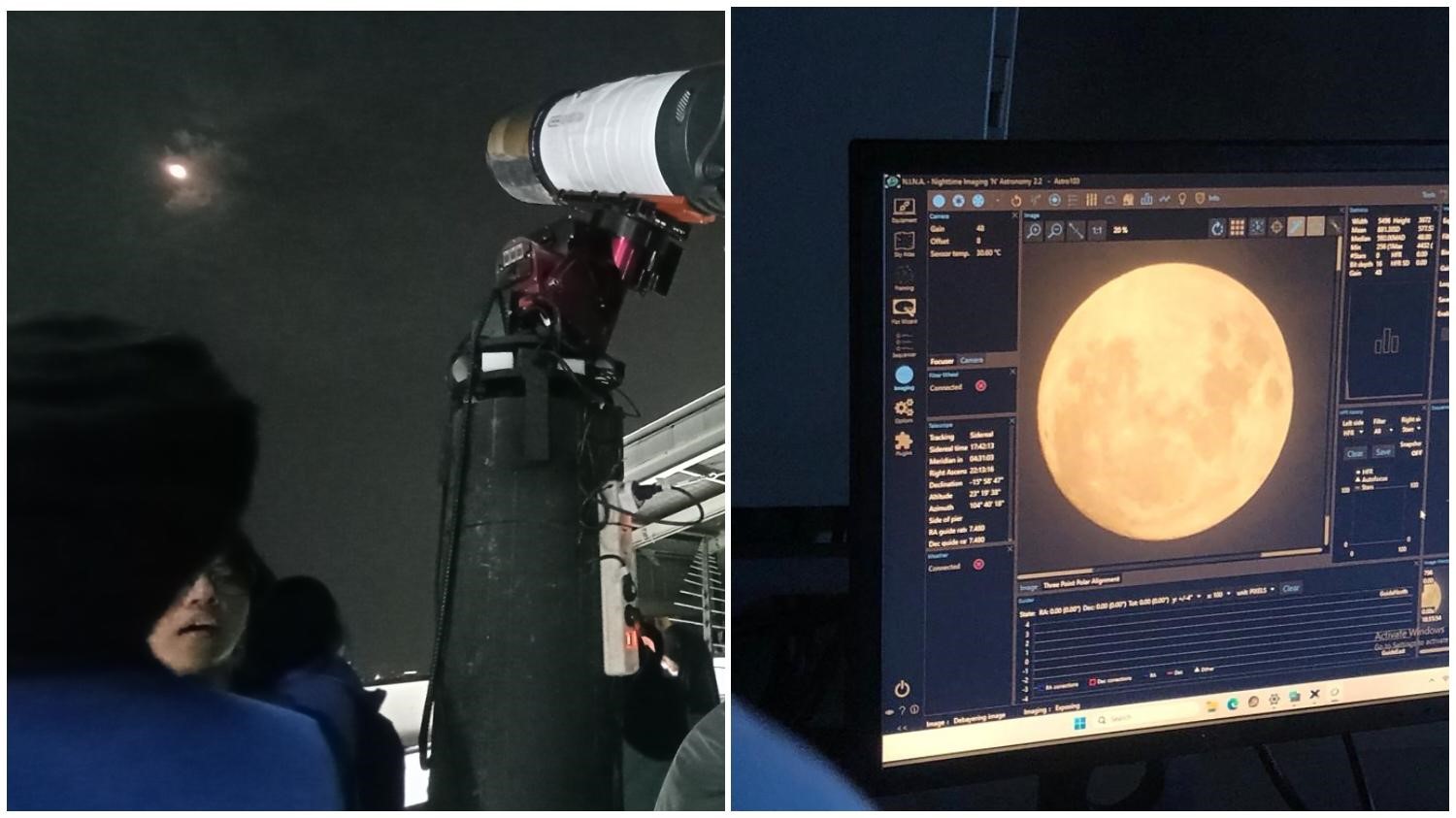
Blue Moon on May 31, 2026: ITB Astronomer Explains the Moon Will Not Actually Turn Blue
By Merryta Kusumawati - Teknik Geodesi dan Geomatika, 2025
Editor M. Naufal Hafizh, S.S.
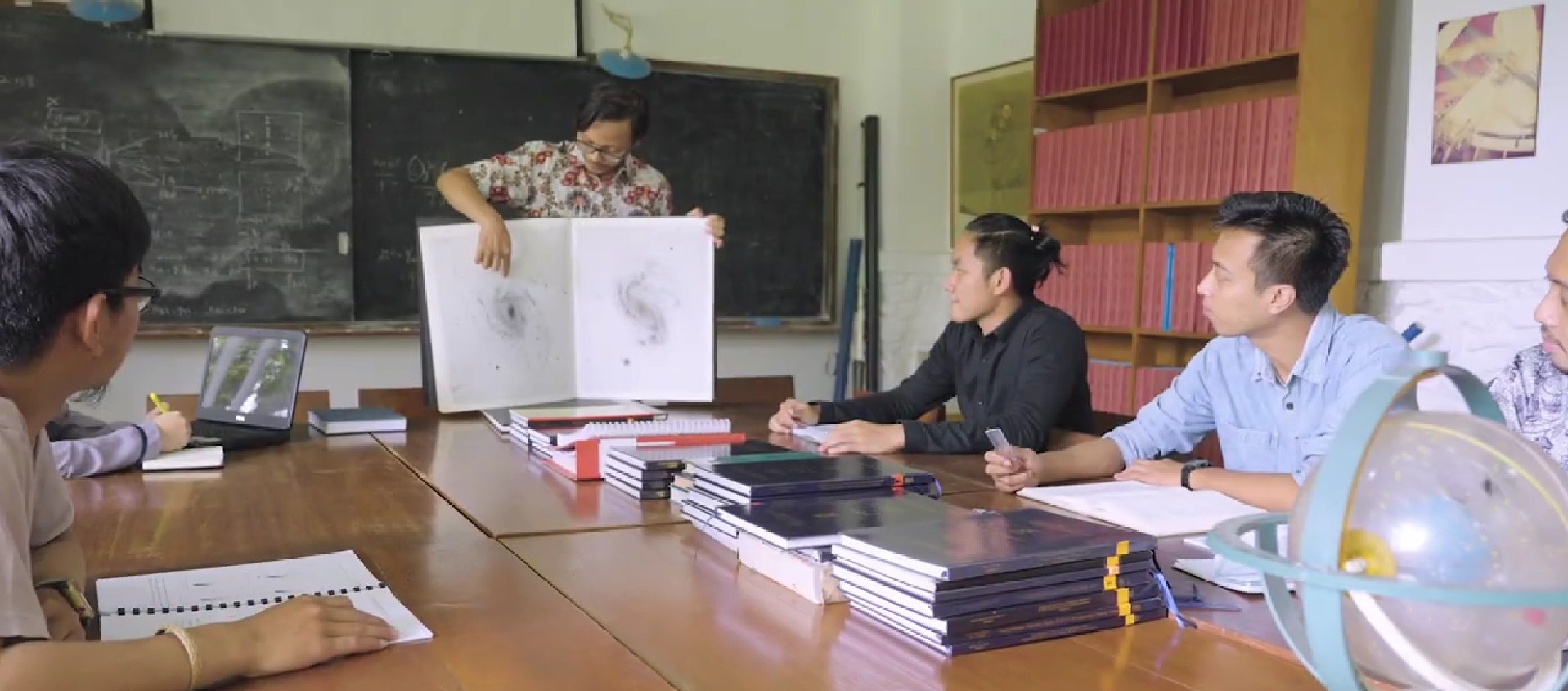
BANDUNG, itb.ac.id - The Blue Moon phenomenon occurring on May 31, 2026, has attracted public attention, as its name is often associated with the Moon appearing blue. In response, Evan Irawan Akbar, S.Si., M.Si., a lecturer from the Astronomy Research Group, Faculty of Mathematics and Natural Sciences, Institut Teknologi Bandung, explained the meaning of Blue Moon, how it occurs, and how the public can observe it.
According to Evan, Blue Moon is not a phenomenon in which the Moon changes color to blue. The term refers to the second full moon occurring within the same Gregorian calendar month. In May 2026, the first full moon occurred on May 2, while the second full moon occurred on May 31, 2026.
Blue Moon, the Second Full Moon in One Calendar Month
Evan explained that Blue Moon is actually a common astronomical event. It occurs because the Moon’s synodic period, or the time interval from one full moon to the next, lasts approximately 29.5 days. Meanwhile, one month in the Gregorian calendar can consist of 30 or 31 days.
“Blue Moon is actually a common event. The term is used to refer to the second full moon occurring within one Gregorian calendar month,” he said.
He further explained that, under normal circumstances, a full moon occurs once a month. However, since the Gregorian calendar month is slightly longer than the lunar cycle, it is possible for two full moons to occur within the same month.
“Because the full moon cycle lasts around 29.5 days, while a Gregorian calendar month can have 30 or 31 days, two full moons may occur, for instance, at the beginning and at the end of the month,” he explained.
Not Related to the Moon’s Color
Although it is called Blue Moon, Evan emphasized that the phenomenon is not related to any change in the Moon’s color. During the May 31, 2026 event, the Moon will appear like an ordinary full moon. It will not be larger, brighter, or blue in color.
“For the May 31 event, it has nothing to do with the Moon turning blue. The Moon will still appear like a regular full moon,” he said.
He explained that the Moon may appear bluish under certain atmospheric conditions, such as when large particles are present in the atmosphere due to volcanic eruptions. One historical record notes that after the eruption of Krakatau in 1883, people in several parts of Europe observed unusual colors in the sky, including sunsets and the Moon appearing bluish. However, this is different from the term Blue Moon, which refers to the second full moon in one Gregorian calendar month.
“The Moon may appear blue due to atmospheric effects, for example because of particles from a volcanic eruption. However, this Blue Moon has no relation to color,” he explained.
A Popular Term from Moon-Naming Traditions
According to Evan, the term Blue Moon has roots in American traditions of naming full moons based on seasons or particular events. For example, the term strawberry moon is associated with the strawberry harvest season, while harvest moon refers to the full moon around harvest time.
The term Blue Moon later became popular due to a misinterpretation by James Hugh Pruett in an article published in the popular astronomy magazine Sky & Telescope. Since then, the term has been widely used.
“Initially, full moon names were often related to seasons. However, the popular term Blue Moon used today originated from a misinterpretation in an article published in Sky & Telescope,” he said.
Evan added that the term is also known through the English idiom once in a blue moon, which refers to something that rarely happens. Nevertheless, in popular astronomy, Blue Moon still refers to the second full moon in one Gregorian calendar month.
Occurs Seven Times in 19 Years
Evan explained that Blue Moon does not occur every year, but it is also not an extremely rare phenomenon. It can occur around seven times within a 19-year period.
“Blue Moon can occur seven times in 19 years. It is not tied to a particular season, so it can happen in any month,” he explained.
After May 31, 2026, the next Blue Moon events are expected to occur on December 31, 2028, and September 30, 2031. These dates can be calculated based on the full moon cycle, which lasts approximately 29.5 days.
According to him, the phenomenon is interesting because it shows how the lunar cycle and the Gregorian calendar system can result in two full moons occurring within the same month.
Can Be Observed with the Naked Eye
For observers in Indonesia, Evan stated that the peak of the full moon on May 31, 2026, occurs at around 3:44 p.m. Western Indonesia Time. However, people can still observe the Moon at night because a full moon remains visible for an extended period.
“If people want to observe the full moon, they can do so at night. A full moon can be seen for quite a long time, from moonrise around sunset until the following morning,” he said.
He emphasized that no special equipment is needed to observe the Blue Moon. The phenomenon can be seen directly with the naked eye, just like any ordinary full moon.
“There are no special tips because it will look like a regular full moon and can be seen with the naked eye,” he explained.
The Role of ITB Astronomy in Observing Celestial Phenomena
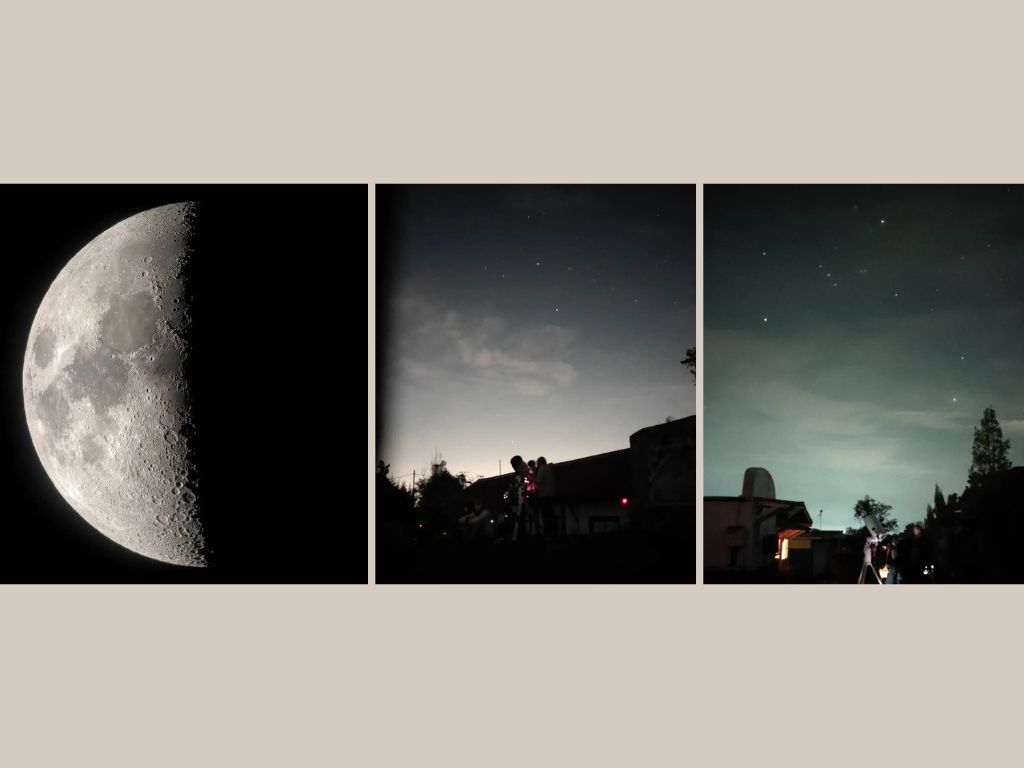
Evan explained that the Astronomy Study Program at ITB has observational facilities, including a telescope laboratory at ITB Ganesha Campus and Bosscha Observatory. These facilities are used for education, practicum activities, and astronomical research, particularly for lunar phenomena with specific scientific aspects such as lunar eclipses, hilal observation, and supermoon events.
However, ITB does not conduct a special observation for the Blue Moon phenomenon because it is merely a term for the second full moon in one Gregorian calendar month.
“At ITB Astronomy, we have a telescope laboratory in the study program and Bosscha Observatory. Lunar observations are usually conducted for phenomena such as lunar eclipses, hilal, or supermoon. For Blue Moon, there is no special observation because it is only a term for the second full moon in one month,” he said.
Nevertheless, Evan noted that public interest in the Blue Moon can still serve as an educational momentum to introduce astronomy in a simple and accessible way, especially in explaining the relationship between the lunar cycle and the calendar system.
Reporter: Merryta Kusumawati (Geodesy and Geomatics Engineering, 2025)
.jpeg)
.jpg)


.jpeg)