ITB Student Team Develops Green Tea and Postbiotic Hydrogel for Diabetic Foot Ulcers
By Vito Egi Nandriansyah - Mahasiswa Teknik Geofisika, 2021
Editor Anggun Nindita
.png)
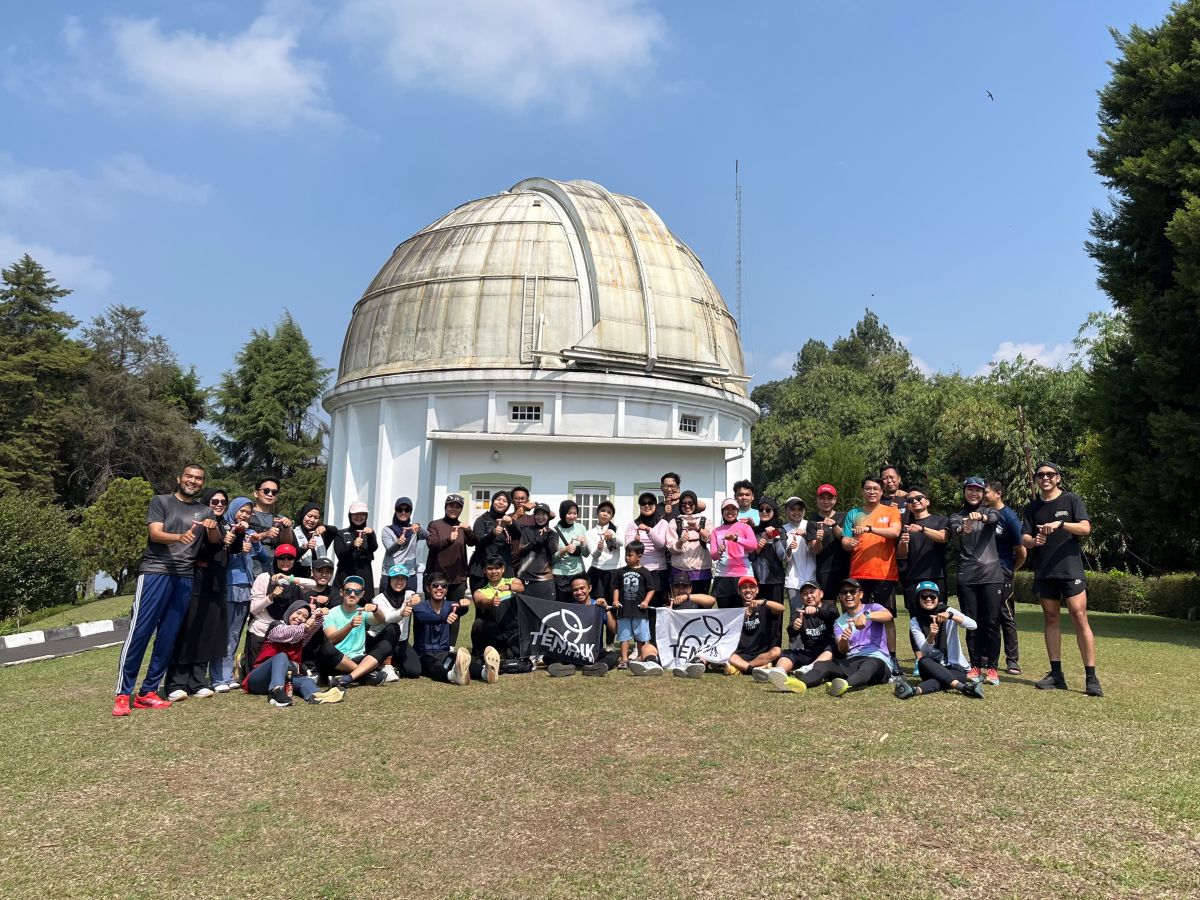
Caption: Five ITB students who received PKM-RE 2026 funding are developing a hydrogel based on green tea extract and postbiotics as a potential wound dressing to help manage infections in diabetic foot ulcers. (ITB/PKM-RE Team)
BANDUNG, itb.ac.id — Five students from Institut Teknologi Bandung (ITB) are developing a hydrogel based on green tea extract and postbiotics as a potential wound dressing to help manage infections in diabetic foot ulcers (DFU).
The innovation is being developed by Hafif Rois Abdillah (STF’23), Theodore Marvel Suranton (BI’23), M. Kevin Rizsya Zulkarnain (BM’23), Gustav Ian Setiabudi (STF’23), and Abiyyu Ilham Dyas (STF’23). The research, involving students from ITB’s School of Pharmacy and School of Life Sciences and Technology, received funding through the 2026 Student Creativity Program for Exact Sciences Research (Program Kreativitas Mahasiswa–Riset Eksakta/PKM-RE) of the Ministry of Higher Education, Science, and Technology.
The research addresses the challenges associated with diabetic foot ulcers. Bacterial infections in these wounds can be difficult to treat because bacteria are capable of forming biofilms and using efflux pumps, mechanisms that can increase their resistance to antimicrobial exposure. The team focuses on two bacterial species, namely Staphylococcus aureus and Pseudomonas aeruginosa.
“Our goal is not only to inhibit bacterial growth, but also to interfere with the virulence mechanisms that make these bacteria more difficult to control,” Hafif said.
To address this challenge, the team developed a hydrogel composed of hyaluronic acid (HA) and polyvinyl alcohol (PVA) as a local delivery system for green tea (Camellia sinensis) extract and postbiotics derived from lactic acid bacteria. HA helps improve the hydrogel’s ability to absorb wound exudate, while PVA helps maintain its strength and structural integrity.
Selecting Green Tea Extract and Postbiotics
During the research process, the team compared green tea extracts from Pangalengan and Ciwidey, as well as postbiotics derived from Lactobacillus acidophilus and Pediococcus acidilactici.
The test results showed that the Ciwidey green tea extract contained higher levels of phenolic compounds than the Pangalengan extract. Meanwhile, P. acidilactici demonstrated stronger antimicrobial activity than L. acidophilus.
“The active ingredients were selected based on a series of tests, ensuring that only the candidates showing the greatest potential proceeded to the formulation stage,” Theodore said.
Further testing showed that P. acidilactici postbiotics demonstrated promising antibiofilm activity. Green tea extract also showed potential in inhibiting efflux pumps and enhancing the activity of several antibiotics, including ciprofloxacin and tetracycline.
Based on these findings, the team then incorporated green tea extract and postbiotics into the hydrogel formulation for further development.
.png)
The ITB student team receiving PKM-RE 2026 funding conducts experimental procedures and material preparation in the laboratory. (ITB/PKM-RE Team)
Testing Effectiveness and Safety
In addition to evaluating antibacterial activity, the team assessed the biocompatibility of the materials. The results showed that the combination of green tea extract and postbiotics was able to maintain HaCaT keratinocyte cell viability above 70 percent across the tested concentration range.
However, hemolysis testing showed a high level of hemolysis. This finding led the team to consider directing the system toward topical application on the body surface rather than systemic use.
“This finding gives us clear boundaries for the next stage of development. We need to ensure that both the delivery system and its application are appropriate for the characteristics of the materials we are working with,” Kevin said.
The team also screened several hydrogel formulations to identify suitable physical characteristics. Through the optimization process, a formulation with a PVA-to-HA ratio of 70:30 was selected for further development.
“Promising active ingredients need to be supported by a hydrogel system with suitable physical characteristics. That is why formulation optimization is an important part of this research,” Gustav said.
The next phase of the research will focus on the physical and mechanical characterization of the hydrogel, including its ability to absorb and retain fluids, its strength and adhesion, as well as its ability to deliver active ingredients and inhibit bacteria and biofilm formation.
The team hopes the research can serve as a foundation for the more targeted development of wound dressings based on natural materials and postbiotics, while also opening opportunities for further research, scientific publications, and intellectual property development.
“We hope that the findings from this study can serve as a foundation for further research and, in the future, be developed into a more practical solution for wound management,” Abiyyu said.
.jpg)
.png)
.jpg)
.jpg)