Three ITB Students Develop a Method for Using Nickel Tailings to Produce Cost-Effective LFP Battery Cathodes
By Jekky - Teknik Pertambangan, 2023
Editor M. Naufal Hafizh, S.S.
.jpg)
BANDUNG, itb.ac.id - Three Mining Engineering students from the Bandung Institute of Technology (ITB), class of 2024, won first place in the ISMC XV Paper Competition through their innovative use of nickel industrial waste to create value-added materials for electric vehicle batteries. This event is a practical mining competition organized by the Bandung Institute of Technology Mining Student Association (HMT-ITB) for the 15th time at ITB since its inception in 1998.
The team, consisting of Kornelius Candra Hutabarat, Adyatma Putra Fausta Hariyadi Said, and Nikolo Albertgati Barasa, presented a project titled “Low-Cost Production of LFP Battery Cathodes from HPAL Nickel Tailings: A Techno-Economic Feasibility Study and Circular Business Model at IMIP Morowali.”
In their work, the team addressed the issue of the high volume of tailings from the High-Pressure Acid Leaching (HPAL) process, a method commonly used to process low-grade nickel in Indonesia. They highlighted that the production of 1 ton of nickel can generate up to 100 tons of tailings, which have not been optimally utilized to date.
Based on this situation, the team conducted a literature review and found that HPAL nickel tailings still contain significant amounts of iron (Fe). This content then became the basis for developing the idea of processing it into raw material for Lithium Iron Phosphate (LFP) battery cathodes.
“We see a huge opportunity in waste that has not been utilized until now. The iron content in these tailings can be processed into key components for LFP batteries, the use of which continues to grow,” Kornelius Candra Hutabarat said.
The selection of this topic is also closely tied to the global context, particularly the energy transition and net-zero emission targets. The growing demand for electric vehicles is driving a significant increase in battery demand. Although Nickel-Manganese-Cobalt (NMC)-based batteries remain dominant, the trend is shifting toward LFP, which is considered more stable, safer, and more economical.
During the development process, the team focused not only on technical aspects but also conducted a comprehensive assessment of economic feasibility and business models. They leveraged the context of the integrated industrial zone at IMIP Morowali, which enables supply chain efficiency due to the availability of raw materials such as lithium and iron within a single region.
.jpg)
By utilizing iron directly from tailings, the need for external raw materials can be reduced. Additionally, the integration of industrial zones allows for significant reductions in logistics costs, thereby increasing profit margin potential.
The team is also developing a circular business model inspired by the Domestic Market Obligation (DMO) scheme for coal. Under this scheme, LFP cathode products are prioritized to meet domestic demand to support the Local Content Requirement (TKDN), while the surplus can be allocated for export.
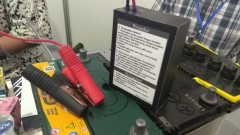
From an environmental perspective, this innovation offers a more sustainable approach through the utilization of waste as raw material. The team is also exploring the use of Enhanced Volatilization and Recovery (EVR) technology to recycle phosphoric acid during the production process, thereby reducing liquid waste. Additionally, the process is designed to operate at lower temperatures compared to conventional methods to improve energy efficiency.
However, the team acknowledges that this innovation is still in its early stages. The technology currently in use is still at the laboratory scale and requires further development to be implemented on an industrial scale.
.jpg)
“The challenge ahead is how to scale up this technology. Additionally, external factors such as fluctuations in lithium prices must also be taken into account,” Nikolo Albertgati Barasae xplained.
The team also conducted an economic simulation based on an assumed production capacity of approximately 60,000 tons per year. According to preliminary calculations, the project has the potential to achieve a payback period of around 3.2 years. However, these results are still based on secondary data and therefore require validation using actual industry data.
The team’s success stems from a comprehensive approach that integrates technical, economic, and policy aspects. They believe that the key strength in this competition lies in the ability to present solutions that are not only innovative but also relevant and practical.
“We tried to move away from an overly theoretical approach. A good idea is one that can be understood in context and has the potential to be applied in the real world,” Nikolo Albertgati Barasa said.
Through this work, they not only offer a solution for mining waste management but also open opportunities to strengthen the national battery supply chain based on local resources, as part of efforts toward a more sustainable industry.
.jpg)
.jpg)
.jpeg)

.jpg)