Turning EV Battery Waste into Portable Power, ITB Students Win First Place at GREENOVATE 2026
By Rasya Ihza Ramadhan - Mahasiswa Teknik Fisika, 2023
Editor M. Naufal Hafizh, S.S.
.jpg)
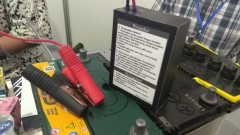
JAKARTA, itb.ac.id - Three students from Institut Teknologi Bandung (ITB) have developed a portable power station powered by second-life EV batteries. The innovation, named SparkGo, earned them first place in the Sustainable Business Innovation Competition category at GREENOVATE 2026, an event organized by TBS Foundation.
The three students form team "The Triple A," made up of Bryan Maulana A. from the Geodesy and Geomatics Engineering study program, class of 2024; Tazkia Zahra Aulia from the Management study program, class of 2024; and Muhammad Farrel A. from the Geological Engineering study program, class of 2025.
GREENOVATE is a business plan competition that challenges participants to turn innovative ideas into applicable, sustainable business models. The competition runs through two selection stages: a pre-eliminary round at the ITB level to choose one team to represent the campus, followed by the national final. The four-day final program included a welcoming dinner, a visit to one of TBS’s subsidiaries, a pitching session where teams presented their solutions and fielded questions from the judges, and finally the award ceremony.
“The atmosphere on pitching day was nerve-wracking. Nothing was scheduled all morning, and we weren’t moved out until around noon. Seeing how polished the other teams’ preparations were made it feel even more intense,” said Bryan.
Connecting Two Problems Into One Solution
SparkGo’s concept grew out of two increasingly pressing problems as electric vehicle adoption rises in Indonesia. On one hand, more electric vehicles on the road means more batteries reaching the end of their usable life. On the other, demand for portable electricity across various sectors is still met largely by diesel generators, which are costly to run, emit pollution, and are noisy.
The team saw that batteries no longer fit for use in vehicles haven’t entirely lost their value. Batteries with a State of Health of around 70–80% can still be repurposed. Building on that insight, SparkGo was designed to give electric vehicle batteries a second life while also serving as an alternative source of portable energy.
“SparkGo’s advantage isn’t just the product itself, but the completeness of the solution we offer. We brought together environmental, technological, and business considerations into one integrated approach, and we’ve validated it with industry practitioners and academics,” said Tazkia.
Choosing this topic was also driven by two trends the team observed: the growth of electric vehicles and rising demand for portable energy. They saw these trends as an opportunity to build a business that combines circular-economy principles with a commercially viable model. The team also pointed to the potential of Indonesia’s generator market, which by their research could reach a value of US$1.138 billion by 2030.
.jpg)
Combining Technology and a Business Model
SparkGo is not just a product it’s designed as a system that brings together technology, environmental impact, and a business model. On the technical side, the solution uses second-life EV batteries fitted with a Smart Battery Management System (BMS) that ensures safety through thermal protection, cell balancing, and auto cut-off.
Each unit is also integrated with Internet of Things (IoT) technology, allowing battery condition, power consumption, and unit location to be monitored in real time. On the business side, the team applies an Energy-as-a-Service model through a rental system, making the service more accessible and affordable for users.
The problem the team is tackling also carries a direct impact on society and industry. The growth of electric vehicles is expected to increase the volume of EV battery waste, while demand for portable electricity keeps growing across construction, mining, event, and small-business (UMKM) sectors that still depend on diesel generators.
.jpg)
Research, Validation, and Repeated Revisions
Developing SparkGo went well beyond drafting a concept. The team carried out independent research on both the technical and business sides, then validated their findings through interviews with lecturers, technical simulations, and financial projections. The process was further strengthened through mentoring sessions with mentors from TBS Foundation before everything was compiled into a pitch deck.
One of the team’s biggest challenges was the product’s technical complexity. None of the members came from an electrical engineering background, while SparkGo involves fairly intricate electrical components, particularly around EV batteries and portable power stations.
To close that gap, the team expanded their self-study and drew on academic papers covering similar topics. That process proved essential to ensuring their idea was not just commercially appealing, but technically sound and defensible.
A major revision followed the pre-eliminary round. During their first mentoring session, the team received extensive feedback, particularly on the technical and financial-projection fronts. One issue they had to correct was a projected return on investment (ROI) that had exceeded 900 percent.
Their mentor considered the projection overly optimistic, since the rental price used was still benchmarked against conventional generators. The team realized that if SparkGo was meant to substitute for generators, its price needed to be more attractive to customers than the alternative. The financial projections were eventually reworked to stay ambitious while being more realistic about industry conditions.
.jpg)
From Competition Idea to Further Development
For the team, winning GREENOVATE 2026 doesn’t mark the end of SparkGo’s journey.
“We hope SparkGo won’t just remain an idea from this competition, but can grow into a real solution supporting Indonesia’s energy transition. For communities and business owners, SparkGo offers access to portable energy that’s more affordable, cleaner, and practical. For industry and the environment, we want to help extend the life cycle of EV batteries, cutting waste while supporting the circular economy in Indonesia.”
Going forward, the team plans to develop SparkGo further through a pilot project with industry partners, strengthen the product’s technical and safety aspects, and expand partnerships with electric vehicle battery suppliers. These steps are meant to move SparkGo from the competition stage toward commercial implementation.
Daring to Try and Keep Learning
Throughout the competition, the most memorable experience for the team was preparing for pitching night. Repeated rehearsals helped build their confidence before presenting in front of the judges.
For the team, the competition was also a space to build networks. They met participants from different regions and backgrounds, exchanged perspectives, and supported one another throughout the event.
From the experience, they concluded that the courage to move forward needs to be matched with hard work, teamwork, and prayer. Strong camaraderie among team members mattered too, since good communication helped them get through the pressure of preparing for the competition. Support from their liaison officer (LO), Hayfa Felicia, was also credited with helping them stay mentally and technically ready before pitching.
“Just do it. Sometimes we’re afraid to enter a competition, whether it’s fear of making mistakes or losing but it’s exactly that kind of failure that pushes us to become so much better.”
Reporter: Rasya Ihza Ramadhan (Engineering Physics, 2023)
.png)
.jpg)
.jpg)
.jpg)
.jpg)