ITB Rector Promotes Education Transformation and Human Capital Development at the 3rd Regional Leadership Development Program

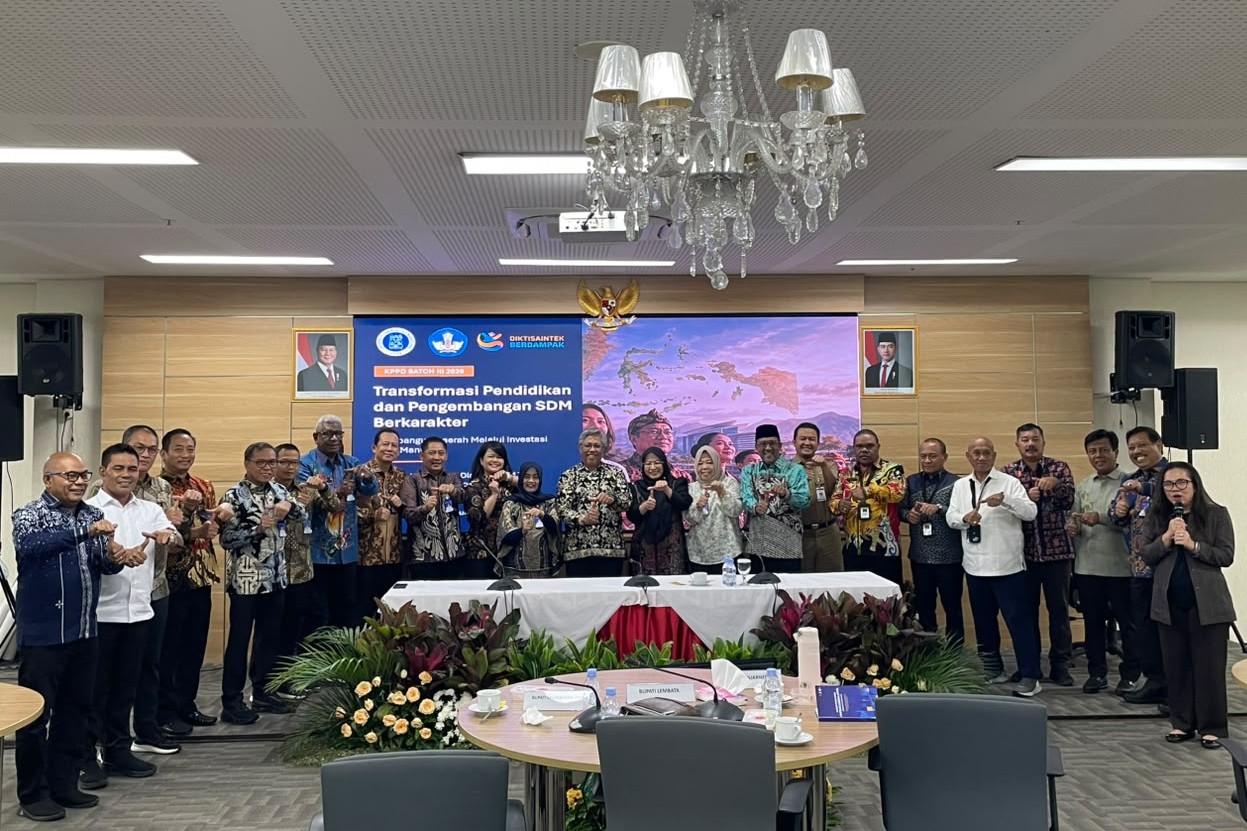
The Rector of Institut Teknologi Bandung (ITB), Tatacipta Dirgantara, served as a keynote speaker at the 3rd Regional Leadership Development Program (Kursus Pemantapan Pimpinan Daerah/KPPD) organized by the Purnomo Yusgiantoro Center (PYC) on Tuesday (July 21, 2026). Held at the Human Resources Development Agency of Indonesia's Ministry of Home Affairs in Jakarta, the program brought together dozens of regents and mayors from across Indonesia.
The third edition of KPPD was designed to strengthen the leadership capacity, national perspective, and integrity of regional leaders in support of more effective, innovative, and accountable governance and public service delivery.
In his presentation, the ITB Rector emphasized that education and human capital development must be regarded as the foremost investment in regional development. Amid the rapid advancement of artificial intelligence, automation, disparities in educational quality across regions, and the mismatch between graduates' competencies and labor market needs, he stressed that schools can no longer focus solely on academic achievement. Instead, educational transformation should reinforce literacy, numeracy, STEM competencies, and character development through five key enablers: improving teacher quality, strengthening school leadership, implementing relevant and contextual curricula, fostering technology- and project-based learning ecosystems, and building partnerships among local governments, universities, industry, parents, alumni, and the wider community.
The Rector also reaffirmed ITB's commitment to supporting regional governments through curriculum development, training programs for teachers and school principals, school mentoring and quality assurance, talent development initiatives, applied research, and scholarship programs for outstanding local students. He emphasized that these initiatives should begin with measurable pilot projects supported by strong leadership from regional governments, cross-sector collaboration, data-driven targets, and scalable implementation across schools. Furthermore, scholarship programs should be aligned with each region's strategic development priorities so that recipients not only gain access to high-quality education but also return to contribute their knowledge, expertise, and innovative solutions to the sustainable development of their home regions.


