Bamboo Expo 2026: Merging Science, Tech, and Art of ITB to Drive Green Innovation
By Atika Widya Nurfaizah - Biomanajemen. 2025
Editor M. Naufal Hafizh, S.S.
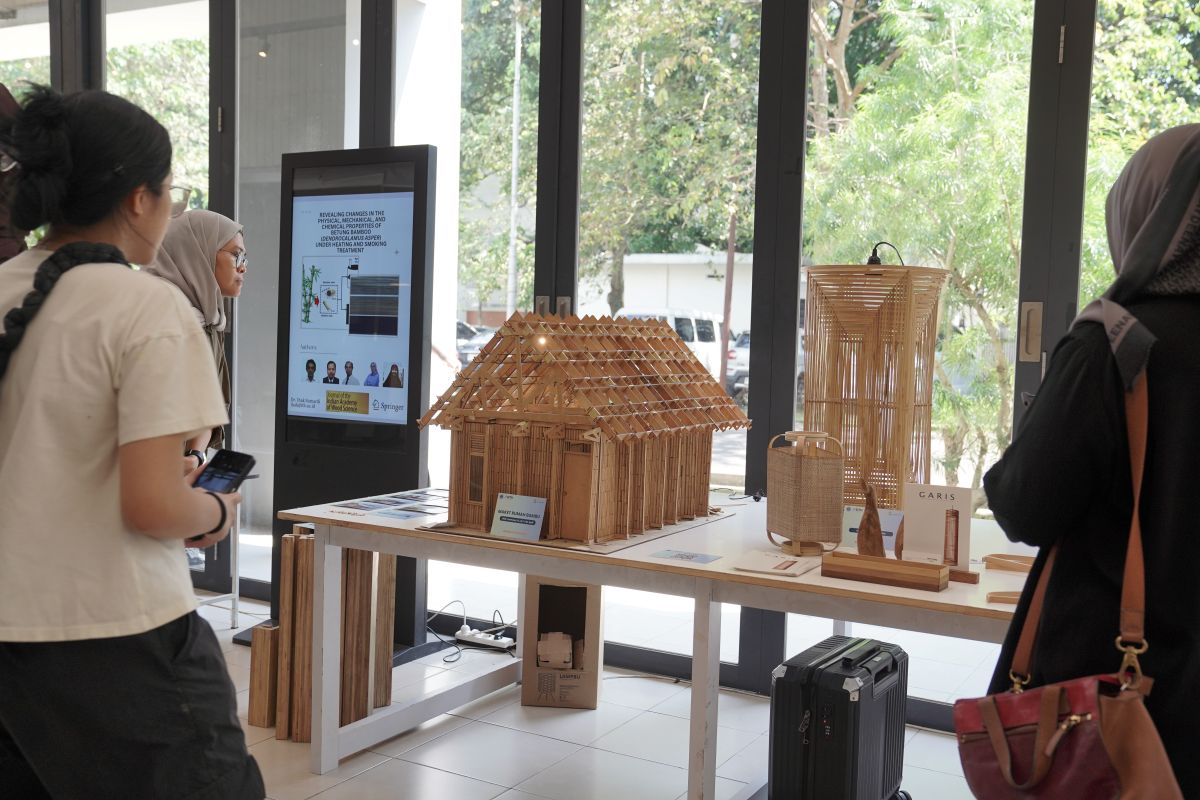
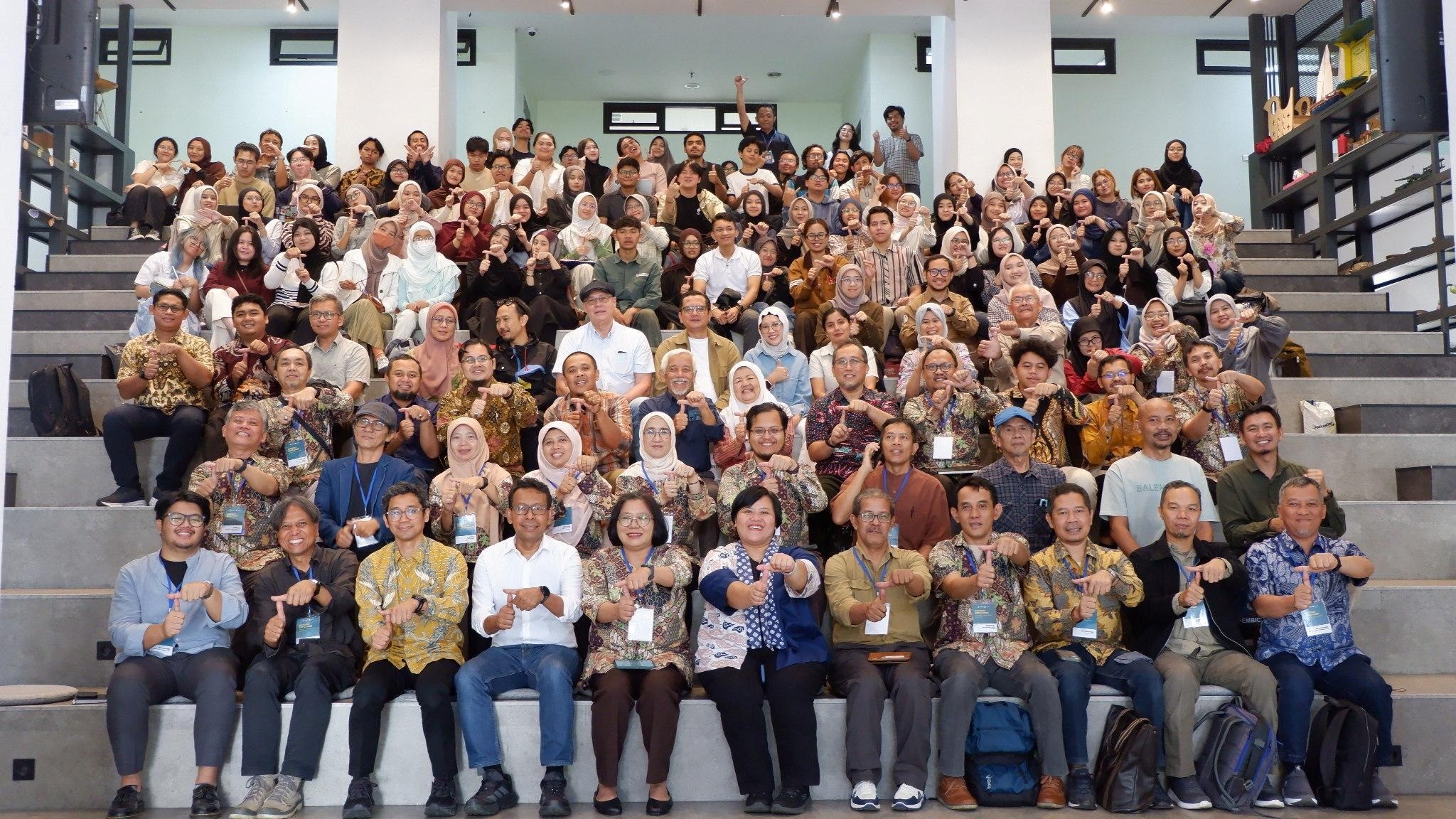
BANDUNG, itb.ac.id – The Forestry Technology Research Group of the School of Life Sciences and Technology (SLST) at Institut Teknologi Bandung (ITB) hosted the Bamboo Expo 2026 on Monday, May 18, 2026, at the CADL Design Center, ITB Ganesa Campus. Centered around the theme "The Role of Science, Technology, and Art in Adding Value to Indonesian Bamboo," this integrative event combined an innovative product exhibition with educational talk shows aimed at accelerating the downstream processing of local biomaterials.
The event was initiated by the SLST ITB Forestry Technology Research Group to serve as a tangible downstream platform for a comprehensive, end-to-end bamboo research roadmap. This academic agenda received collaborative backing from multiple disciplines within ITB, most notably researchers from the School of Architecture, Planning, and Policy Development (SAPPD) focusing on structural engineering, and the Faculty of Arts and Design (FAD) specializing in product design and aesthetics.
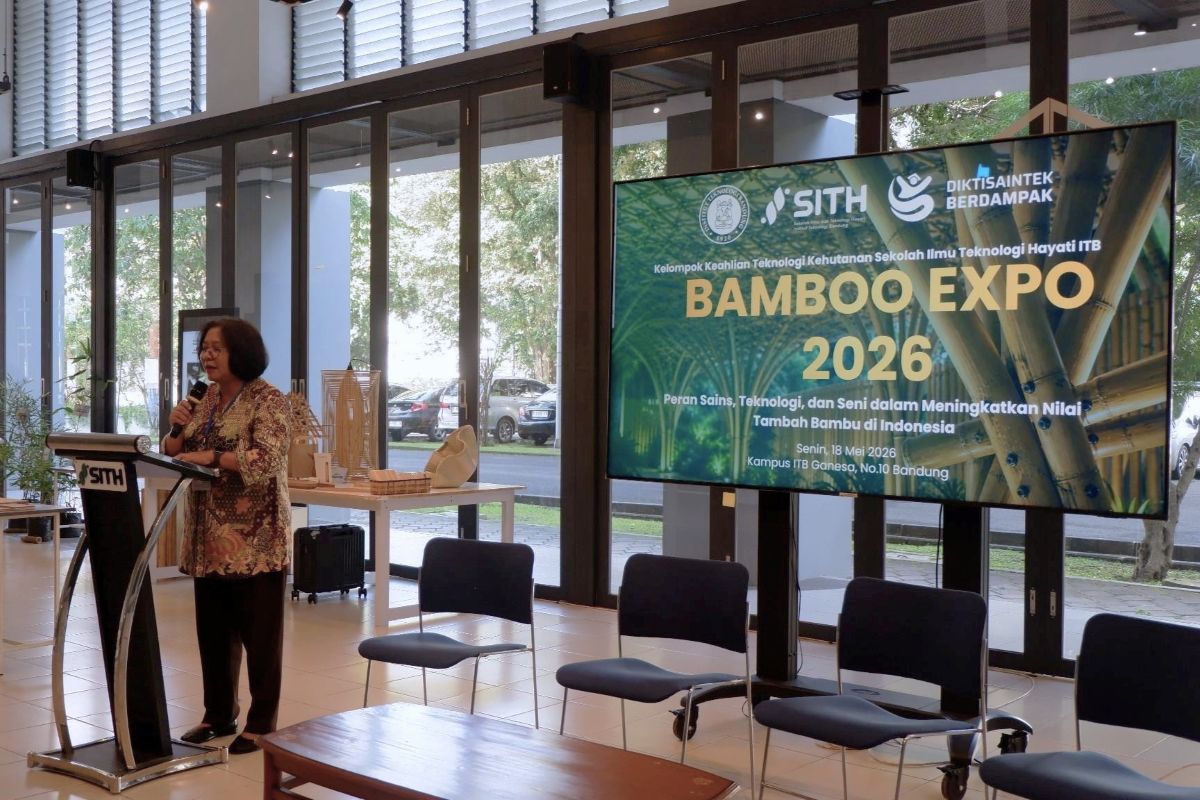
In her opening remarks, Prof. Endah Sulistyawati, B.Sc., Ph.D., Head of the Forestry Technology Research Group, emphasized the urgent need for a paradigm shift regarding this strategic commodity.
"Bamboo is no longer merely a traditional biological resource; rather, it is a material of the future that is highly adaptive to climate change and capable of driving a community-based green economy," she asserted.
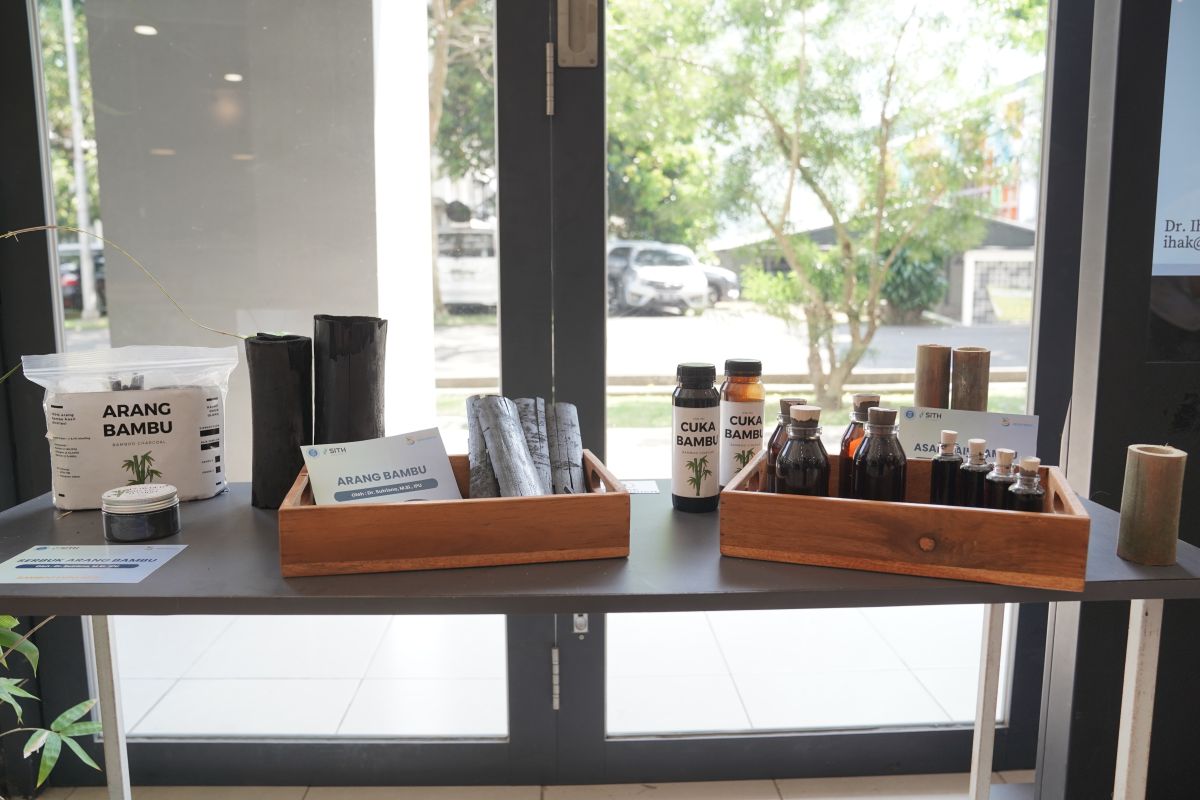
Beyond displaying a diverse array of innovative products, the Expo served as an integrative platform for intellectual exchange, kicking off with its first session focused on Science and Bioenergy. Led by SLST ITB, this session presented cutting-edge research on the fundamental material characterization of bamboo. The exhibition highlighted advanced laminated bamboo technology alongside essential downstream bioenergy products, such as high-quality bamboo charcoal, liquid smoke, and charcoal briquettes, showcasing the raw material's immense ecological and energy potential.
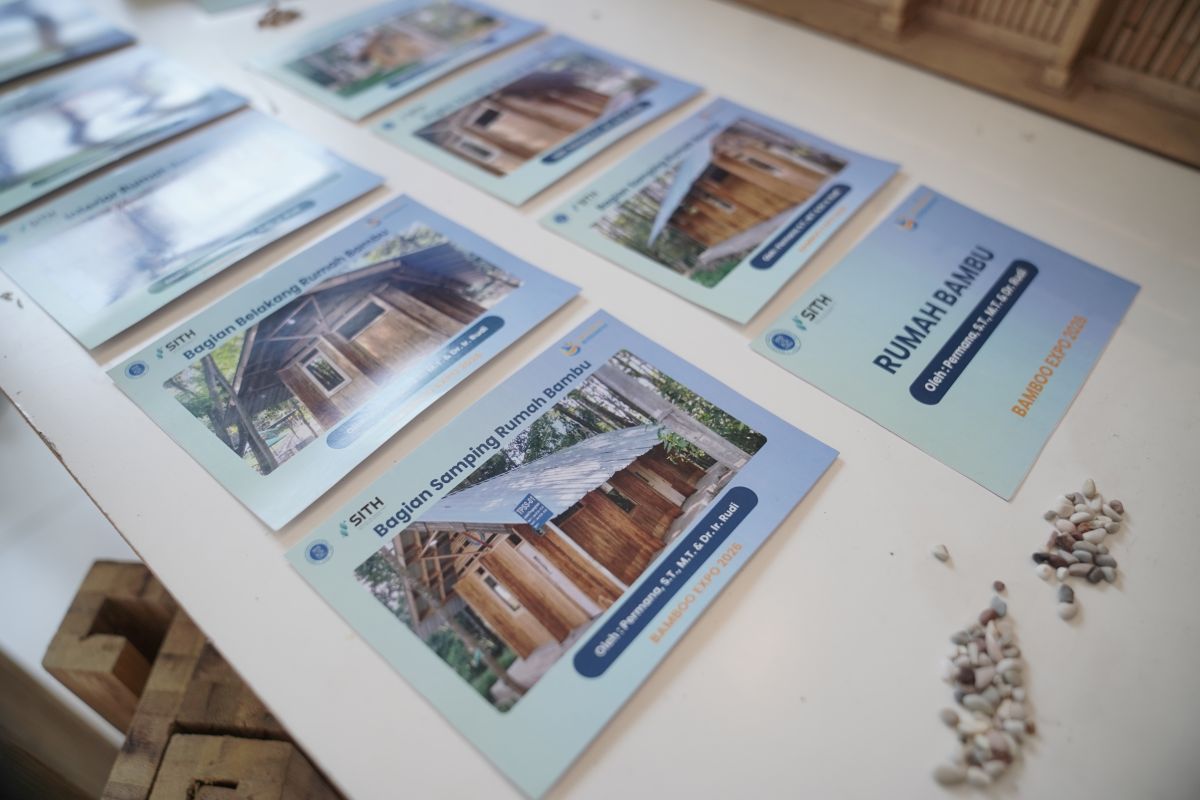
The academic exchange continued in the second session, where SAPPD ITB shifted the focus toward modern Construction and Building Technology. Researchers showcased future structural engineering applications, featuring innovative prototypes of earthquake-resistant building columns and highly efficient modular bamboo housing models. These safe, adaptive advancements in sustainable construction technology were comprehensively discussed with experts from the SAPPD Building Technology Research Group, emphasizing bamboo's viability in modern architecture.
The final session concluded the academic proceedings by exploring the intersection of Design, Art, and Aesthetics, spearheaded by FAD ITB. This session highlighted functional aesthetics through a range of ready-to-use domestic items, from stylized study lamps and decorative lampshades to everyday household utensils like water ladles (ciduk). The event wrapped up with an insightful discussion on current bamboo design trends in Indonesia, led by academics from the Human and Industrial Product Design Research Group of FAD ITB.
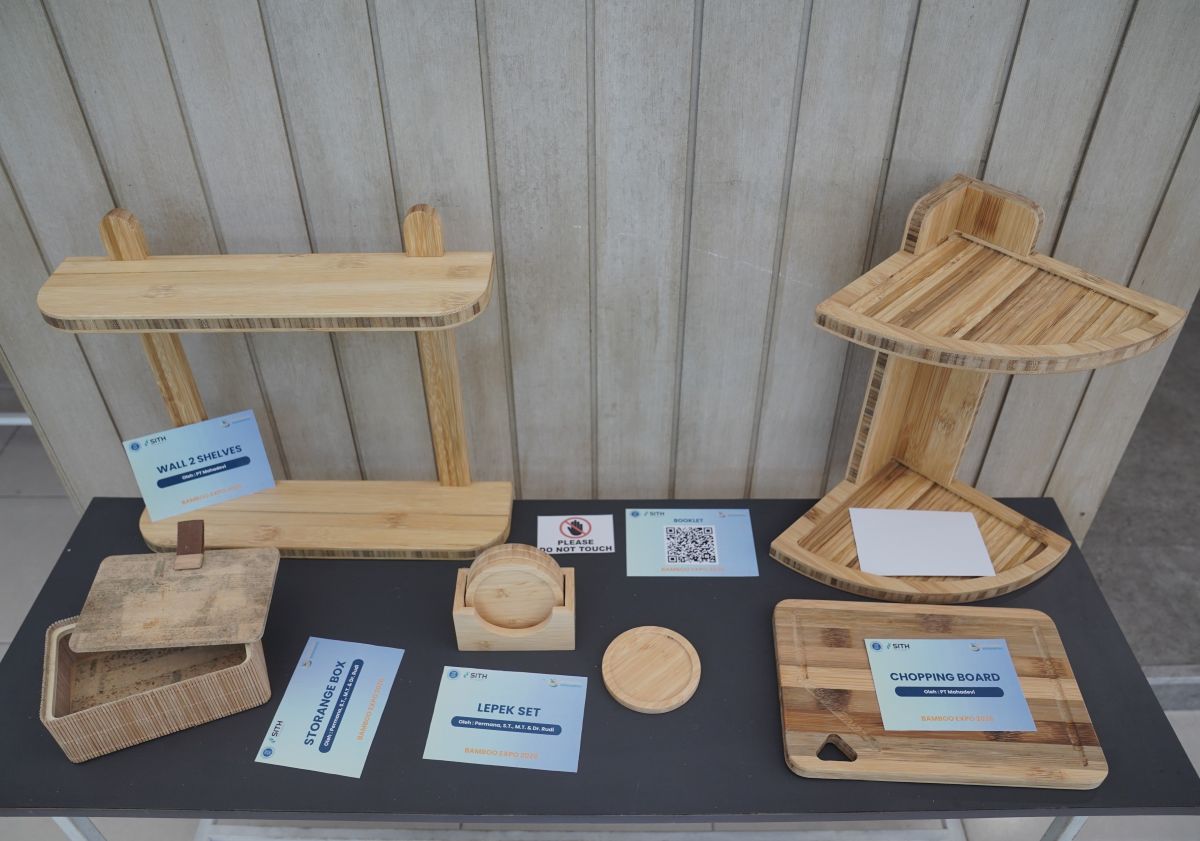
All exhibited products have a strong scientific foundation, compiled into the Bamboo Expo 2026 Booklet from reputable scientific journals authored by SITH and SAPPK ITB faculty members, ensuring that each innovation has undergone rigorous methodological validation.
In addition to academic representation, the exhibition was bolstered by active contributions from three national industrial entities that demonstrated the commercial viability of these innovations. CV Shaniqua Bamboo showcased the structural and artistic potential of the material through its architectural seating, while PT Mahadevi Bamboo Mfg presented durable and high-quality laminated household furniture. Complementing these exhibits, PT Akusara Parahita Martani displayed modern interior decor, collectively proving how university research can seamlessly integrate with industry to create high-value, sustainable products.
The event garnered highly positive feedback from industry practitioners, who viewed the forum as an effective bridge for aligning market demands with higher education research. Industry representatives expressed hope that ITB would continue to initiate similar collaborative agendas periodically to establish unified standardization for bamboo as a material of the future.
The Chairman of the Bamboo Expo 2026 Committee, Eka Mulya Alamsyah, B.F., M.S.A., Ph.D., noted that this enthusiasm validates the direction of academic research within the university.
"The positive response from the industrial sector proves that this synergy successfully accelerates technology transfer and unifies perspectives regarding the standardization of bamboo as a reliable bio-material of the future," he remarked.
On a macro level, the event contributes directly to the Sustainable Development Goals (SDGs). Bamboo is positioned as a promising, renewable, and eco-friendly biomaterial capable of effectively mitigating global warming. Its rapid growth rate makes it an ideal substitute for conventional timber from natural forests, while significantly reducing carbon emissions compared to concrete production.
In conclusion, this multidisciplinary exhibition stands as clear evidence that local commodities like bamboo can be transformed into high-value modern materials when managed within an integrated ecosystem. Through the Bamboo Expo 2026, SLST ITB, alongside its academic and industrial partners, has laid a vital foundation for strengthening Indonesia’s green industry independence while reaffirming the pivotal role of biotechnology in addressing global sustainability challenges.
.jpg)

.jpeg)
.jpg)
.png)
.jpg)