British Ambassador Visits Bosscha Observatory, Exploring ITB’s Astronomical Heritage and Technological Advancements
By M. Naufal Hafizh, S.S.
Editor M. Naufal Hafizh, S.S.
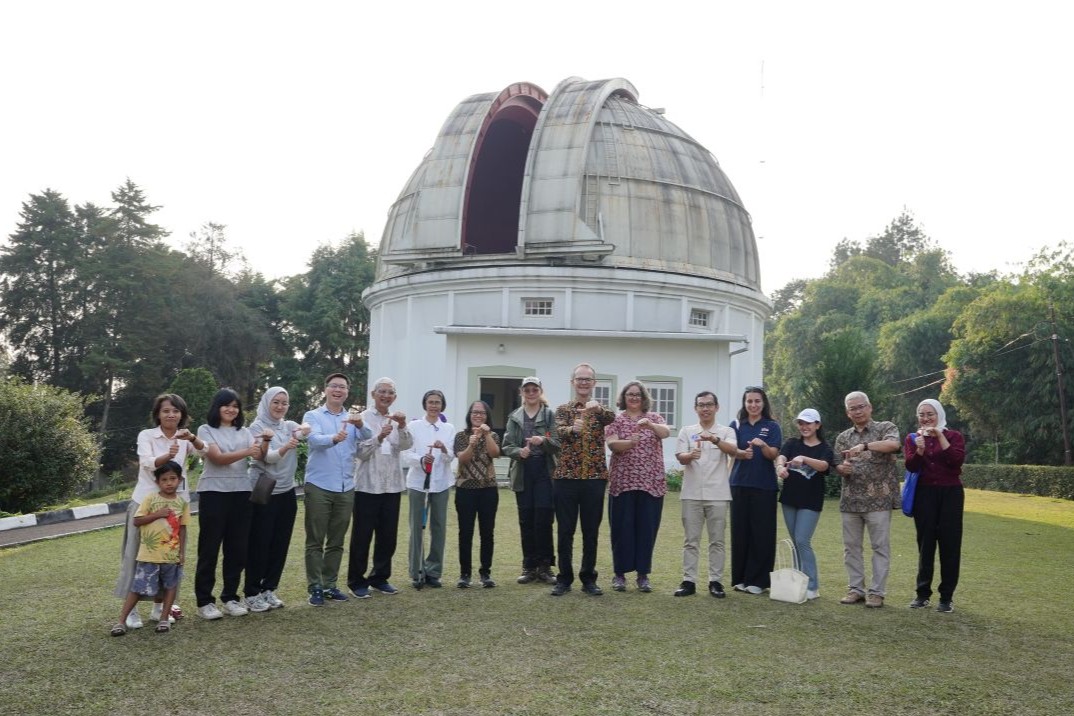
LEMBANG, itb.ac.id — The British Ambassador to Indonesia and Timor-Leste, H.E. Dominic Jermey CVO OBE, visited Bosscha Observatory at Institut Teknologi Bandung (ITB) in Lembang, West Bandung Regency, on Saturday (29 August 2026). During the visit, the delegation explored the observatory’s long history, modern astronomical facilities developed through international collaboration, and ongoing efforts to preserve historical astronomical instruments and data.
Dominic Jermey was accompanied by delegates from the British Embassy Jakarta and British Council Indonesia, including Summer Xia, Country Director of British Council Indonesia. The delegation was welcomed by the Dean of ITB’s Faculty of Mathematics and Natural Sciences (FMIPA), Aep Patah, Ph.D., Head of Bosscha Observatory, Dr. rer. nat. Hesti Retno Tri Wulandari, S.Si., M.Si., and several ITB astronomers, including Prof. Dhani Herdiwijaya, Prof. Taufiq Hidajat, and Prof. Dra. Premana Wardayanti Premadi, Ph.D.
The visit to Bosscha Observatory was part of Dominic Jermey’s series of engagements in the Bandung area. One of the related events was an exhibition titled “Setanah, Tak Diam: Merawat dan Membentuk Masa Depan di Tanah Bergerak” (Shared Ground, Never Still: Caring for and Shaping the Future on Moving Land) at Selasar Sunaryo Art Space, which involved researchers from ITB, the National Research and Innovation Agency (BRIN), the British Geological Survey (BGS), and several national and international partners.
Bosscha Observatory was selected as one of the destinations not only because of its affiliation with ITB and its historical significance to the Bandung area, but also because of its geographical relevance to environmental dynamics and fault activity in the Lembang region.
Exploring Modern Astronomical Technology at VGOS
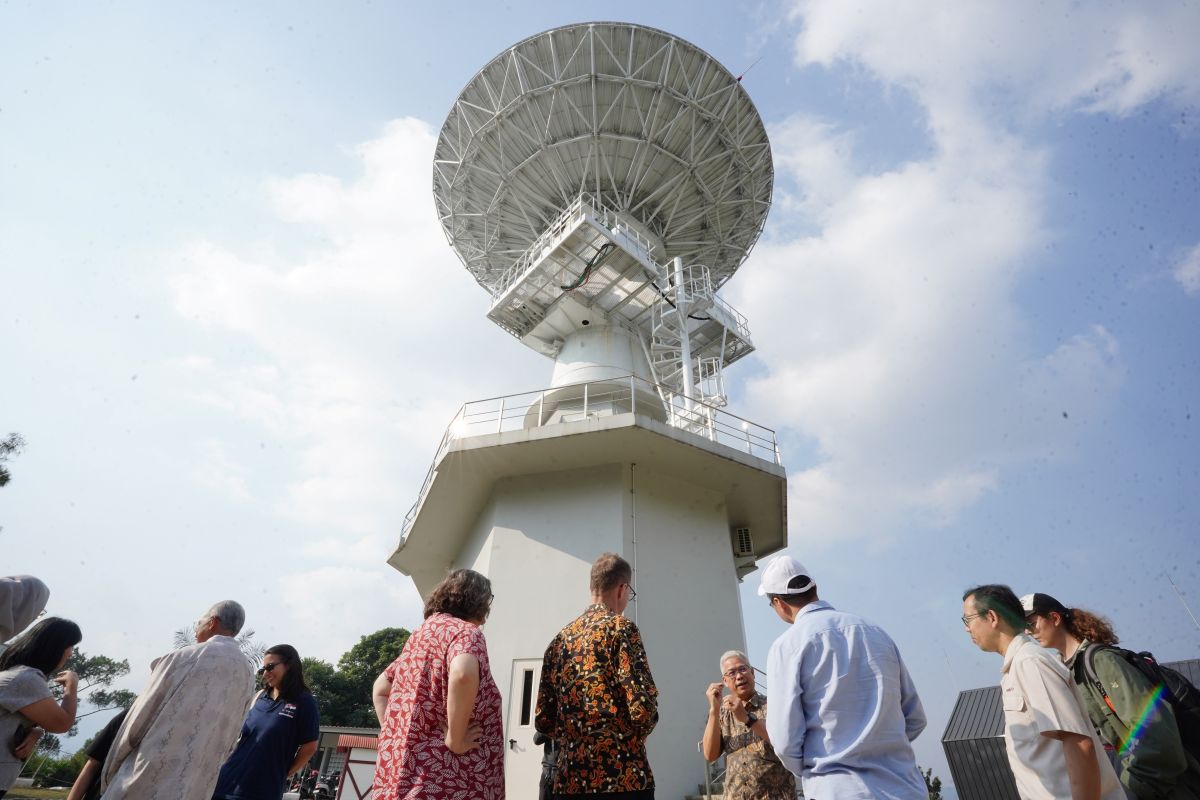
The visit began at the Very Long Baseline Interferometry Global Observing System (VGOS) facility. The facility exemplifies Bosscha Observatory’s ongoing efforts to keep pace with advances in astronomical technology while strengthening its international scientific network.
The VGOS facility at Bosscha Observatory was developed through an international collaboration between ITB and the Shanghai Astronomical Observatory, part of the Chinese Academy of Sciences. It represents one of the latest advances in radio astronomy, particularly in the application of Very Long Baseline Interferometry (VLBI).
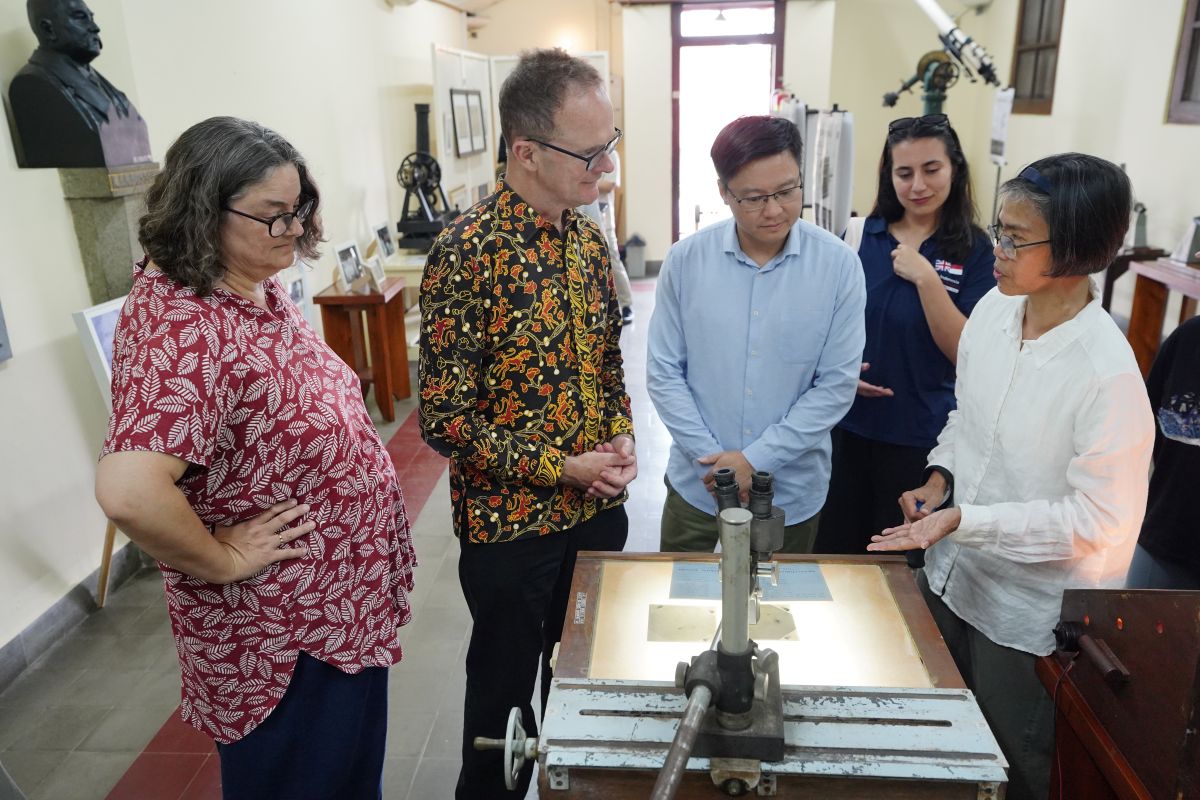
After exploring the modern facility, the delegation discovered the historical side of Bosscha Observatory through its Historical Exhibition Room, which houses various instruments previously used for astronomical observations. These instruments hold significant value as part of Indonesia’s astronomical research heritage.
Dr. Hesti explained that, at the time of its establishment, Bosscha Observatory was one of the few observatories located in the Southern Hemisphere. As most observatories at the time were situated in the Northern Hemisphere, observational data produced by Bosscha held considerable significance for the international astronomical community.
“When Bosscha Observatory was established, it was one of only three observatories in the Southern Hemisphere, making its observational data highly sought after by the international community,” she said.
Preserving the Nearly Century-Old Zeiss Telescope
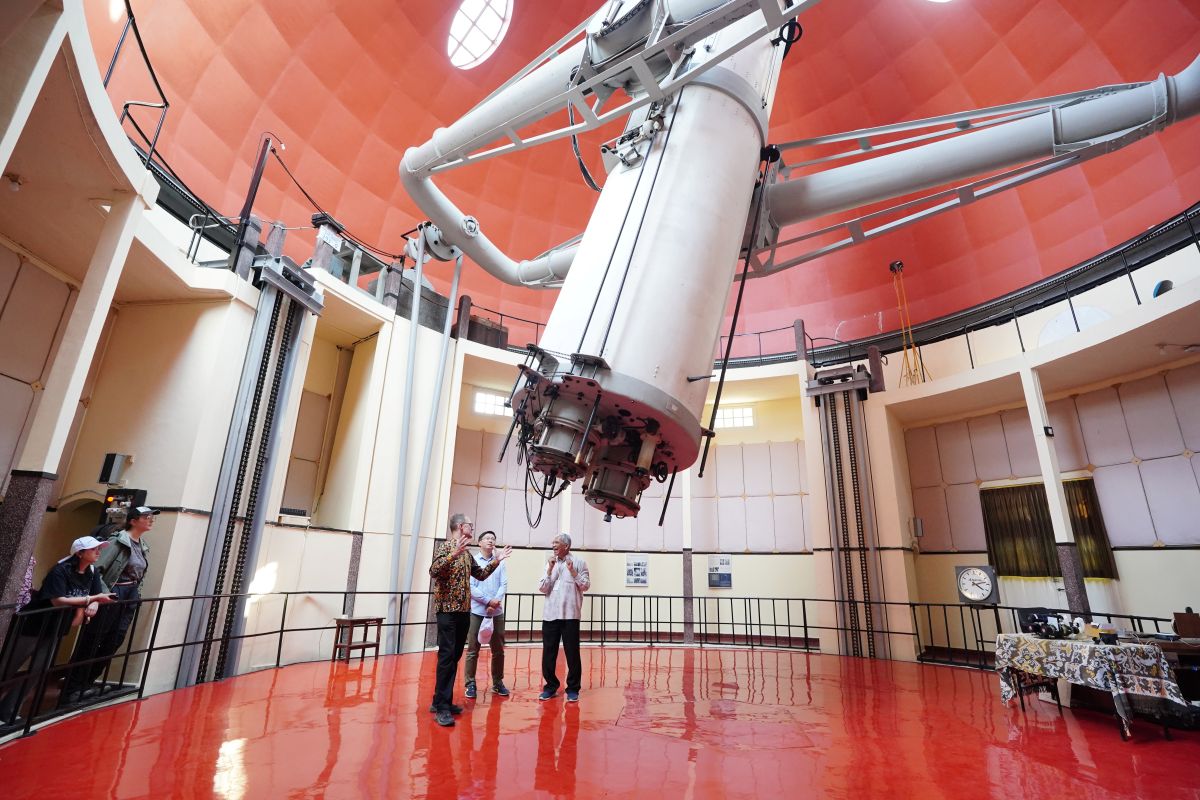
The delegation then visited the Koepel Building, home to the Zeiss Double Refractor Telescope, one of Bosscha Observatory’s most iconic instruments. During the visit, the delegation viewed the telescope and a collection of astronomical photographic plates that form part of the extensive documentation of observational activities at Bosscha.
Dr. Hesti explained that the telescope, which has been in use for nearly a century, not only marks the historical development of astronomy in Indonesia but also demonstrates the country’s ability to preserve scientific instruments and maintain their operational condition.
“The telescope is nearly 100 years old, and we continue to take care of it. Indonesia has been able to preserve it well, ensuring that it remains functional and can still be used in good condition,” she said.
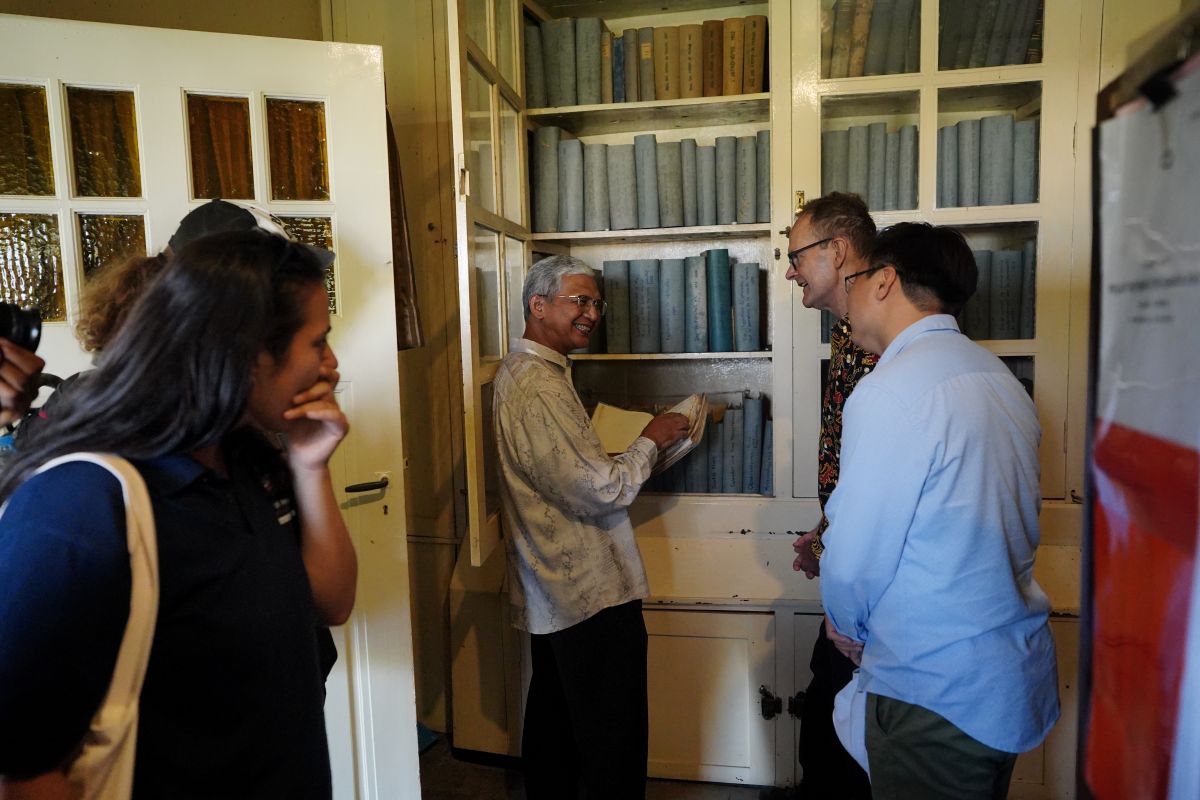
Several components have been modernized in line with technological advancements, while the telescope’s primary functions and historical character have been preserved.
“Bosscha serves as a showcase through which other countries can see that Indonesia continues to contribute to science and technology while keeping pace with developments over time,” she added.
A History of Scientific Collaboration with the United Kingdom
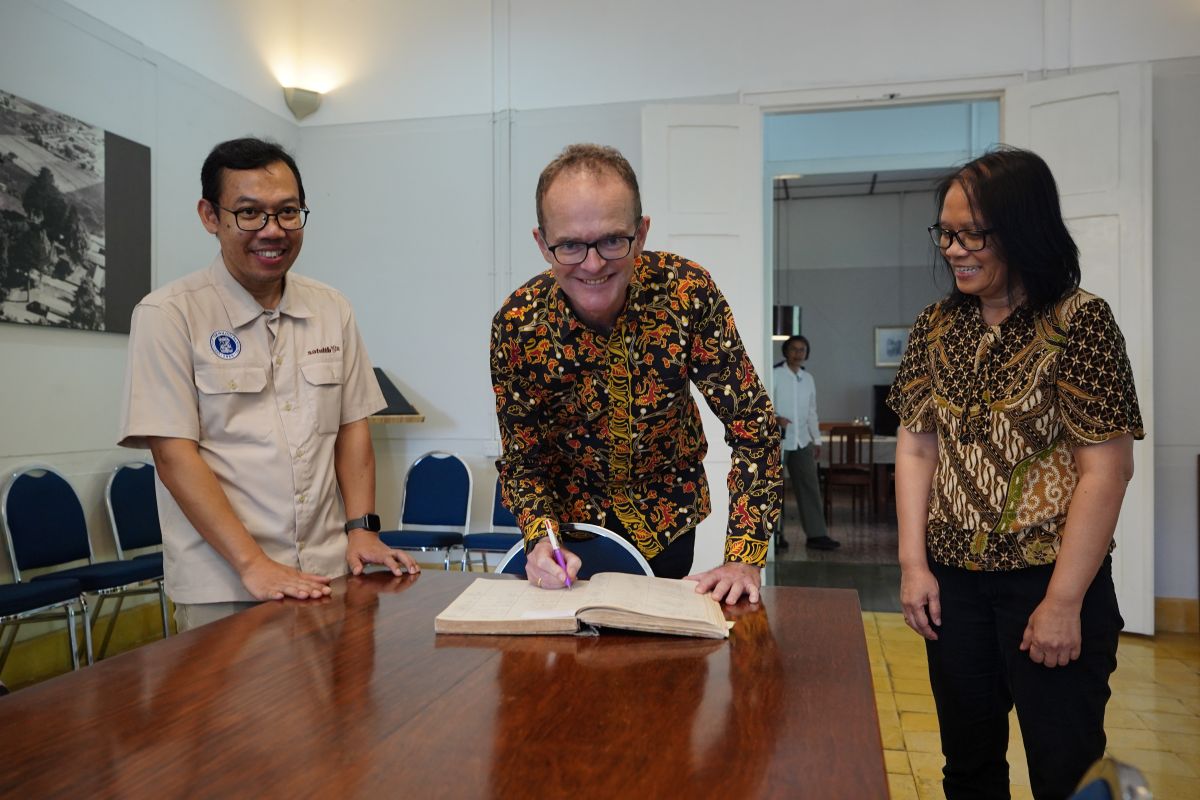
The visit also opened discussions on Bosscha Observatory’s international relations, particularly with scientific communities and institutions in the United Kingdom.
Bosscha Observatory has an established history of engagement with British scientists. One example is the support previously received by Bosscha Observatory astronomers through the Newton Fund, which enabled research collaborations with astronomers in the United Kingdom.
Furthermore, Bosscha Observatory’s efforts to preserve its historical archives and collection of astronomical photographic plates have also attracted the attention of the British Library.
The Dean of ITB’s Faculty of Mathematics and Natural Sciences, Aep Patah, Ph.D., stated that visits by international guests demonstrate that Bosscha Observatory is not only nationally renowned but also recognized by the international scientific community.
“This visit is highly strategic for future collaboration and the development of Bosscha Observatory under ITB’s Faculty of Mathematics and Natural Sciences. It demonstrates that Bosscha is recognized not only nationally but also internationally,” he said.
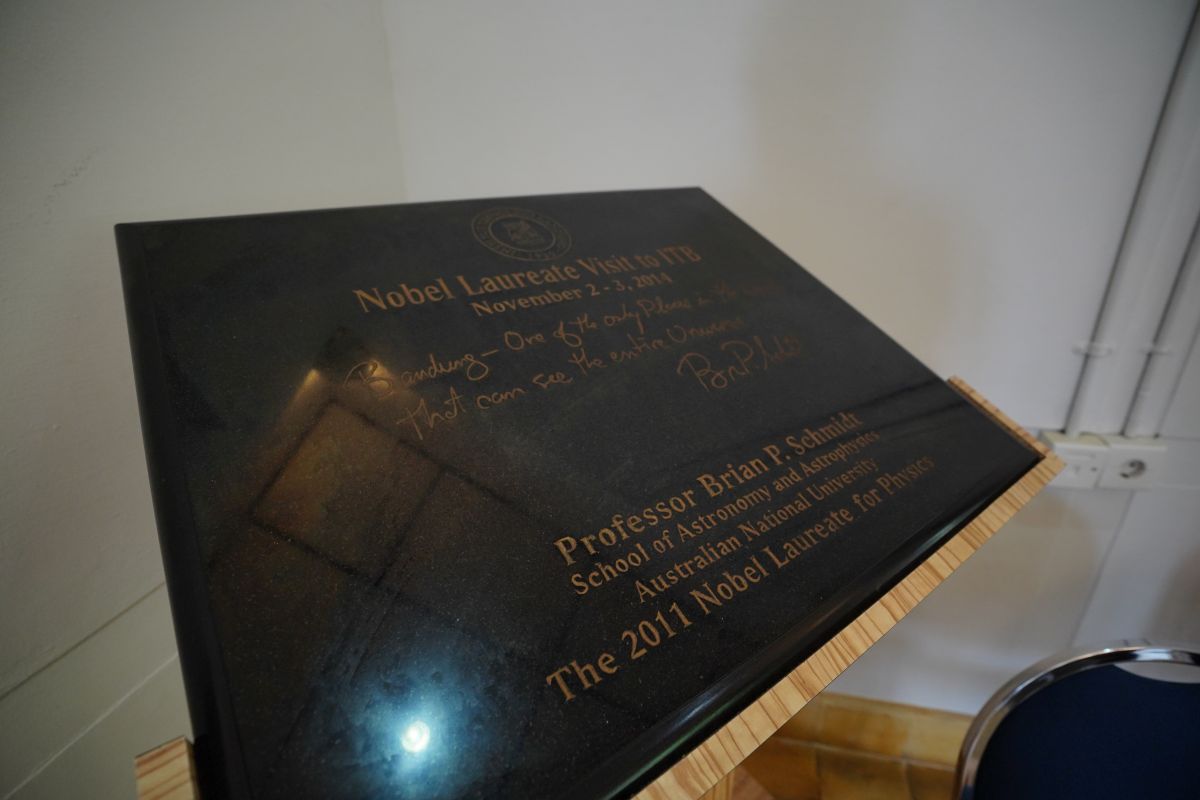
According to him, international interest in Bosscha is also reflected in visits by prominent figures from around the world. Among them is Nobel laureate in Physics Brian Schmidt, who previously visited Bosscha Observatory.