Hantavirus and Urban Environmental Challenges: ITB Expert Highlights the Importance of Sanitation Infrastructure
By Qoulan Tsaqila - Mahasiswa Teknik Sipil, 2023
Editor Muhammad Efriza Pandia
.jpg)
Doc. Pexels
BANDUNG, itb.ac.id – Hantavirus has recently become a health issue that has drawn significant public attention. Concerns surrounding the virus are not only related to public health but are also closely linked to sanitation and urban environmental management. Responding to this issue, Mayrina Firdayati, S.Si., M.T., an expert from the Environmental Management Technology Research Group, Faculty of Civil and Environmental Engineering (FTSL), Institut Teknologi Bandung (ITB), emphasized that environmental engineering approaches play a vital role in mitigating the spread of the virus.
Although it has recently gained public attention, Hantavirus is not a new phenomenon in Indonesia. The virus has been detected in the country since the 1980s and is known to be associated with a variant called the Seoul Virus. Hantavirus is classified as a zoonotic disease, meaning it can be transmitted from animals to humans.
Symptoms of Hantavirus infection often resemble those of other endemic diseases, such as dengue fever, leptospirosis, and fever accompanied by muscle pain. As a result, many cases have not been specifically identified. However, following the Covid-19 pandemic and the wider adoption of Polymerase Chain Reaction (PCR) technology, the virus has become easier to detect.
Rats are recognized as the primary reservoir of Hantavirus transmission. According to Mayrina, environmental conditions in several regions of Indonesia continue to provide ideal habitats for rat populations. These animals are highly opportunistic and tend to thrive in damp, poorly managed environments with abundant food sources. High-density urban settlements further increase the likelihood of creating favorable habitats for rats.
.png)
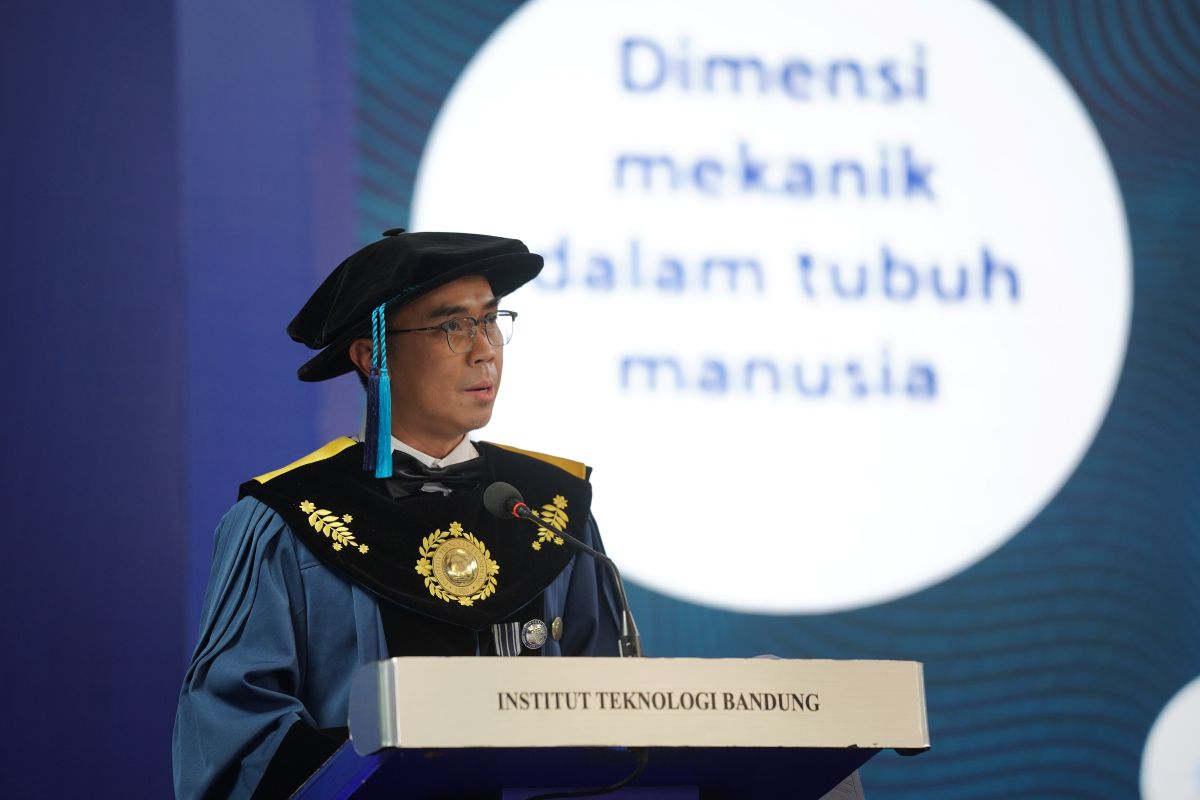
Mayrina Firdayati, S.Si., M.T., Expert from the Environmental Management Technology Research Group, Faculty of Civil and Environmental Engineering (FTSL), ITB.
Improving Sanitation and Drainage Systems in Residential Areas
One of the most important strategies for controlling Hantavirus is disrupting the life cycle of its carrier vectors within residential environments. In major cities such as Jakarta and Yogyakarta, the primary challenge stems from high population density, which indirectly creates favorable living conditions for rats.
In addition, problems are often found in drainage systems. Ideally, drainage infrastructure is designed to channel stormwater runoff. However, due to infrastructure limitations, many drainage channels have gradually been used to dispose of household wastewater, or grey water. Open drainage systems contaminated with organic waste from domestic activities create environments that support rat nesting and breeding.
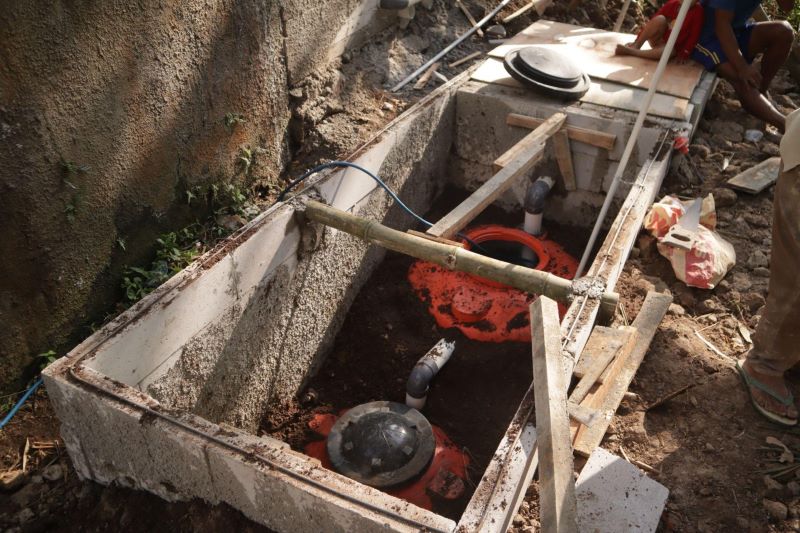
The situation is further complicated by the persistence of a practice known as “Closed Open Defecation” (Buang Air Besar Sembarangan/BABS Tertutup). This term refers to households that have toilet facilities but whose wastewater disposal systems are not connected to watertight septic tanks that comply with Indonesian National Standards (SNI). Consequently, domestic wastewater may flow directly into open drains or seep into the ground without adequate treatment.
Such inadequate wastewater management systems not only pose environmental contamination risks but also provide rats with easier access to residential areas.
“Our main problem is that environmental infrastructure is often treated as a secondary priority. We tend to assume that having a toilet means we are already maintaining proper sanitation. In reality, if the wastewater disposal system is unsafe and the septic tank does not meet SNI standards, the risk of contamination remains around us,” Mayrina explained.
According to her, sanitation development continues to face challenges related to financial limitations, particularly among lower- and middle-income communities, as well as the limited coverage of urban wastewater treatment networks. As a result, environmental infrastructure development often receives less attention than other infrastructure priorities.
Building a Culture of Waste Segregation
Beyond sanitation, waste management is another critical factor in reducing the risk of Hantavirus transmission. One of the most common challenges is the accumulation of waste in residential areas and traditional markets.
Waste management becomes increasingly difficult when organic and inorganic waste are mixed without proper segregation at the source. This condition not only complicates downstream processing but also accelerates the formation of decomposing waste piles that can become food sources for rats.
“The key to efficient waste management is segregation at the source. As long as organic waste remains mixed in wet conditions, any processing technology will continue to consume excessive energy and will never achieve optimal results,” said Mayrina.
Therefore, encouraging communities to adopt waste segregation practices at the household level is a crucial step. In addition to facilitating waste management at temporary disposal sites (TPS), waste segregation can also reduce the potential formation of habitats that support rat populations.
Mayrina emphasized that breaking the chain of Hantavirus transmission and other environmentally related diseases requires a shift in perspective regarding environmental infrastructure development. Sanitation programs should focus on meeting higher standards, while waste segregation should become a consistent and sustainable habit.
Collaboration among government institutions, academia, industry, and the wider community is essential to creating healthier and more sustainable environments. Maintaining high standards of sanitation and environmental management is a long-term investment that will improve quality of life while strengthening resilience against future disease threats.

.jpg)
.jpeg)