ITB Economist Highlights Indonesia’s Economic Resilience in Q2 2026
By --- -
Editor Muhammad Efriza Pandia
.png)
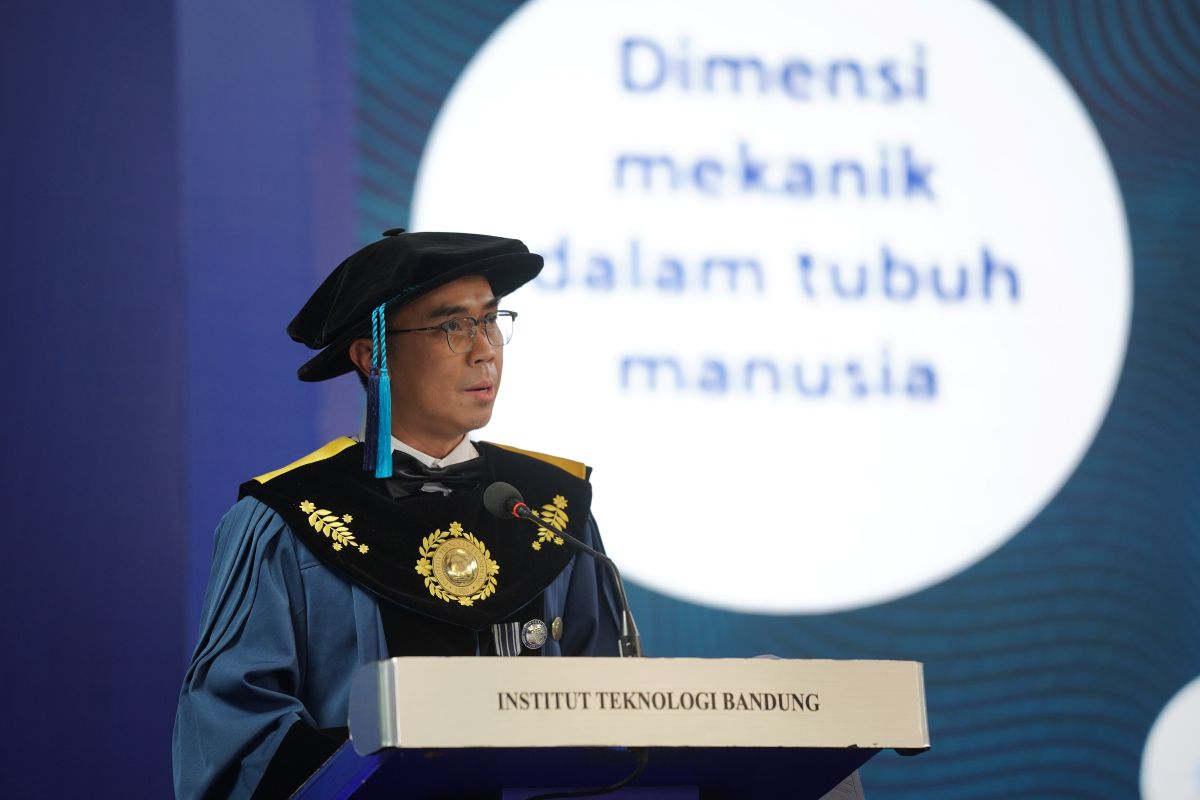
Lecturer at the School of Business and Management (SBM), Institut Teknologi Bandung (ITB), Ir. Dzikri Firmansyah Hakam, S.T., Pg.Dip., M.Sc., Ph.D.
BANDUNG, itb.ac.id — Indonesia’s economy demonstrated resilience amid global economic uncertainty and pressure on financial markets. In the second quarter of 2026, the economy grew by 5.29 percent year-on-year (YoY), remaining above 5 percent despite slowing from 5.61 percent in the first quarter of 2026.
The growth is particularly noteworthy as it occurred amid a range of challenges, including geopolitical conflicts, trade tensions, supply chain disruptions, and volatility in financial markets and exchange rates. In his State Address on August 14, 2026, President Prabowo Subianto also expressed optimism about the resilience of the national economy. During the first half of 2026, realized investment reportedly reached IDR 1,010 trillion and generated more than 1.4 million jobs.
According to a lecturer at the School of Business and Management (SBM), Institut Teknologi Bandung (ITB), Ir. Dzikri Firmansyah Hakam, S.T., Pg.Dip., M.Sc., Ph.D., Indonesia’s economic growth in the second quarter of 2026 can be better understood by distinguishing developments in financial markets from those in the real economy.
Financial Markets Under Pressure, While the Real Economy Keeps Moving
Dzikri explained that shifts in financial market sentiment can occur much more rapidly than changes in the economic activities of households and businesses. Investor sentiment may change within days, while adjustments in consumption, credit, investment, production, and employment generally take longer.
“Pressure in financial markets has not yet fully translated into a slowdown in real economic activity,” he said.
This dynamic can be seen, among other things, in developments in the stock market and concerns surrounding Indonesia’s investability. In June 2026, MSCI raised concerns over shareholder transparency and coordinated trading in the Indonesian stock market. It also indicated the possibility of consultations regarding a potential reclassification of Indonesia from Emerging Market to Frontier Market status if the necessary improvements are not evident by November 2026.
According to Dzikri, such pressures initially tend to affect asset prices, portfolio allocation, foreign portfolio investment flows, risk premiums, and perceptions of investment attractiveness. Their impact on the real economy would become more pronounced if they eventually led to higher capital costs, slower investment, reduced business expansion, weaker job creation, and lower household income.
He also emphasized that foreign capital flows should be viewed more comprehensively. In the second quarter of 2026, Bank Indonesia recorded a net inflow of foreign portfolio investment amounting to USD 8.5 billion, primarily into government securities and Bank Indonesia Rupiah Securities.
Thus, pressure on the stock market may occur simultaneously with capital inflows into fixed-income instruments.
“This development is more appropriately understood as a shift in portfolio preferences and allocation, rather than simply as a broad-based withdrawal of foreign capital,” he explained.
Domestic Demand Remains the Main Pillar
One of the key factors sustaining Indonesia’s economic growth is domestic demand. Household consumption grew by 5.06 percent YoY in the second quarter of 2026. Although this was slower than the 5.52 percent recorded in the previous quarter, household consumption remained the main driver of growth due to its substantial share in Indonesia’s economic structure.
Dzikri observed that households, in aggregate, were still able to maintain their consumption activities. Inflation stood at 3.34 percent YoY in June 2026, remaining within Bank Indonesia’s target range of 2.5±1 percent. This suggests that pressure on purchasing power had not developed into sufficiently severe inflationary conditions to significantly suppress overall consumption.
In addition to household consumption, continued economic activity was also supported by the banking system’s ongoing provision of financing. In June 2026, bank lending grew by 12.67 percent YoY. Investment loans rose by 24.90 percent, working capital loans by 8.94 percent, and consumer loans by 5.75 percent.
Bank Indonesia’s Banking Survey also showed that the Weighted Net Balance of new loan disbursements increased to 93.08 percent in the second quarter, from 38.74 percent in the first quarter of 2026.
According to Dzikri, these developments indicate that the banking intermediation function remains effective. Businesses continue to have access to financing for working capital and investment, while households also retain access to credit.
“As long as banking intermediation continues to function, capital market volatility does not immediately bring production, investment, and consumption to a halt,” he said.
Government Spending Helps Sustain Economic Momentum
Government spending has also played an important role in supporting economic activity. Government consumption grew by approximately 15.97 percent YoY in the second quarter of 2026, although this was lower than the 21.81 percent growth recorded in the first quarter.
The increase was supported by the implementation of priority programs, accelerated government spending, the payment of 13th-month salaries for civil servants, and social assistance programs. Household consumption was also supported through food assistance and transportation stimulus measures.
Dzikri explained that government spending not only contributes directly to economic growth but can also generate income for households and businesses. This income may subsequently support further consumption and production activities.
Under these conditions, economic growth in the second quarter of 2026 can be understood as being primarily driven by domestic demand, supported by relatively strong fiscal policy.
Investment Grows but Still Needs to Be Strengthened
On the investment side, Gross Fixed Capital Formation (GFCF) grew by 6.87 percent in the second quarter of 2026, making it one of the contributors to economic growth.
However, Dzikri cautioned that investment growth does not necessarily indicate stronger private investor confidence. According to Bank Indonesia, investment growth was primarily supported by construction investment related to National Priority Programs, while private investment still requires further strengthening.
This is also related to the nature of investment, which generally involves relatively long implementation cycles. Projects that have already entered the construction or procurement phase are not necessarily halted immediately due to short-term changes in market sentiment.
“Therefore, investment resilience does not always mean that private investor confidence is equally resilient,” Dzikri said.
Rising Imports Should Be Viewed in a Broader Context
External sector developments are also important in assessing Indonesia’s economic growth. In May 2026, Indonesia recorded exports of USD 23.20 billion and imports of USD 24.81 billion, resulting in a trade deficit of approximately USD 1.61 billion.
However, cumulatively from January to May 2026, Indonesia’s trade balance still recorded a surplus of USD 4.03 billion. During the period, imports grew by 15.24 percent, higher than export growth of 3.02 percent.
According to Dzikri, an increase in imports does not necessarily indicate economic weakness. Imports may also reflect rising demand for raw materials, intermediate goods, energy, machinery, and capital goods needed to support domestic production and investment.
Therefore, while the external sector was not the main source of economic resilience in the second quarter, the pressure from this sector was not strong enough to offset the strength of domestic demand.
Sustaining Economic Resilience in the Long Term
Overall, Dzikri assessed that the 5.29 percent growth rate demonstrates that Indonesia’s economy has several buffers that have helped sustain economic activity amid external pressures.
Domestic demand remains resilient, bank lending continues to expand, fiscal policy provides support, a number of investment projects remain underway, and foreign exchange reserves are still relatively strong. At the end of June 2026, Indonesia’s foreign exchange reserves stood at approximately USD 145.6 billion, equivalent to around 5.5 months of imports.
These conditions indicate that, in the short term, Indonesia’s economy still has the capacity to absorb various pressures originating from financial markets and the global economic environment.
Nevertheless, Dzikri emphasized that this resilience must be accompanied by continued efforts to maintain confidence, strengthen the investment climate, and ensure that pressures in financial markets do not develop into greater stress on the real sector.
“The 5.29 percent growth rate demonstrates that Indonesia’s economy has the capacity to absorb short-term pressures. The challenge is how to maintain that capacity so that it can support sustainable growth,” he concluded.
.jpg)

.jpg)
.jpg)

.jpg)
.jpg)