ITB Promotes Risk-Based Preparedness for the 2026–2027 El Niño, Strengthens Water and Food Security
By Anggun Nindita -
Editor Muhammad Efriza Pandia
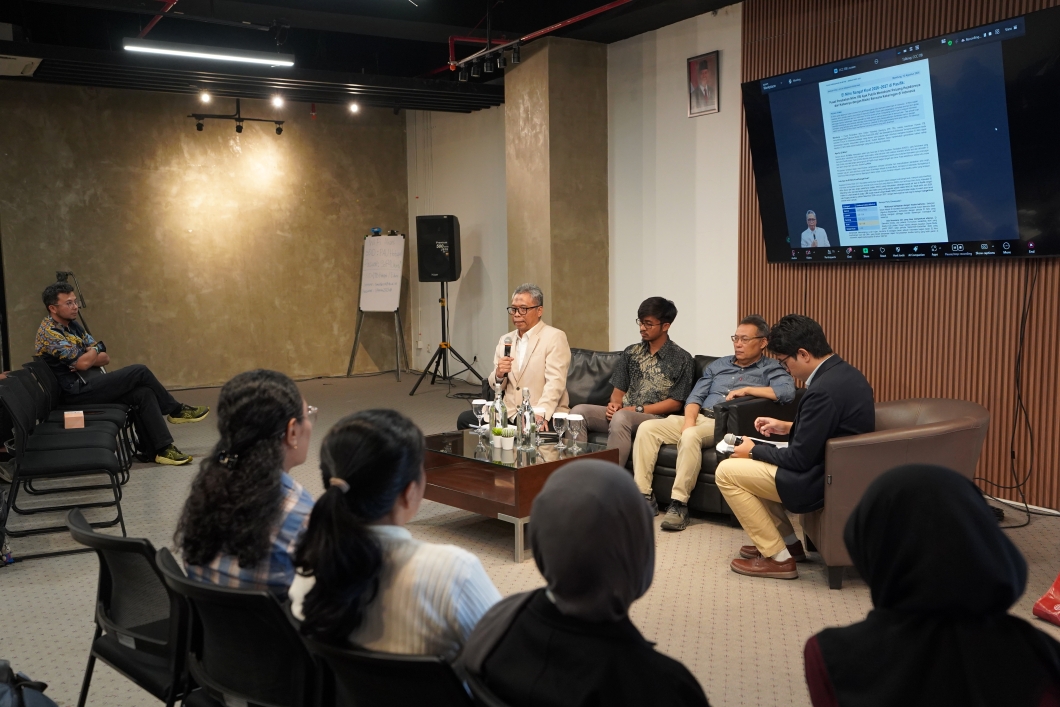
BANDUNG, itb.ac.id — The Climate Change Center Institut Teknologi Bandung (PPI ITB) is encouraging the public and stakeholders not to view El Niño merely as a threat of drought, but to understand its risks and opportunities more accurately according to specific regions and sectors. This message emerged during the interactive talk show “The Very Strong El Niño of 2026–2027 and Its Potential Impacts in Indonesia,” held in the 8th-floor auditorium of the PAU Building at ITB on Thursday, August 13, 2026.
The forum, which involved experts from ITB and the Meteorology, Climatology, and Geophysics Agency (BMKG), was held to improve public and media literacy regarding the El Niño Southern Oscillation (ENSO) based on scientific evidence. PPI ITB emphasized that El Niño is a climate phenomenon in the tropical Pacific Ocean that can affect rainfall patterns in Indonesia, but its impacts are not always the same across all regions, times, or sectors.
The head of PPI ITB, Prof. Ir. Djoko Santoso Abi Suroso, Ph.D., stressed the importance of shifting the approach from a reactive one acting only after a disaster occurs to a risk-based approach, which involves preparing before impacts reach critical levels.
“What we want to clarify is how to understand El Niño. The phenomenon occurs in the Pacific Ocean, but for the Indonesian public, the most important thing is to know what its impacts are in their region, how significant the risks are, and what needs to be anticipated,” he said.
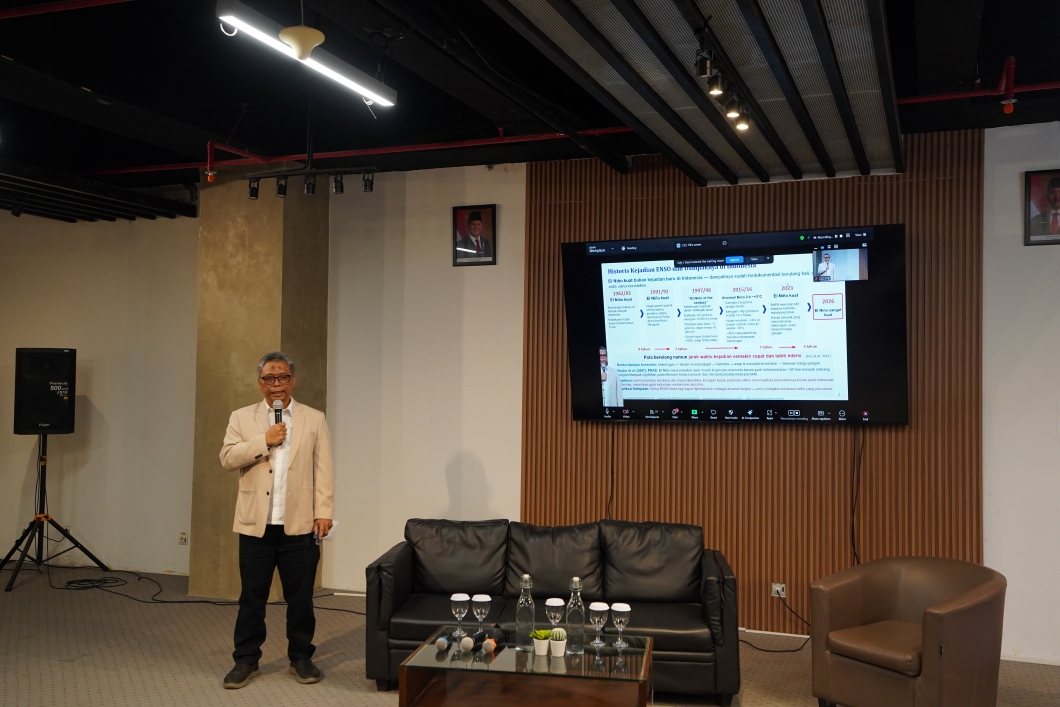
Head of PPI ITB, Prof. Ir. Djoko Santoso Abi Suroso, Ph.D.
According to him, the patterns of El Niño’s impacts have recurred in Indonesia. Since the phenomenon can be monitored and predicted several months in advance, climate information should serve as the basis for determining preventive measures, including in the food sector, water resources, energy, and the mitigation of forest and land fires.
Impacts Vary by Region
The discussion was moderated by Dr. Muhammad Rais Abdillah, S.Si., M.Sc., Head of the Climate Science Division at PPI ITB and Chair of the ITB Undergraduate Meteorology Program.
The Director of Climate Change at BMKG, Dr. A. Fachri Radjab, S.Si., M.Si., explained the current conditions and seasonal developments in Indonesia. During the peak of the dry season, vigilance remains necessary regarding the potential for drought as well as forest and land fires, especially in areas experiencing drier-than-usual conditions.
“Meanwhile, as we enter the transition period toward the rainy season, the public needs to be aware of the potential for extreme weather, such as heavy rain and strong winds,” said Dr. Fachri.
Dr. Tri Wahyu Hadi, M.Sc., Chair of the PPI ITB Expert Team and a lecturer in the ITB Doctoral Program in Meteorology, explained that El Niño is a phenomenon involving the interaction between the ocean and the atmosphere in the Pacific Ocean. When El Niño occurs, changes in sea surface temperature and atmospheric circulation can reduce the supply of water vapor to parts of Indonesia, leading to decreased rainfall.
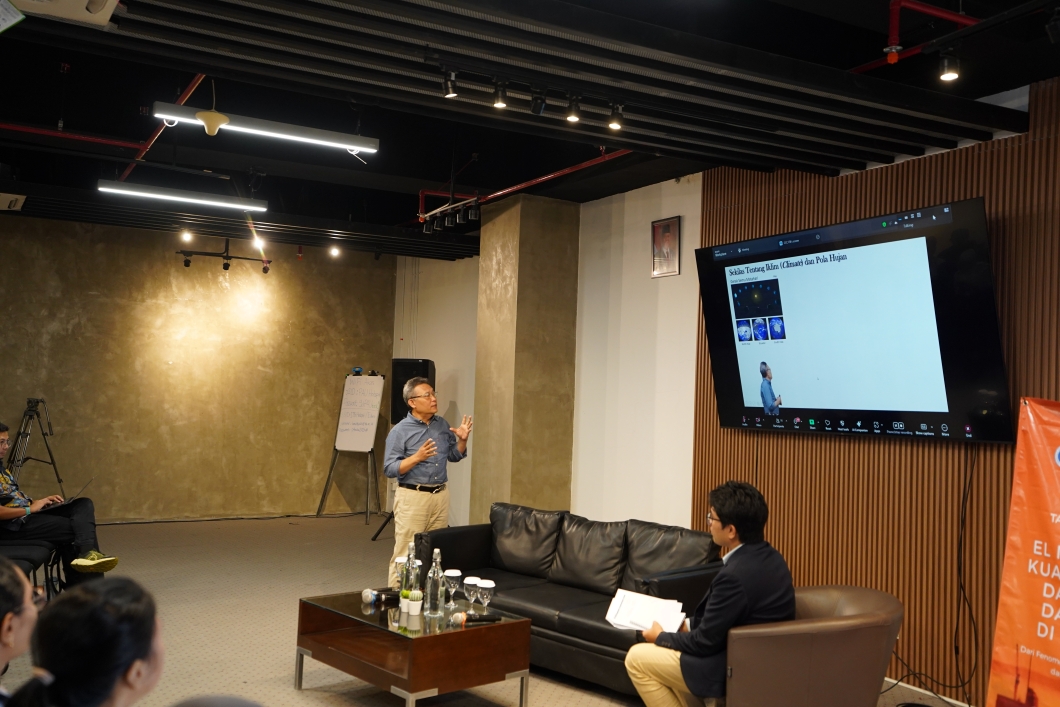
Dr. Tri Wahyu Hadi, M.Sc., Chair of the ITB PPI Expert Team and lecturer in the ITB Doctoral Program in Meteorology.
“The impacts can ripple through various sectors, ranging from a decline in agricultural production, reduced water supplies from rivers and reservoirs, and a decrease in hydroelectric power generation, to an increased risk of forest and land fires,” explained Dr. Tri Wahyu.
These impacts, he noted, are not uniform because they are influenced by the season and the characteristics of each region.
Early Anticipation of Water and Food Issues
In the water resources sector, Fikry Purwa Lugina, S.Si., M.Eng., Ph.D., a researcher in the Water Sector Hazards and Risks Division at ITB’s PPI and a lecturer in Meteorology at ITB, explained that droughts can develop gradually. Rainfall deficits can lower soil moisture, reduce surface runoff and groundwater recharge, and subsequently lead to decreased river flow, ultimately disrupting water availability for communities.
Therefore, forecast information must be followed by concrete actions. “Turn forecasts into decisions, not just information,” he said.
Preventive measures can include monitoring rainfall, river discharge, reservoir water levels, and groundwater levels; managing water use and allocation; preparing alternative water sources; and strengthening storage capacity and conservation efforts in watersheds.
Meanwhile, Dr. Elza Surmaini, S.P., M.Si., a Senior Researcher in Agricultural Hazards and Risks at PPI ITB and BRIN, explained that the impact of El Niño on rice production varies by region. Based on the data she presented, during the 1990–2024 period, the national decline in rice production due to El Niño ranged from 0.5 to 1.7 million metric tons. However, not all regions experience a decline in production.
"Enhancing farmers' adaptive capacity is key to mitigating these risks. Measures include strengthening weather and climate information and early warning systems, adjusting planting calendars, utilizing drought-tolerant or early-maturing crop varieties, improving water use efficiency, and diversifying crops," explained Dr. Elza.
El Niño does not always bring negative impacts. Drier conditions in certain regions can create opportunities for increased salt production and capture fisheries—the latter driven by the upwelling phenomenon. In floodplain wetlands, receding water levels can also open up opportunities to expand rice cultivation areas and boost production.
Through this forum, PPI ITB encourages the public to look beyond the "strong El Niño" label and instead understand how the impacts manifest, identify the regions and sectors most at risk, and recognize the proactive steps that can be taken. By translating climate information into action, risks can be minimized, and emerging opportunities can be optimally leveraged.