ITB Students Develop Technology to Reduce Methane Emissions at Landfills, Win Two International Awards in Malaysia
By Jekky - Mahasiswa Teknik Pertambangan, 2023
Editor M. Naufal Hafizh, S.S.
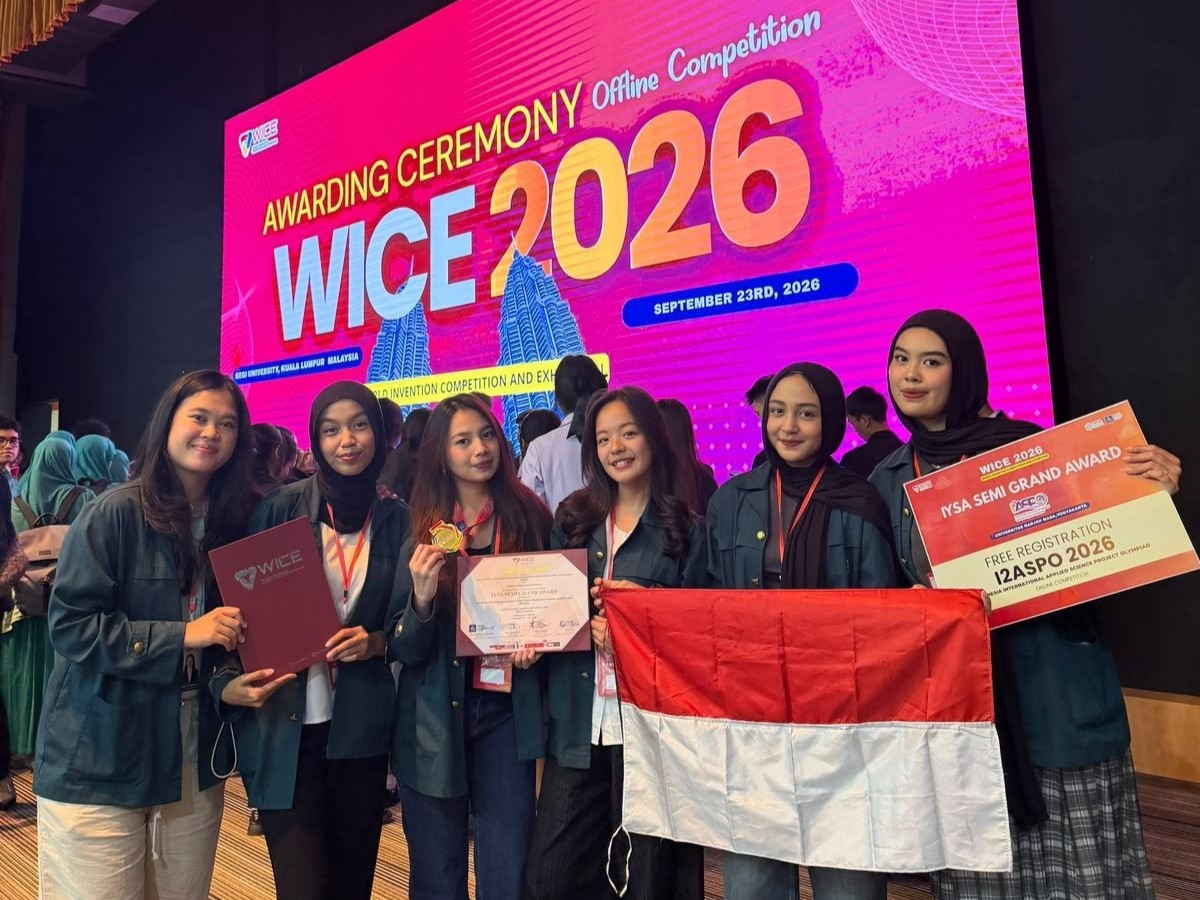
The EcoSisters team after winning a Gold Medal in the Environmental Science category and the IYSA Semi Grand Award at WICE 2026, held at SEGi University, Kuala Lumpur, Malaysia, September 23, 2026. (Courtesy of the EcoSisters Team)
KUALA LUMPUR, itb.ac.id – Six female Environmental Engineering students from Institut Teknologi Bandung (ITB), collectively known as the EcoSisters team, have developed SMARTBIO, an intelligent biofilter system integrated with Internet of Things (IoT) technology to help reduce methane emissions from landfills. The innovation is designed to address methane emissions generated by accumulated waste while enabling landfill operators to monitor gas concentrations in real time.
The technology has the potential to support more environmentally sustainable waste management and greenhouse gas emission reduction efforts. Through this innovation, the EcoSisters team won two awards at the World Invention Competition and Exhibition (WICE) 2026, held at SEGi University in Kuala Lumpur, Malaysia, in September 2026.
The team received a Gold Medal in the Environmental Science category and the IYSA Semi Grand Award. The international competition was organized by the Indonesian Young Scientist Association (IYSA) in collaboration with SEGi University & Colleges, Malaysia.
The EcoSisters team consists of Saila Izza Nadhrah as team leader, along with Aneira Descinda Naula Ayu, Zayda Salima, Keysha Ayu Rumanti, Siti Najwa Dafina, and Alyanissa Rahma Pujangga. They were supervised by Dr. Ir. I Made Wahyu Widyarsana, S.T., M.T., Head of the Environmental Engineering Study Program at ITB. The name "EcoSisters" reflects the fact that all six members are female students from the same study program.
From Methane Emission Concerns to a Five-Layer Biofilter Innovation
SMARTBIO stands for Smart Multi-layered Biofilter with Real-Time IoT Monitoring for Sustainable Landfill Methane Mitigation. The innovation was inspired by the team's concern over methane emissions from landfills, an environmental challenge faced not only by Indonesia but also by countries around the world.
Methane is a greenhouse gas that contributes to global warming. Emissions from accumulated waste are a significant environmental concern, particularly in areas that continue to rely on open dumping practices and lack adequate emission control infrastructure.
"This issue has attracted attention not only in Indonesia. People in other countries are also increasingly aware of the methane emission problem," Keysha said.
Indonesia is among the countries with substantial methane emissions. Ongoing challenges in waste management, including open dumping practices and limited investment in emission mitigation infrastructure, motivated the team to develop a potential solution.
The idea of participating in an international competition emerged while the six students, who had been friends since their third semester, were completing their internships. They wanted to develop an innovative project and achieve international recognition before graduating.
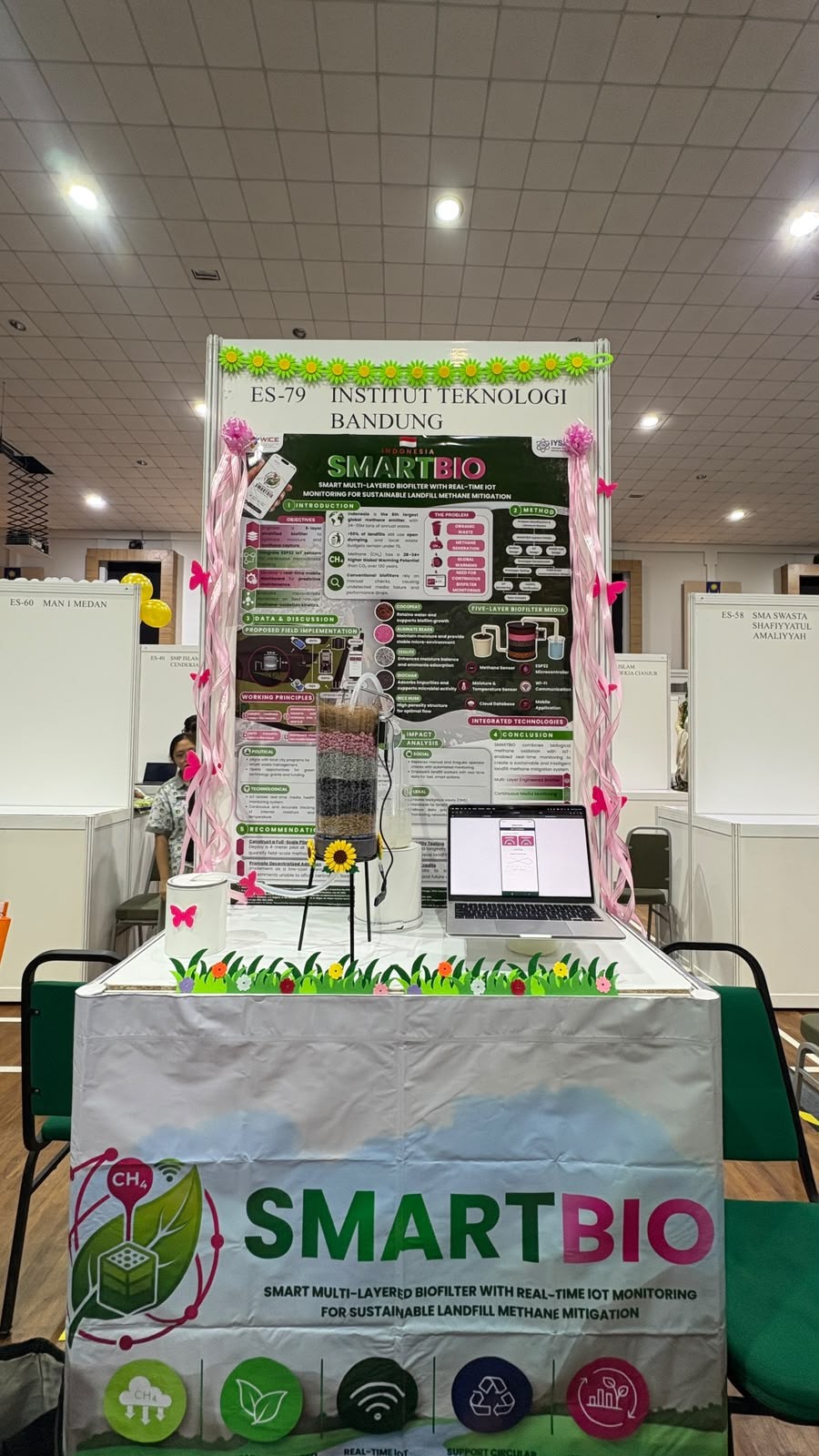
The SMARTBIO prototype and scientific poster displayed at the exhibition booth in Malaysia, September 23, 2026. (Courtesy of the EcoSisters Team)
Technically, SMARTBIO employs a five-layer biofiltration system that uses methanotrophic bacteria to oxidize methane. The system is equipped with temperature, humidity, and gas sensors connected to a microcontroller and a real-time monitoring application.
By integrating biofiltration with IoT technology, SMARTBIO combines methane mitigation with continuous system monitoring. This approach could enable landfill operators to access gas concentration data and receive early warnings, supporting more effective emission management.
The SMARTBIO prototype was designed for potential implementation at the Bantargebang Integrated Waste Treatment Facility (TPST) in Bekasi, West Java. The team also developed a field-scale implementation plan that divides the landfill into several monitoring zones.
Prototype development took approximately two to three months, from July to September 2026. During the initial stages, the team focused on intensive discussions and planning before accelerating prototype development in the final month, despite each member undertaking an internship at a different location.
One of the technical challenges was obtaining biofilter materials, particularly alginate beads, which were difficult to find commercially.
"The material was quite difficult to find on the market, so we made it ourselves using calcium chloride and alginate powder," Alyanissa explained.
The team also had to independently learn programming and sensor assembly. Aneira Descinda Naula Ayu explained that acquiring these skills presented an additional challenge, as they had not been directly covered in their coursework.
Overcoming Internet Connectivity Issues During Judging to Secure Two Awards
WICE 2026 was held in a hybrid format, with the online competition taking place on September 10–14, 2026, followed by the in-person competition on September 20–24, 2026, at SEGi University in Kuala Lumpur, Malaysia.
The competition brought together participants from 12 countries and territories, including Indonesia, Malaysia, Hong Kong, Thailand, Mexico, South Korea, Belarus, China, Canada, Uzbekistan, Vietnam, and Bangladesh. Innovations were presented across five competition categories. EcoSisters became the first ITB student team to participate in a competition organized by IYSA.
During their presentation to the judging panel, the team encountered an unexpected technical problem. Their IoT system, which had consistently functioned during practice sessions, experienced an internet connectivity failure shortly before the judges arrived.
The team requested additional time to resolve the issue. Through close collaboration, all six members managed to restore the system before the judges returned to evaluate their project.
"We really worked together as a team to solve the problem for approximately an hour, and fortunately, we managed to fix it before the judges returned," Siti Najwa recalled.
Beyond the technical difficulties, the team also faced a challenging question from one of the judges concerning the urgency of developing another solution to methane emissions, an issue already widely discussed at the global level.
In response, the team emphasized that SMARTBIO's distinctive advantage lies in its integration of biofiltration technology with an IoT-based monitoring system. Rather than focusing solely on methane reduction, the innovation also provides monitoring and early warning capabilities that could assist landfill operators in managing emissions.
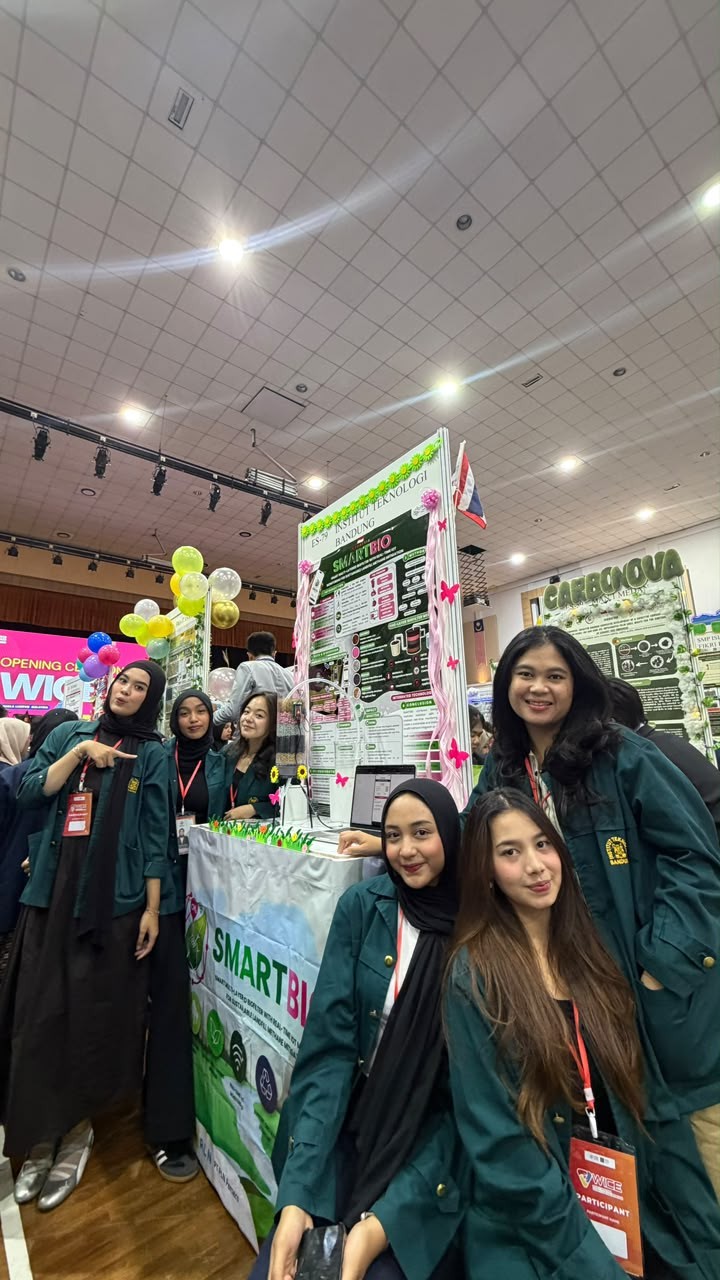
The EcoSisters team welcoming judges and fellow participants to the SMARTBIO exhibition booth during WICE 2026 in Malaysia, September 23, 2026. (Courtesy of the EcoSisters Team)
The EcoSisters team successfully secured a Gold Medal in the Environmental Science category and the IYSA Semi Grand Award. The latter is among the competition's highest distinctions, presented to only three outstanding teams across all categories and participating countries. The recipients represented Indonesia through ITB, Malaysia, and Thailand.
Opening Opportunities for Further Development and Landfill Implementation
The EcoSisters team's success was supported by a collaborative approach throughout the innovation development process. Although the team had a designated leader, responsibilities were not rigidly divided. All members contributed to various aspects of the project, ranging from accommodation arrangements to IoT system development and biofilter prototype construction.
According to Saila, participating in the international competition provided valuable lessons in teamwork, adaptability, and problem-solving under pressure.
"This experience really strengthened our teamwork. We usually met just to eat together or work on university assignments, but this time we had to deal with challenges we had taken on ourselves," Saila said.
Following their international achievements, the EcoSisters team is exploring opportunities to further develop SMARTBIO for broader applications.
The team also expressed openness to collaborating with companies and other stakeholders interested in transforming the SMARTBIO prototype into a field-ready technology.
Further development could pave the way for the application of intelligent biofiltration technology in managing methane emissions at landfills. Through such efforts, the students' innovation could go beyond its success in international competitions and potentially contribute to greenhouse gas emission reduction and more sustainable environmental management.