Pelita Muda Fosters Students’ Social Awareness Through “Tritangtu Empati” Exhibition
By Vito Egi Nandriansyah - Mahasiswa Teknik Geofisika, 2021
Editor M. Naufal Hafizh, S.S.
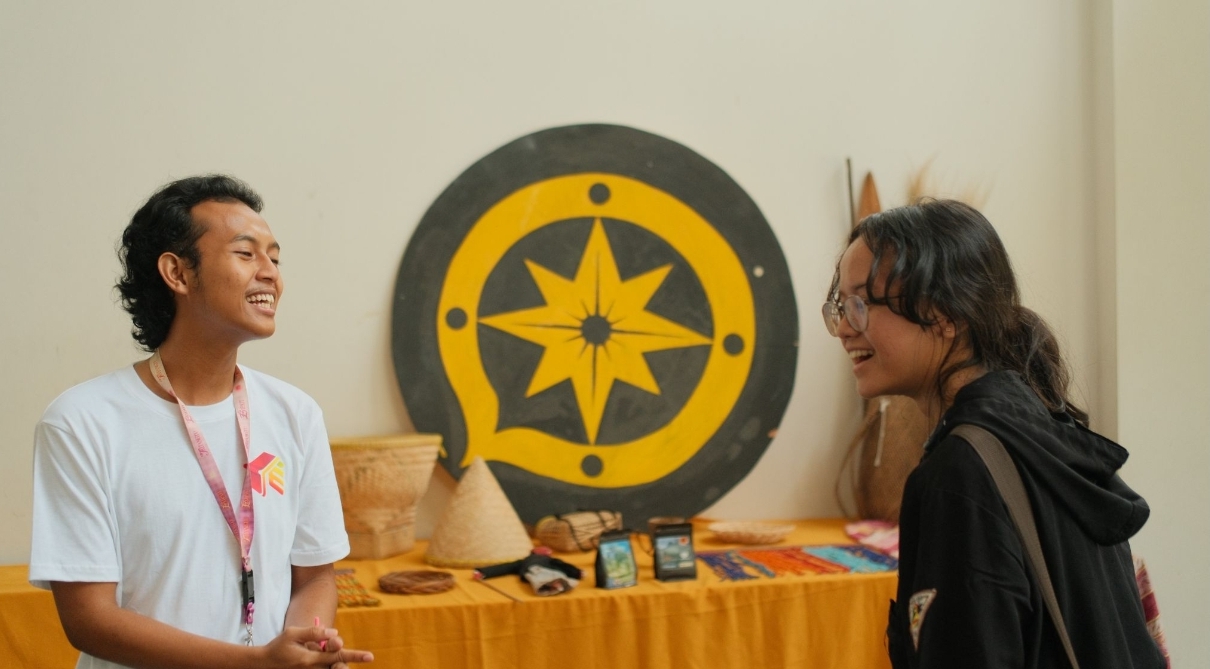
Caption: A committee member of the Pelita Muda 9 Exhibition (left) explains the stories behind handicrafts and the cultural potential of local villages to a visitor at the Pelita Muda Gallery. (Photo: Courtesy of Pelita Muda ITB)
BANDUNG, itb.ac.id – The Pelita Muda Student Organization at Institut Teknologi Bandung (ITB) held the ninth Pelita Muda Exhibition (PM 9), titled “Tritangtu Empati,” on Saturday (October 3, 2026), at the East Campus Center Gallery, ITB Ganesha Campus. The exhibition served as a platform for reflection and a meeting space where artistic expression, community service learning experiences, and social awareness came together.
The theme “Tritangtu Empati” draws on Sundanese cultural philosophy and humanitarian values. Tritangtu refers to three interconnected elements that complement and balance one another, reflected in three fundamental principles: Silih Asah (mutual learning and knowledge sharing), Silih Asih (mutual love and compassion), and Silih Asuh (mutual care and guidance).
The Chair of the PM 9 Exhibition Committee, Nindya Maulidatus Sakinah (Architecture 2025/AR'25), explained that the theme was chosen to encourage students to rediscover and cultivate a deeper, more holistic sense of empathy.
Reflection and Firsthand Experiences from Villages
The exhibition showcased the experiences, explorations, and creative works of Pelita Muda 9's junior members, documenting their field visits to five villages in West Java: Pelitaasih, Sumurgintung, Mekarsari, Girijaya, and Kutamanah.
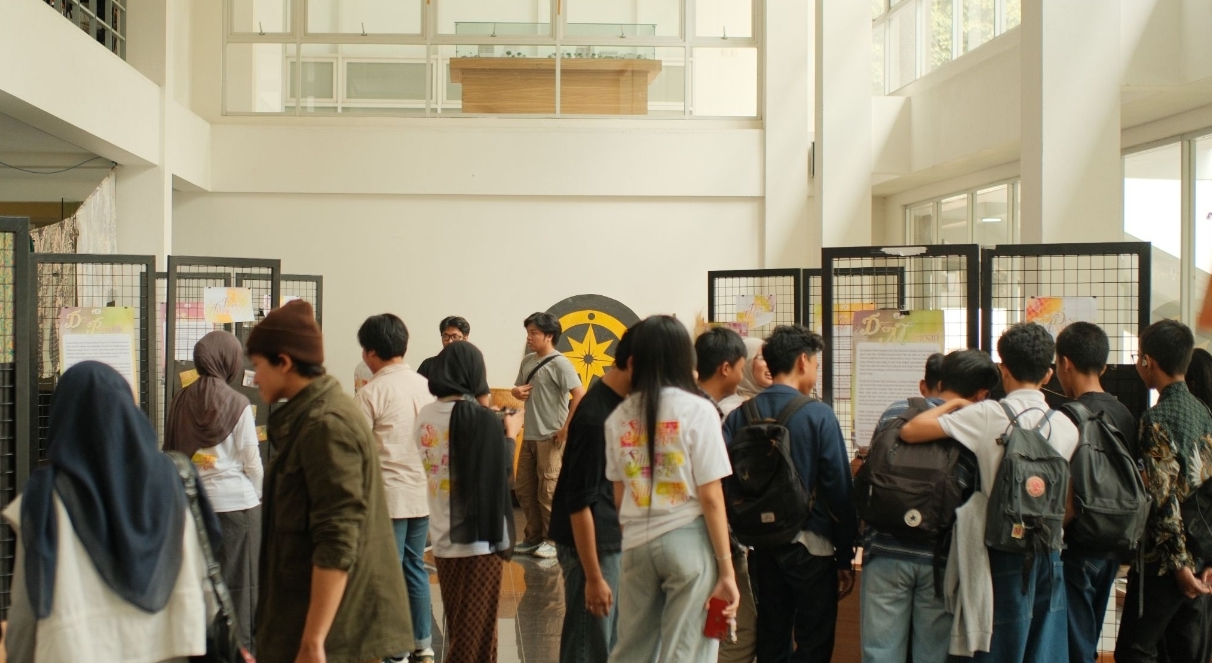
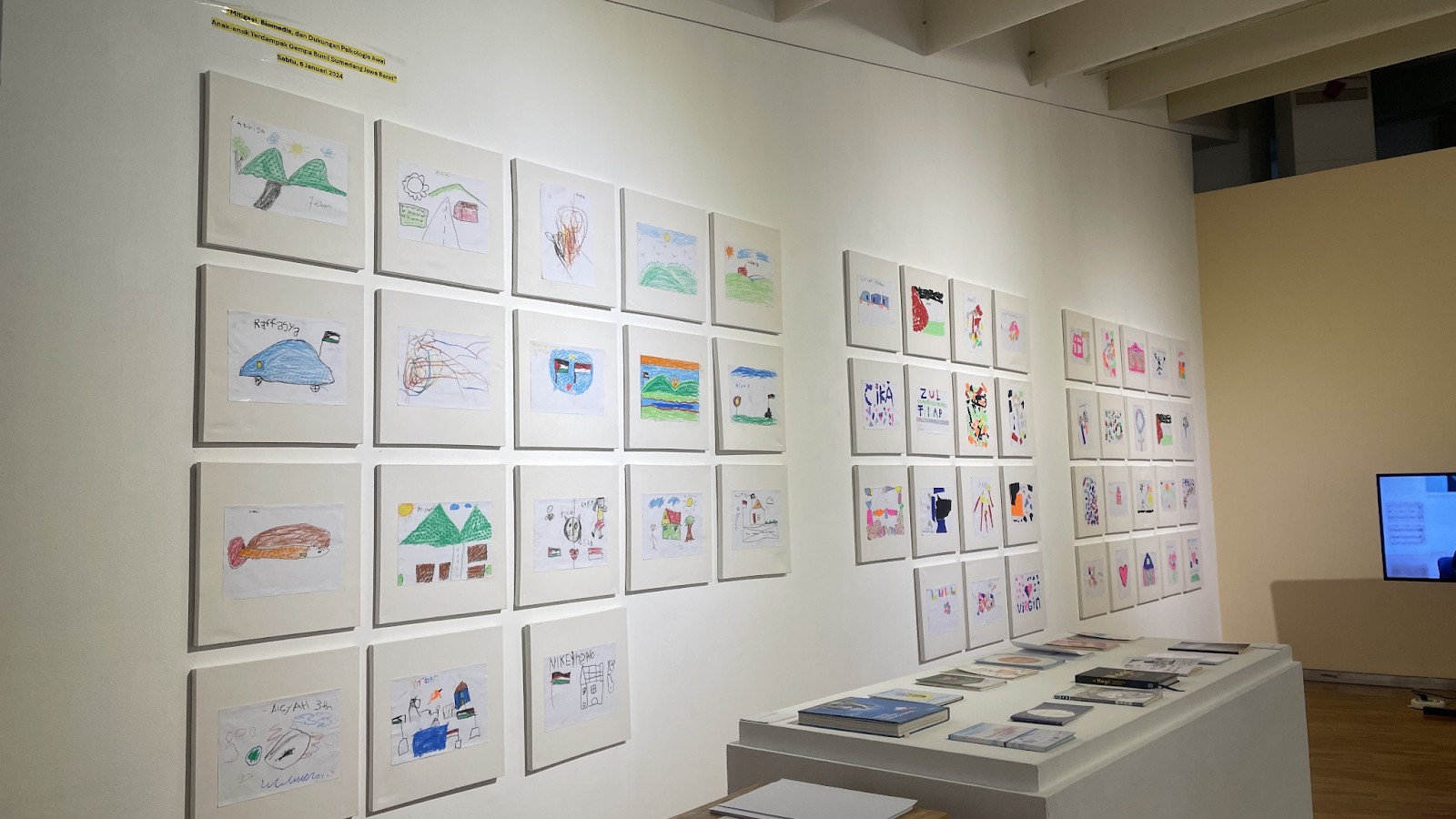
Caption: Students and visitors explore the “Tritangtu Empati” Pelita Muda 9 Exhibition, featuring documentation, magazines, and records of explorations conducted in five villages across West Java. (Photo: Courtesy of Pelita Muda ITB)
Before engaging directly with local communities, participants underwent three months of intensive training in four areas of specialization: social mapping, design thinking, exploration, and journalism.
Their firsthand interactions with villagers were then transformed into various forms of creative expression, including photography, cinematic travel videos, cultural magazines, and proposed solutions to real-world community challenges developed through a design thinking approach.
The Vice Chair of the PM 9 Exhibition Committee, Fioren Edri (AR'25), emphasized that the participants' creative journey went beyond producing artistic works. It was also a learning process that encouraged them to better understand themselves, others, and their surroundings.
“Art is a powerful medium for expressing emotions and experiences that are difficult to convey through conventional digital technology. Through documentation and visual storytelling, the messages can resonate directly with visitors on an emotional level,” Fioren said.
An Interactive Experience for Visitors
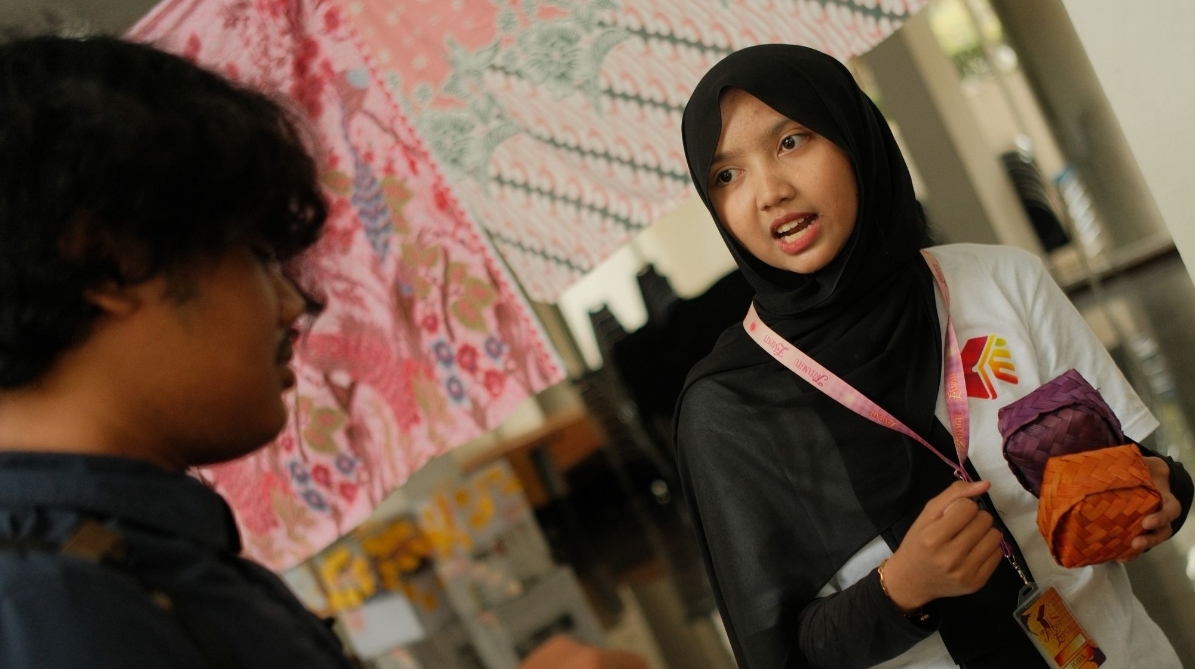
Caption: Members of Pelita Muda ITB share the stories and philosophical values behind local products from the participating villages with exhibition visitors. (Photo: Courtesy of Pelita Muda ITB)
The PM 9 Exhibition was designed not merely as a static display but as an interactive experience that encouraged visitors to engage, reflect, and participate. Its activities and installations included:
Convex Mirror Photospot: Located near the entrance to the main gallery, this installation invited visitors to look at their reflections and engage in self-reflection before exploring the exhibition.
Pelita Muda Gallery: A showcase of photographs, videos, magazines, and documentation highlighting the lives, stories, and potential of communities in the five participating villages.
“Belajar dari Masyarakat” (Learning from Communities) Installation & Dream Cubes: Interactive spaces where visitors could share their perspectives, post their dreams and aspirations, and participate in voting activities.
Inspirational Talk Show: An in-depth discussion exploring the creative process, empathy, and meaningful action through community service.
Through this exhibition, the organizers hoped that visitors, particularly members of the ITB academic community, would gain a broader perspective on the diverse cultures, traditions, and everyday challenges faced by communities beyond the university campus.
The exhibition was also expected to inspire more students to actively participate in community service initiatives that create meaningful and tangible impacts on society.