ITB Promotes the Development of Transmigration Areas through the Patriot Expedition Based on Technology, Economic Agglomeration, and Environmental Ethics
By Merryta Kusumawati - Teknik Geodesi dan Geomatika, 2025
Editor M. Naufal Hafizh, S.S.
.jpg)
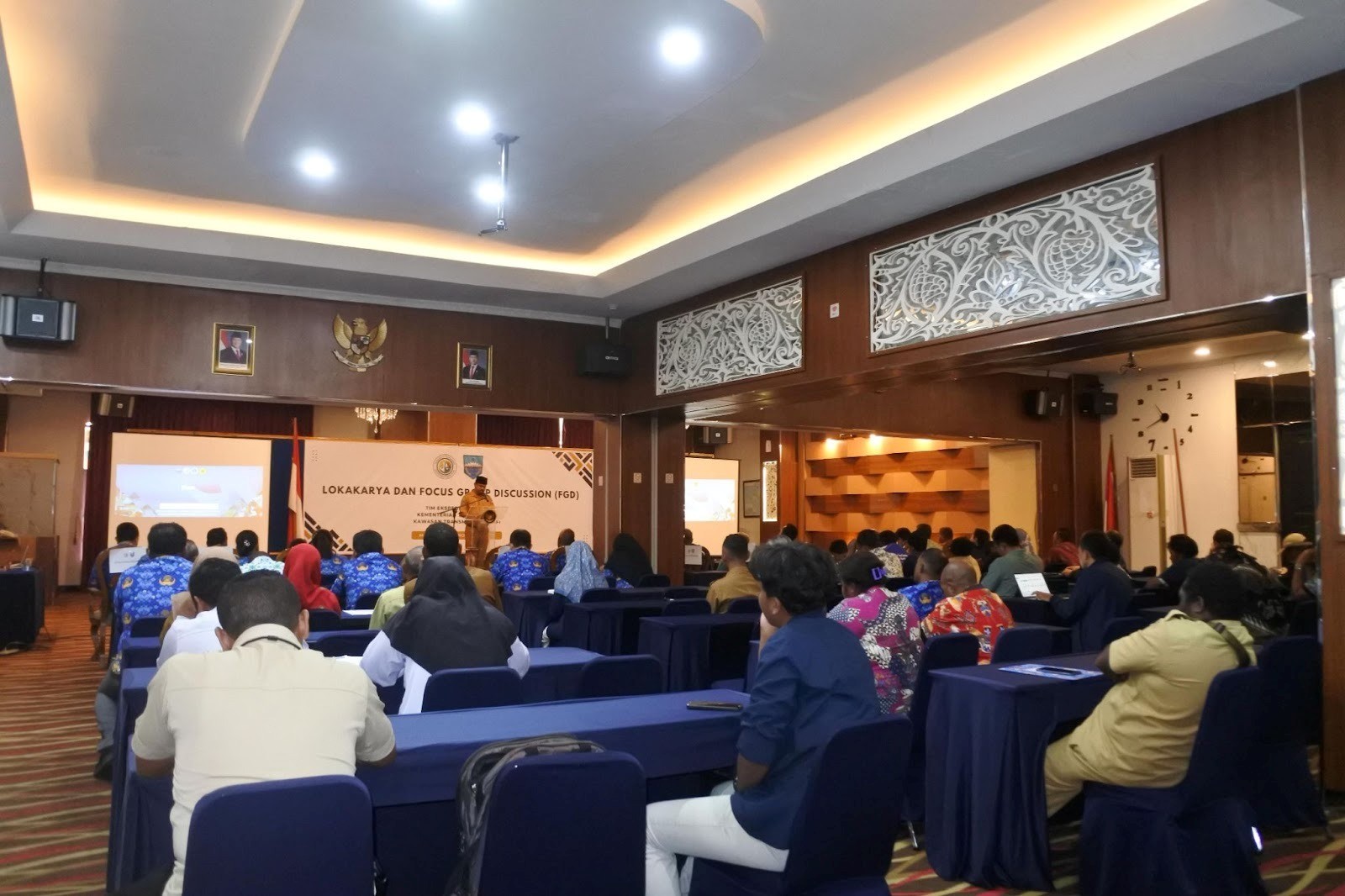
JAKARTA, itb.ac.id - Institut Teknologi Bandung (ITB) continues to strengthen its contribution to shaping the direction of transmigration area development through the Patriot Expedition, a field-based research and technology-driven program involving multidisciplinary teams from ITB. This was conveyed by Prof. Dr. Sri Maryati, S.T., MIP., Head of the Executive Directorate for Multi-Campus ITB (DEMK). The forum marked the final series of activities of the Patriot Expedition, which has been conducted since August 2025 across various regions in Indonesia.
Patriot Expedition as a Platform for Field-Based Studies
ITB’s presentation on December 20, 2025, was opened by the Vice Rector for Research and Innovation, Prof. Ir. Lavi Rizki Zuhal, Ph.D. The session continued with Prof. Sri Maryati serving as moderator, who explained that in addition to the topic of Transmigration Area Recommendations, ITB’s mandate within the Patriot Expedition placed special emphasis on the development of appropriate technologies and port development that are relevant to the local characteristics of transmigration areas. Through field activities, direct observations, and dialogues with regional stakeholders, the Patriot Expedition has become a platform for ITB to formulate applicable technological solutions.
.jpg)
This approach is considered essential to promote improvements in the welfare of transmigrant communities without increasing pressure on land, while also ensuring that the designed interventions are aligned with real conditions on the ground.
Cluster-Based Approach in the Patriot Expedition
Based on the study areas of the Patriot Expedition, ITB team presentations were grouped into three development clusters: Sumatra; Kalimantan and Nusa Tenggara; and Sulawesi, Maluku, and Papua. This clustering aims to determine program priorities and distinct policy directions in accordance with the social, economic, and environmental conditions of each transmigration region.
In the forum, Prof. Sri Maryati emphasized ITB’s role through the Patriot Expedition, stating, “ITB may focus—no, should focus—on technology development.”
In certain clusters, the findings of the Patriot Expedition indicate that development efforts need to be directed toward increasing community income through the optimization of existing land and the adjustment of policies to local conditions.
Economic Agglomeration within the Patriot Expedition Framework
Beyond technological aspects, ITB’s Patriot Expedition also underscores the importance of economic agglomeration and interregional linkages. The development of leading sectors in transmigration areas is considered ineffective if pursued in isolation; instead, it must be interconnected with other sectors and regions that possess similar potential.
Regarding the strengthening of economies of scale, she stated, “Cooperatives operate at the village scale, but we encourage these cooperatives to collaborate with one another because of the principle of economies of scale.”
Policy Synchronization and Institutional Strengthening
In implementing the Patriot Expedition, ITB teams also accommodated various planning documents, such as the Regional Medium-Term Development Plan (RPJMD), Regional Spatial Plan (RTRW), and other sectoral policies, in accordance with the Terms of Reference (TOR). This approach ensures that the resulting recommendations are aligned with both regional and national development directions.
Institutional strengthening constitutes another key aspect of the Patriot Expedition’s findings. One of the expedition team’s topics focuses on designing models of economic institutional collaboration, with particular emphasis on increasing value added to commodities. Prof. Sri Maryati explained that institutional models are highly dependent on the type of product being developed as well as the specific characteristics of each region.
Direct Impact and Environmental Ethics
The studies conducted through ITB’s Patriot Expedition are not only oriented toward macro-level and long-term policies, but are also intended to generate direct impacts that can be immediately adopted by local governments and partners, particularly in the preparation of programs for the 2026 fiscal year.
At the same time, the Patriot Expedition places environmental ethics as a fundamental principle in transmigration area development. Prof. Sri Maryati explained that industrial development must be accompanied by an awareness of maintaining the relationship between humans and the environment.
She stated, “Environmental ethics are related to how we nurture the relationship between humans and the environment.”
Through the multidisciplinary Patriot Expedition, ITB contributes to the formulation of a roadmap for transmigration area development through 2029 and beyond, in line with the national development vision toward Indonesia Emas 2045. Going forward, ITB will continue to strengthen the Patriot Expedition as a strategic platform for delivering research- and technology-based solutions to support inclusive and sustainable regional development.
Reporter: Merryta Kusumawati (Geodesy and Geomatics Engineering, 2025)
.png)
.jpg)
.jpg)
.jpg)