Bringing Indonesian Media Perspectives to Germany: ITB Lecturer Serves as International Guest Lecturer at RheinMain University
By Ahmad Daffa Aldhiya - Perencanaan Wilayah dan Kota, 2021
Editor M. Naufal Hafizh, S.S.
.jpeg)
BANDUNG, itb.ac.id – Institut Teknologi Bandung (ITB) once again demonstrated its international engagement through the global academic contributions of its faculty members. Bridging cross-cultural communication perspectives, a lecturer from the School of Business and Management (SBM) ITB, Dr. N. Nurlaela Arief, affectionately known as Ibu Lala, was appointed as an International Guest Lecturer at RheinMain University of Applied Sciences, Wiesbaden, Germany, for a two-week period from 15 November to 2 December 2025.
During the program, Dr. Lala taught undergraduate students in the Bachelor’s Program in International Media Management, an international program under the Faculty of Design, Computer Science, and Media. RheinMain University is located in Wiesbaden, approximately 30 minutes from Frankfurt, and is widely recognized as a university of applied sciences that emphasizes practice-based and interdisciplinary learning approaches.
Thorough Preparation Behind the Assignment
Dr. Lala’s participation in the program was not obtained instantly. The opportunity stemmed from international academic networking, which later progressed into a formal selection process conducted by the host university in Germany. Through academic recommendations, she was proposed to serve as a Visiting Lecturer at the Faculty of Design, Computer Science, and Media.
The selection process was rigorous. Dr. Lala was required to design and submit a detailed course syllabus, develop interactive teaching methods, and provide a teaching simulation video as part of the evaluation process.
“The program was originally designed to run for four weeks. However, due to responsibilities back home, the teaching schedule was condensed into two highly intensive weeks, with a workload of approximately 40 hours per week,” said Dr. Lala.
Examining Indonesia’s Media Landscape in a Multinational Classroom
.jpeg)
The International Media Management course was attended by students from various countries, including Germany, France, Morocco, and other European nations. The course materials covered Intercultural Corporate Communication and International Media Management, focusing on media management, media relations, and mapping the global media landscape.
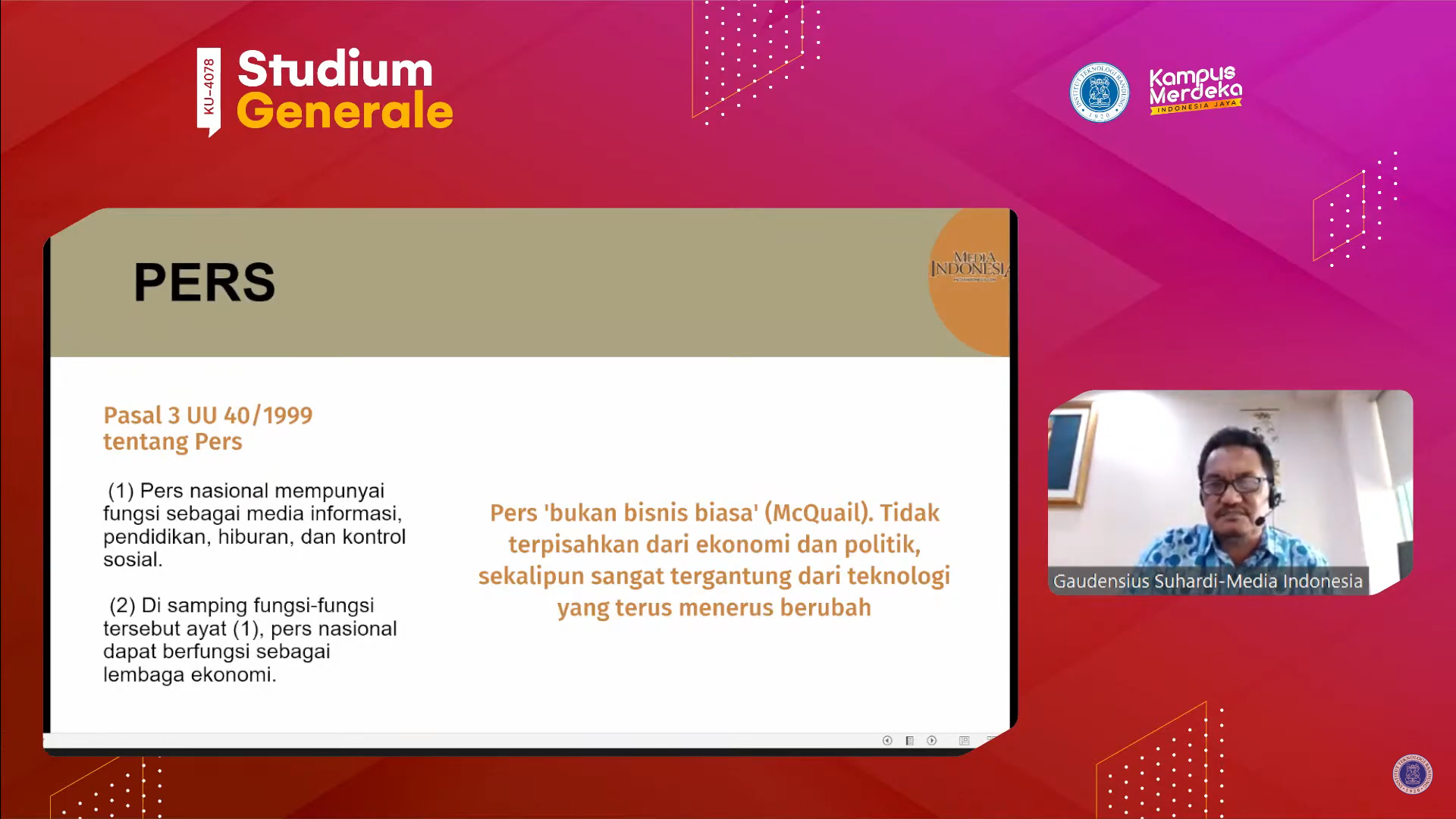
One of the topics that attracted significant attention was the discussion on Indonesia’s media landscape. In front of a multinational classroom, Dr. Lala presented the diversity of Indonesia’s media ecosystem—from state-owned broadcasters such as TVRI and RRI, politically affiliated media outlets, to the growth of digital media platforms acquired by venture capital, often referred to as “homeless media.”
The discussion was later expanded into a comparative analysis. Students were asked to compare media ownership structures and industry dynamics in Indonesia with those in Europe and the United States as part of a cross-country analytical exercise.
Academic Culture Differences: Low-Context and High-Context Communication
.jpg)
Teaching in Germany provided Dr. Lala with new insights into differences in academic culture. European students tend to adopt low-context communication, expressing opinions, criticism, and disagreement in a direct and explicit manner. This contrasts with Indonesian students, who are generally more accustomed to high-context communication, where messages are often conveyed implicitly and with greater social consideration.
"Students in Germany are very straightforward. They do not hesitate to ask questions, offer corrections, or seek clarification—including regarding grading,” she explained.
In addition, the learning system at RheinMain University strongly emphasizes student-centered learning. One-way lectures are limited to a maximum of one hour, followed by discussions, group work, and short breaks (coffee breaks) to maintain students’ focus and learning effectiveness.
“Students there highly value time and openness. If they feel tired, they will say it directly. What is remarkable, however, is their enthusiasm when challenged,” she added.
One of the most memorable experiences occurred when students were assigned to produce a podcast as their final project. The task posed a considerable challenge, given that the culture of digital media consumption and production in Germany is relatively more reserved compared to Indonesia.
Nevertheless, the results exceeded expectations. Within just three days, students successfully produced theory-based podcasts with clear role distribution, including hosts, scriptwriters, and producers. Several groups even addressed current global issues using a mature journalistic approach.
“At first, they were hesitant, but the final results were excellent. That was the moment I truly felt that this teaching method worked,” she said.
Reflections for ITB and Opportunities for Global Collaboration
The teaching experience in Germany provided valuable lessons that could be adapted at ITB, particularly in terms of aligning teaching methods with student characteristics, managing intensive classes, and recognizing the importance of interaction and breaks in the learning process.
At the same time, the presence of ITB faculty members teaching at international universities contributes to strengthening ITB’s faculty reputation at the global level—an important indicator in international university rankings.
The program also opened broader opportunities for collaboration, both on a personal academic level and institutionally. Initial discussions have been conducted regarding potential research collaborations, team teaching initiatives, as well as the development of student exchange programs and summer or winter courses between ITB and RheinMain University.
“This connection is expected to grow into more formal institutional collaboration—not only for faculty members, but also by opening international opportunities for ITB students in the future,” she concluded.
Through this experience, ITB once again reaffirmed its role as a higher education institution that actively contributes to the global academic landscape, while bringing international best practices back home to enrich the national learning ecosystem.
.jpg)
.jpg)
.jpg)
.jpg)