Through Innovative Flood Prediction and Verification Platform, ITB Student Team Represents Indonesia at AI Competition in Singapore
By Johanes Wijaya Susanto - Teknik Telekomunikasi, 2022
Editor M. Naufal Hafizh, S.S.
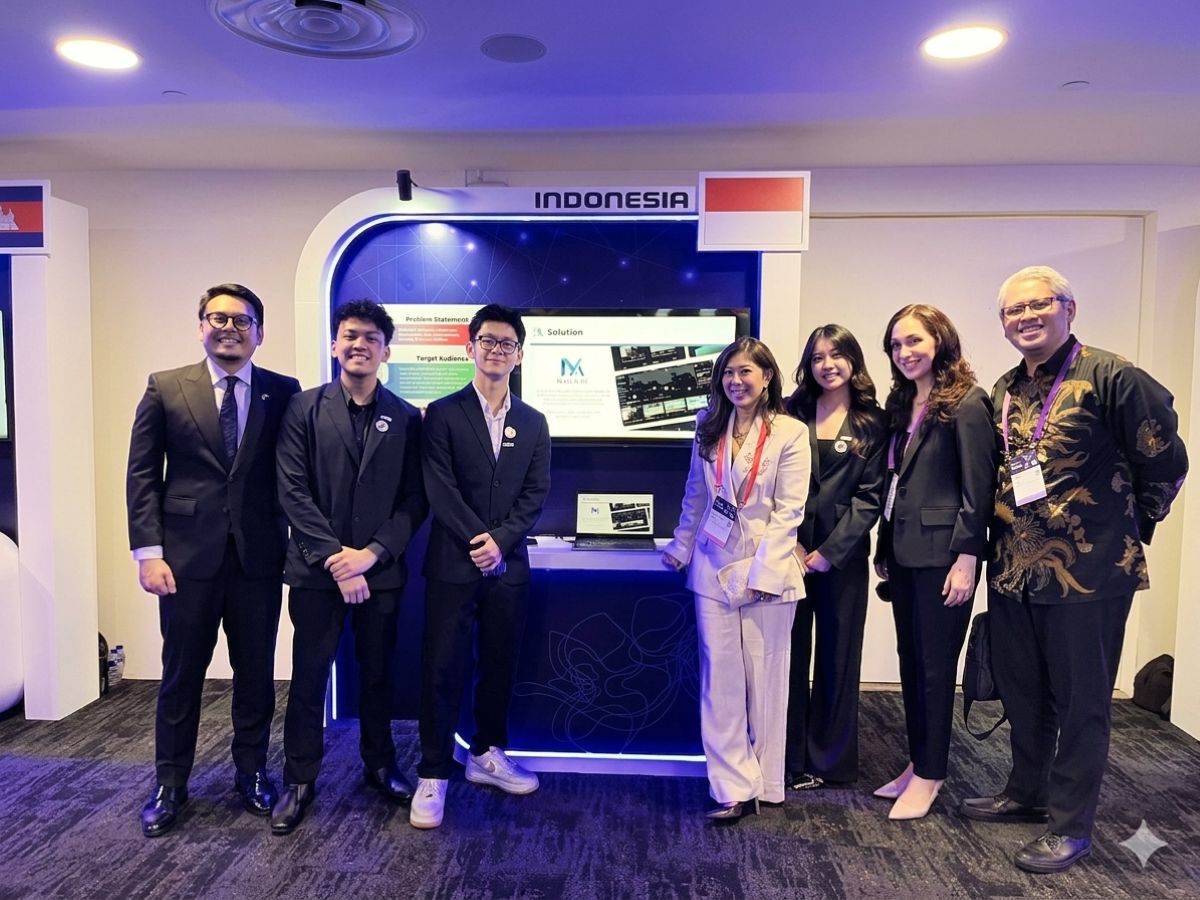
The team outperformed more than 300 teams across Indonesia through their innovation, “Noah AI,” an integrated artificial intelligence-based platform for flood prediction and verification, developed within three weeks. The competition was organized by the ASEAN Foundation, AI Singapore, and AngelHack.
The team, named “Iseng Hackaton,” consists of three STEI ITB students: Ari Aziz, Jason Edward Salim, and Tiffany Chu. At the regional level, the team competed with representatives from 11 other ASEAN countries. They presented their innovation through a booth exhibition session assessed by judges from the ASEAN Foundation and other organizing institutions.
The event was also attended by several ministers from ASEAN countries, including Meutya Hafid, Indonesia’s Minister of Communication and Digital Affairs. In addition, the finalists’ presentations were witnessed directly by the President of Singapore.
“We felt a great sense of responsibility because we were carrying Indonesia’s name. Moreover, pitching directly in front of many people, including the President of Singapore, in English made us quite nervous,” Aziz said.
.jpg)
The development of Noah AI was inspired by the frequent occurrence of floods in Indonesia, including in DKI Jakarta, as well as the major flood that hit Medan in 2025.
In addition, based on information from the National Disaster Management Agency (BNPB), existing flood prediction and verification systems are already available but have not yet been fully integrated. To address this issue, the team developed a solution that combines these systems into one centralized platform.
Noah AI offers three main features. The first is flood prediction. This process is carried out by collecting external data, such as from Google Flood Hub, OpenWeatherMap API, and other sources, to train an AI model, namely Long Short-Term Memory (LSTM), which is used to predict when flooding may occur.
The second feature is verification. The flood verification process uses available road CCTV footage. The team trained a computer vision model, YOLOv8, to detect rising water levels on roads.
The third feature is an alert system designed to notify the public about potential light flooding or dangerous flood conditions. The alerts are planned to be sent via SMS, allowing them to reach a wide range of communities.
Moving forward, the team plans to develop a two-way SMS alert system that will allow the public to communicate directly, such as requesting assistance or receiving rescue guidance.
.jpg)
“Through this competition, I met people from various countries who broadened my perspective on technology and life. The insights we exchanged truly expanded my view of the outside world and my goals for the future. My message is: do not be afraid of losing. From every loss, you are actually one step closer to victory. Just enjoy the journey,” Jason said.
“This competition gave us many exciting experiences. We were able to meet friends from other ASEAN countries and build connections. It has become one of the most memorable and unforgettable experiences for me,” Tiffany said, sharing her impression of participating in the AI Ready ASEAN Youth Challenge 2026.
The AI Ready ASEAN Youth Challenge is a regional ideathon competition aimed at empowering young people in Southeast Asia to harness the transformative potential of artificial intelligence (AI) for social good. The competition is designed to improve AI literacy, strengthen regional collaboration, and encourage the creation of real, inclusive, and sustainable impact for society.
.jpg)
.jpg)
.jpeg)
.jpg)
.jpeg)