Scientific Oration of Prof. Gunawan Handayani: Detecting Subsurface Secrets Through LSSM Smart Innovation for a New Dimension in Disaster Mitigation
By Dina Avanza Mardiana - Mikrobiologi, 2022
Editor M. Naufal Hafizh, S.S.
.jpg)
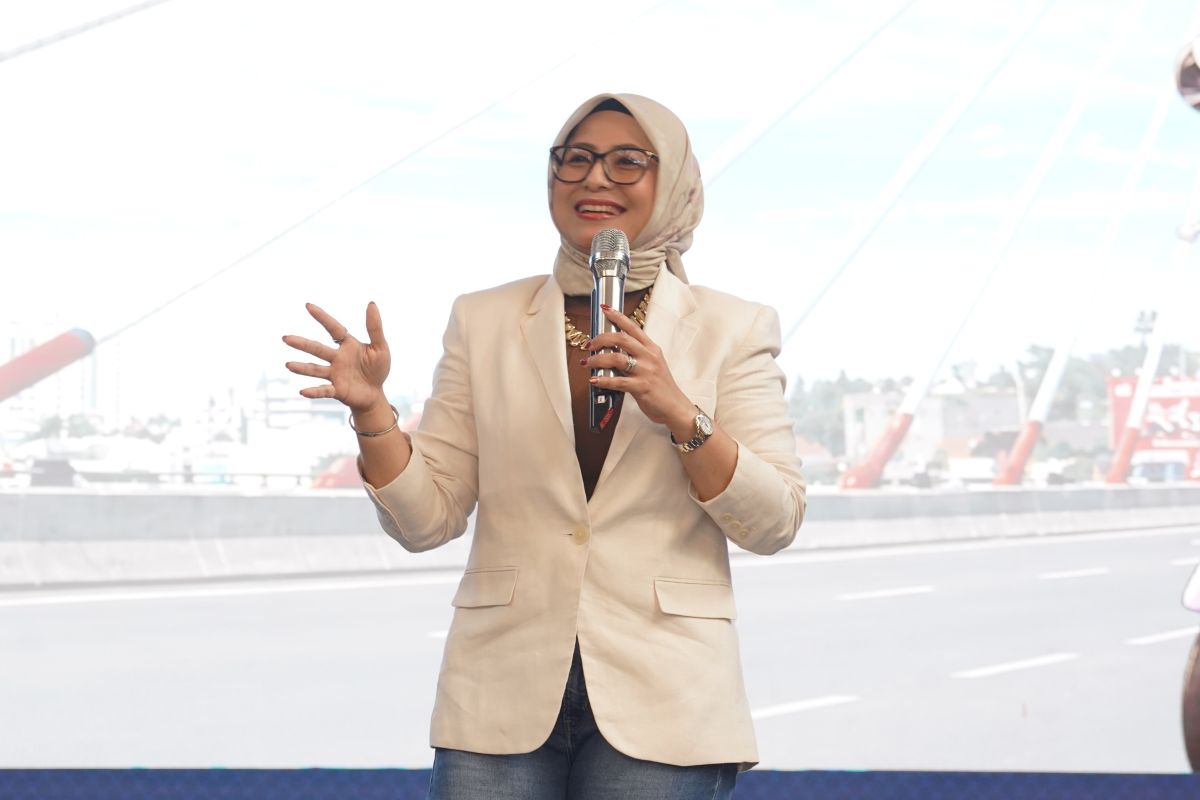
BANDUNG, itb.ac.id - The Board of Professors of Institut Teknologi Bandung (FGB ITB) convened a scientific oration at the West Hall, ITB Ganesha Campus, on Saturday (5/9/2026). On this occasion, Prof. Gunawan Handayani from the Faculty of Mathematics and Natural Sciences officially delivered his scientific oration titled “Research and Application of Near-Surface Waves to Support Infrastructure Development and Natural Disaster Mitigation in Indonesia.”
In his opening remarks, Prof. Gunawan explained that in infrastructure development and disaster mitigation, it is critical to determine the strength of materials, such as concrete, steel, and soil/rock using non-destructive methods. He assessed that the utilization of P and S elastic waves serves as the most effective method for measuring these parameters without compromising material integrity.
LSSM Innovation: A Testing Solution for Noisy Environments
A significant challenge in field testing is the presence of sound interference or noise, particularly on public highways. Prof. Gunawan stated that his team has developed an innovation known as the Linear Sweep Sine Method (LSSM) test, which possesses exceptionally high noise-resistance features.
According to him, this feature is vital for conducting measurements in public areas with heavy traffic. “Economically, it is impossible to halt traffic during these measurements,” he remarked, emphasizing the method’s efficiency. He added that the LSSM system is now Android-based, making it more practical to control via mobile devices.
Understanding Soil ‘Memory’ and the Risk of Recurrent Liquefaction
Transitioning to the discussion on natural disasters, Prof. Gunawan highlighted the importance of the Maximum Shear Modulus (Gmax) parameter in predicting soil behavior. Regarding liquefaction analysis, he dismissed the common assumption that soil which has previously undergone liquefaction will become denser and safer in the future.
Based on his research, liquefaction actually destroys the inter-granular cementation that has formed naturally over thousands of years. "The soil loses its strength 'memory'," he asserted, explaining why certain regions remain at high risk for recurrent liquefaction during subsequent earthquakes.
Strategic Role in Modern Infrastructure Development
.jpg)
Prof. Gunawan further explained that near-surface wave parameters play a vital role in tunnel design and slope stability. He noted that without accurate initial stiffness data from Gmax, earthquake-induced slope stability simulations would merely be rough estimates.
In tunneling projects, modeling that incorporates this stiffness parameter produces sharper and narrower ground settlement profile predictions, consistent with field observations. This, he added, is essential to ensure that damage estimates for existing surrounding structures remain accurate.
In closing his oration, Prof. Gunawan invited the audience to reflect on the essence of this technological innovation. He emphasized that obtaining elastic wave velocities and soil layer thicknesses as accurately as possible is not merely an academic achievement, but a fundamental pillar of public safety. He expressed hope that this non-destructive approach would continue to serve as a backbone for robust infrastructure development while sustainably mitigating the threat of natural disasters in Indonesia.
Reporter: Dina Avanza Mardiana (Microbiology, 2022)
.jpeg)
.jpg)
.jpg)
.jpg)
.jpg)