Scientific Oration of Prof. Katharina Oginawati Highlights the Importance of Environmental Risk Mitigation for Public Health
By Merryta Kusumawati - Teknik Geodesi dan Geomatika, 2021
Editor M. Naufal Hafizh, S.S.
.jpg)
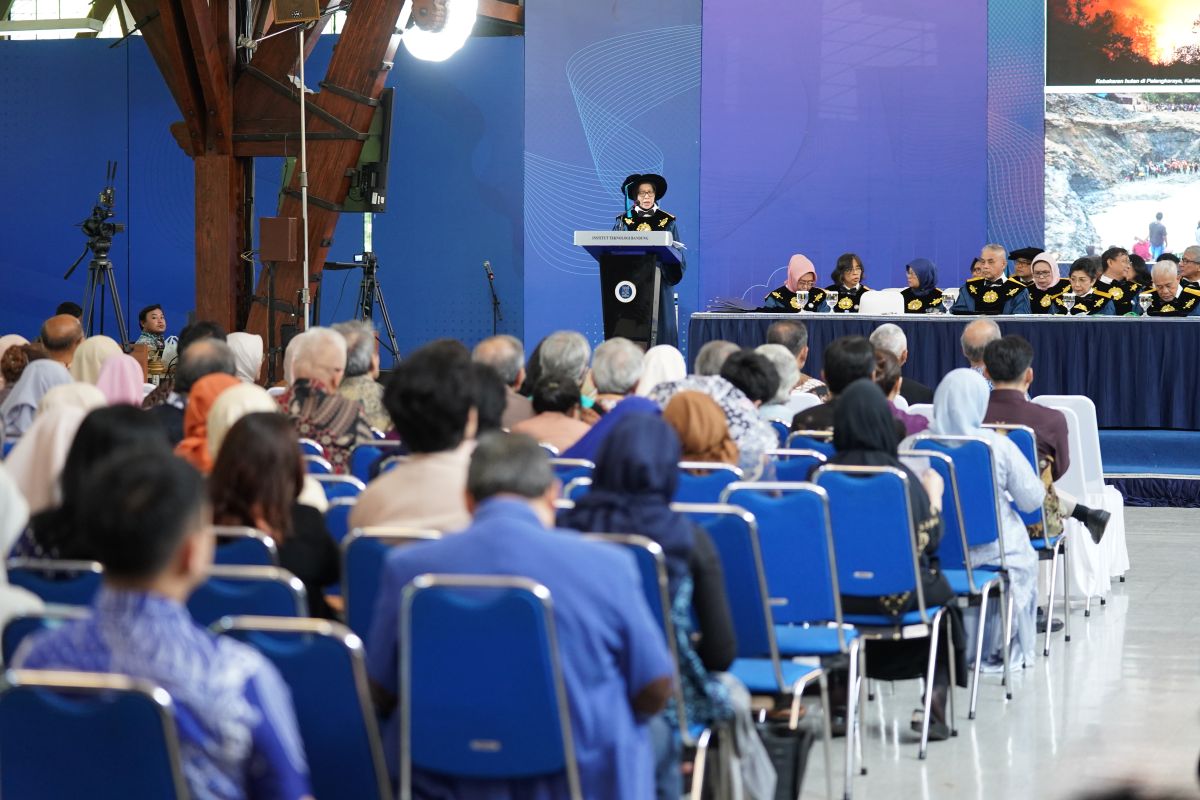
BANDUNG, itb.ac.id - The Forum of Professors of Institut Teknologi Bandung (FGB ITB) once again held a Scientific Oration of Professors at ITB’s West Hall. On this occasion, Prof. Dr. Ir. Katharina Oginawati, M.S., from the Faculty of Civil and Environmental Engineering (FTSL) ITB, delivered a scientific oration entitled “Environmental Health and Safety as a Risk Mitigation Strategy in Supporting the SDGs 2030.”
In her oration, Prof. Katharina emphasized that human health cannot be separated from environmental quality. According to her, population growth and increasing human activities have caused various changes in environmental quality, including air pollution, water pollution, and environmental degradation, all of which directly affect public health.
“Humans and the environment are part of one ecosystem. When environmental quality declines, human health will also be affected,” she stated.
Air Pollution and Global Health Risks
Prof. Katharina explained that air pollution is currently one of the most significant global health determinants. The continuous growth of the world population has led to increased settlement activities, land-use changes, and rising emissions of air pollutants.
She linked this issue to the Sustainable Development Goals (SDGs) 2030, particularly the goals related to good health and well-being, as well as climate action.
“Changes in environmental quality must become a serious concern because they are directly related to sustainable development and people’s quality of life,” she explained.
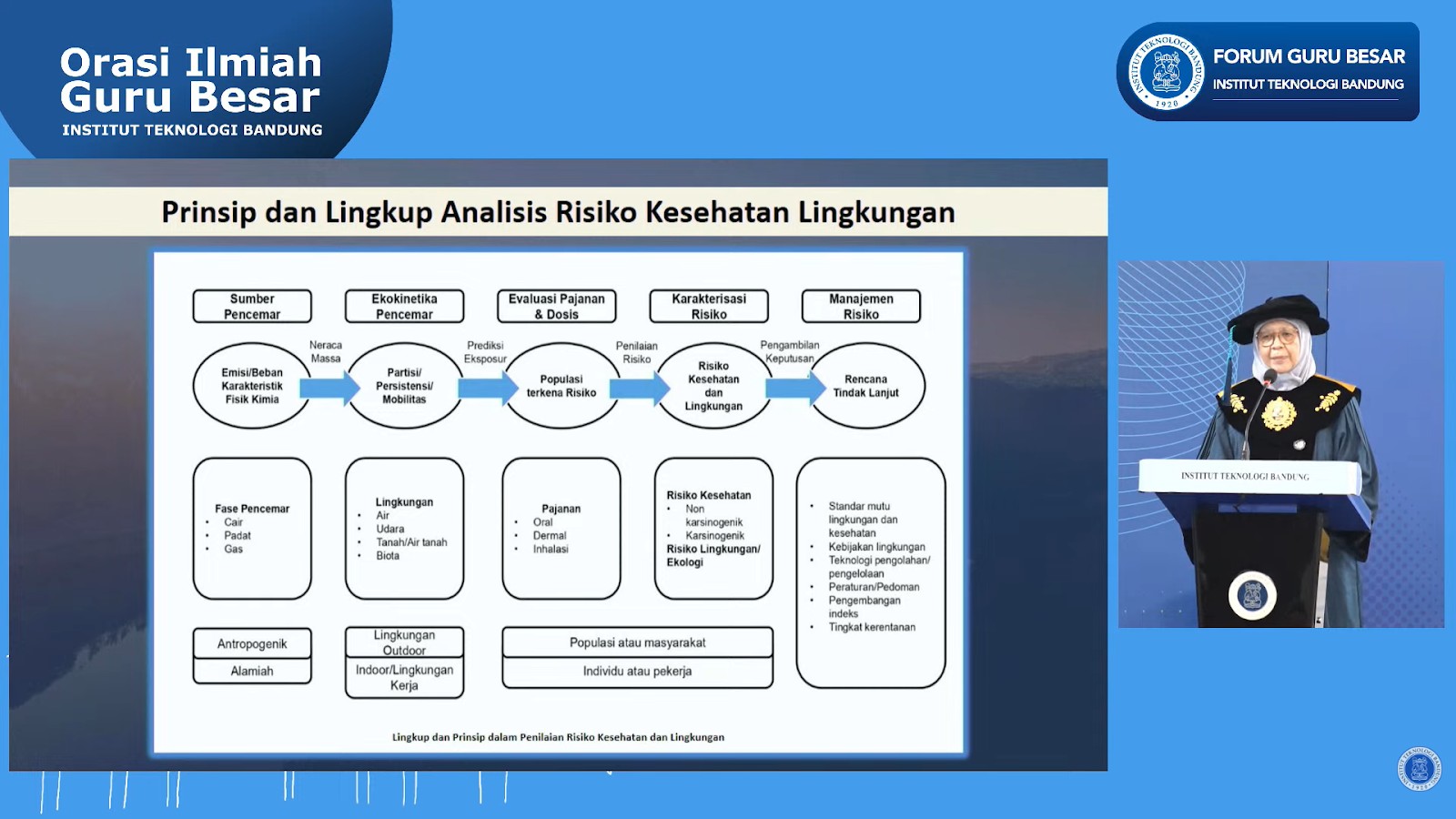
In the oration, Prof. Katharina also introduced the concept of Environmental Health Risk Assessment (EHRA) as a systematic approach to understanding the impact of environmental hazards on human health. This approach includes exposure assessment, dose-response evaluation, risk characterization, and risk management.
Research on Particulate Exposure and Heavy Metals
As part of her research, Prof. Katharina and her team have conducted various studies on exposure to particulates and toxic substances in workplace environments. One of the studies was carried out in the blacksmith industry in Ciwidey, South Bandung.
The study found concentrations of ultrafine particles and heavy metals such as manganese, lead, chromium, and arsenic in the working environment of blacksmith workers. According to her, these extremely fine particles have the potential to enter deep into the alveoli of the lungs and even into human blood vessels.
“Ultrafine particles are a concern because they can penetrate deeper into the respiratory system and increase the risk of health problems,” she said.
She added that the limited use of personal protective equipment (PPE) in informal work environments remains a serious challenge in protecting workers’ health. Long-term exposure to particulates and heavy metals may increase the risk of chronic obstructive pulmonary disease (COPD), asthma, and decreased lung function.
In addition to the blacksmith industry, studies on pollutant exposure were also conducted in the Sarimukti landfill area by dividing the location based on waste disposal zones and activity points, such as workers’ areas, operational areas, and nearby residential areas or scavenger settlements.
The measurement results showed that benzene levels were higher in operational areas and residential areas around the landfill. Ammonia levels remained relatively below the threshold, while PM2.5 exceeded the threshold at all observation points. This condition indicates the need for air quality monitoring, PPE use, and exposure control for both workers and surrounding communities.
The Impact of Pesticide Exposure and the Importance of Risk Mitigation
In her research on pesticides in the South Bandung area, Prof. Katharina found indications of decreased sperm quality among farmers who sprayed pesticides due to exposure to certain chemicals, such as organophosphates and carbamates.
According to her, these findings show that the impact of environmental pollution is not only related to respiratory diseases but may also affect the human reproductive system.
“The use of hazardous chemicals must be followed by proper risk management to prevent long-term health impacts,” she stated.
She also emphasized the importance of developing Internet of Things (IoT)-based air quality monitoring systems, integrating environmental data, and establishing early warning systems as part of science- and technology-based risk mitigation.
Technological Innovation and Collaboration for Environmental Health
In addition to focusing on environmental exposure research, Prof. Katharina and her team have also developed a simple filter made from recycled materials to support the measurement of particulates and pollutants in the environment.
According to her, simple yet applicable technological innovations can become useful solutions for wider communities. She also highlighted the importance of multidisciplinary collaboration among researchers, health professionals, government institutions, and the public in addressing environmental health challenges.
Referring to the theme of World Health Day 2026, “Together for Health: Stand with Science,” Prof. Katharina emphasized that science, research, and collaboration are the main foundations for improving global health and environmental safety.
“Scientific evidence and collaboration must become the basis for building better public and environmental health,” she said.
Profile of Prof. Dr. Ir. Katharina Oginawati, M.S.
Prof. Dr. Ir. Katharina Oginawati, M.S. is a Professor in the field of Environmental Health and Safety at the Faculty of Civil and Environmental Engineering, Institut Teknologi Bandung. She was born in Bandung on March 10, 1962, and completed her education from elementary school to doctoral level in Bandung. She earned her bachelor’s, master’s, and doctoral degrees from the Environmental Engineering Study Program at ITB.
Since 1995, Prof. Katharina has been active as a lecturer in Environmental Engineering at FTSL ITB. She has served as Head of the Environmental Engineering Workshop, Head of the Implementation Subdirectorate at ITB’s Directorate of Development, and Head of the Industrial Hygiene and Toxicology Laboratory at FTSL ITB. In education, she has supervised more than 100 undergraduate students, dozens of master’s students, and doctoral students. She also actively teaches various courses, including environmental health, environmental epidemiology, environmental toxicology, occupational environmental health, cleaner production, and environmental management systems.
Her research focuses on environmental health, health risk analysis due to pollutant exposure, environmental toxicology, and air quality management. Her studies include pesticide exposure risks among farmers, heavy metal analysis in communities along the Citarum River Basin, air emission distribution in landfill areas, and environmental health biomarker studies.
In addition to her research activities, she has also been involved in various community service programs, including clean water and sanitation provision in East Nusa Tenggara. Prof. Katharina has established research collaborations with various national and international institutions, such as Kyoto University, Kanazawa University, and several health and environmental institutions in Indonesia.
Throughout her academic career, Prof. Katharina has produced numerous books and international scientific publications in the fields of environmental health and toxicology. Her research topics include heavy metal pollution, microplastics, air quality, particulate exposure, and public health risks caused by environmental pollution.
For her dedication to education, research, and community service, she has received various awards, including the Satyalancana Karya Satya 10-Year and 20-Year Awards from the President of the Republic of Indonesia, a 25-year service award from the Rector of ITB, and various professional certifications in environmental engineering and environmental impact assessment.
Reporter: Merryta Kusumawati (Geodesy and Geomatics Engineering, 2021)

.jpg)
.jpeg)