ITB's Novadüng Wins Second Place in the Hult Prize Indonesia Through Sustainable Childcare Innovation
By Vito Egi Nandriansyah - Teknik Geofisika, 2021
Editor M. Naufal Hafizh, S.S.
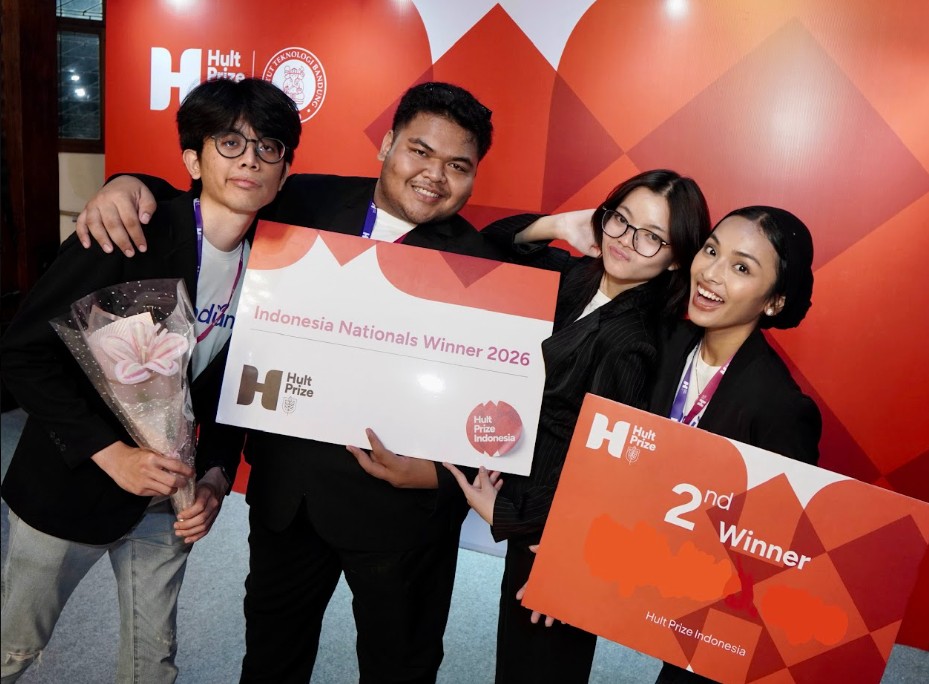
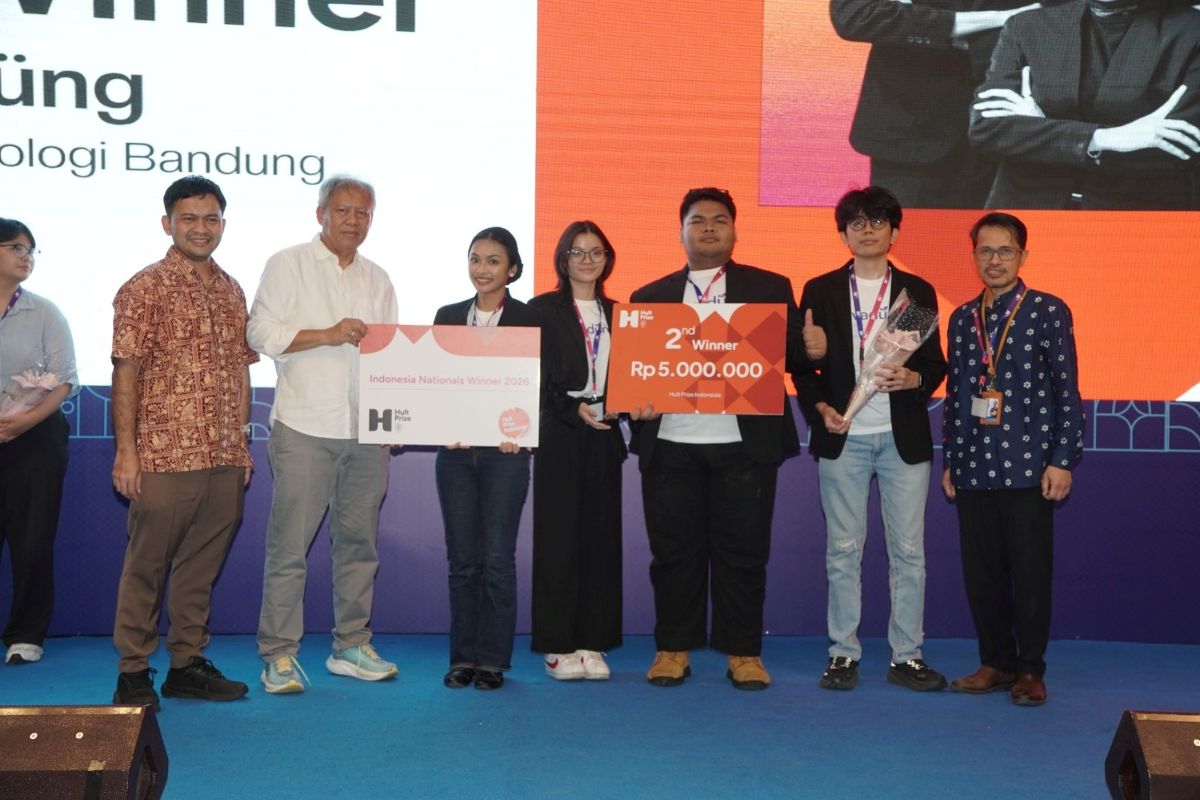
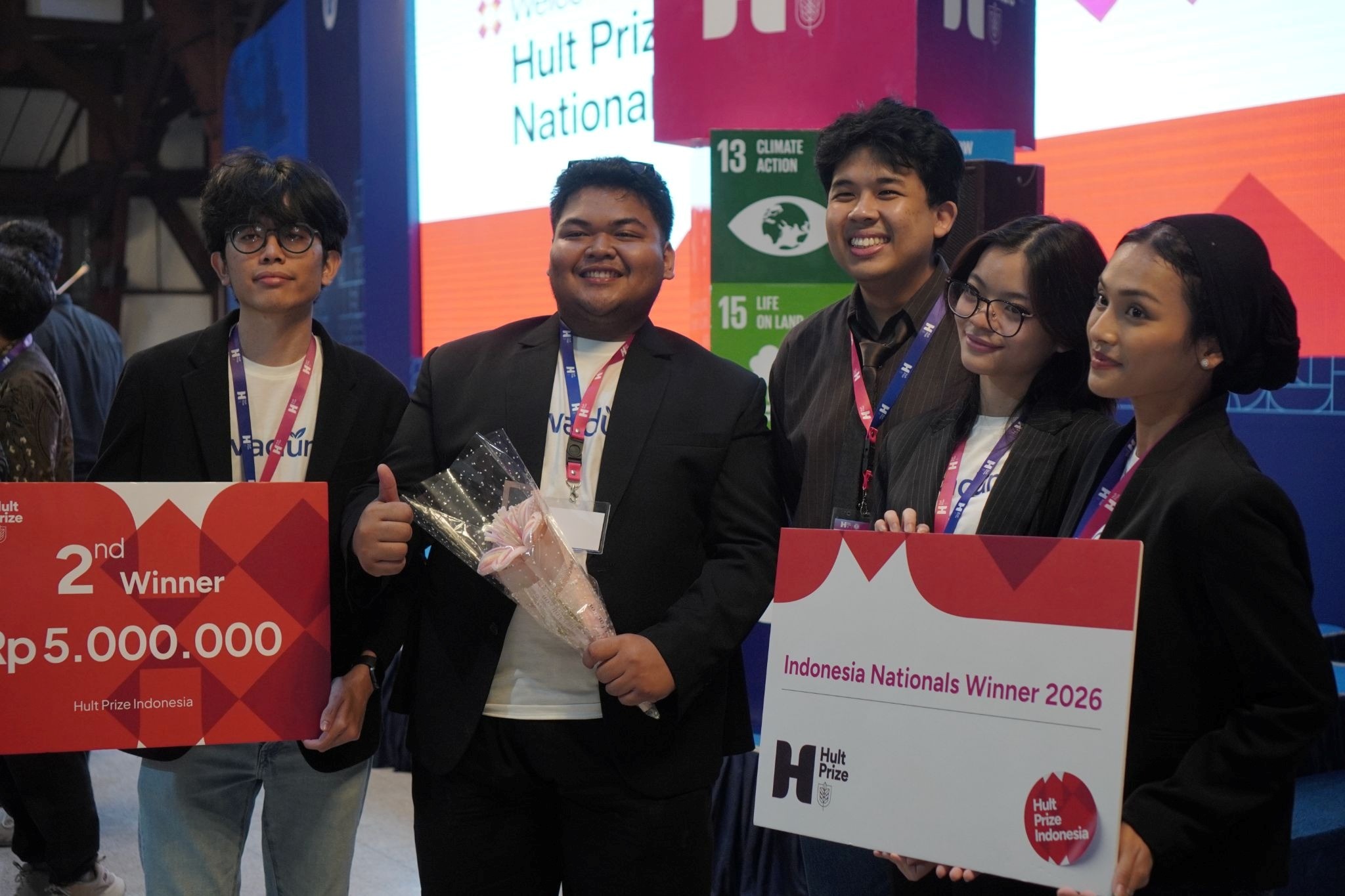
BANDUNG, itb.ac.id—The Novadüng team from the Bandung Institute of Technology won second place at the Hult Prize Indonesia through its sustainable childcare innovation based on Bio-SAP technology. The multidisciplinary team, consisting of Naila Faridah Huda Wasilah (Oceanography 2022), Muhammad Dika Hakim (Materials Engineering 2022), Nadya Saski Wardiman (Telecommunications Engineering 2022), and Arvyno Pranata Limahardja (Information Science and Technology 2022), achieved this achievement.
Starting from concerns about environmental issues and access to quality baby care products, Novadüng presents solutions that not only focus on sustainability but also convenience and affordability for the wider community. Novadüng's team highlights that diaper waste is one of the largest contributors to single-use waste globally, yet it is rarely a key focus in sustainability discussions. On the other hand, childcare product quality is also considered not to be equally accessible to all levels of society.
"It all started with two concerns that converged: environmental damage that was far more severe than what was visible on the surface, and the potential for sustainable absorbent materials that already existed but had not been optimally utilized," Naila said.
From this concern, the team began to question the possibility of presenting sustainable solutions in the childcare industry. which has not been touched much from the sustainability side. This idea later evolved into Novadüng, a childcare innovation based on Bio-SAP technology designed to provide a more environmentally friendly system without sacrificing user comfort.
Through this technology, Novadüng tries to fill the empty space between childcare quality and sustainability that have been going hand in hand but are rarely resolved simultaneously.
"Our main principle is not to force consumers to drastically change their habits, as diaper use is so ingrained in everyday life. We're not trying to fight the habit but rather to improve it through a hybrid system which is smarter and accessible to all groups," said Dika.
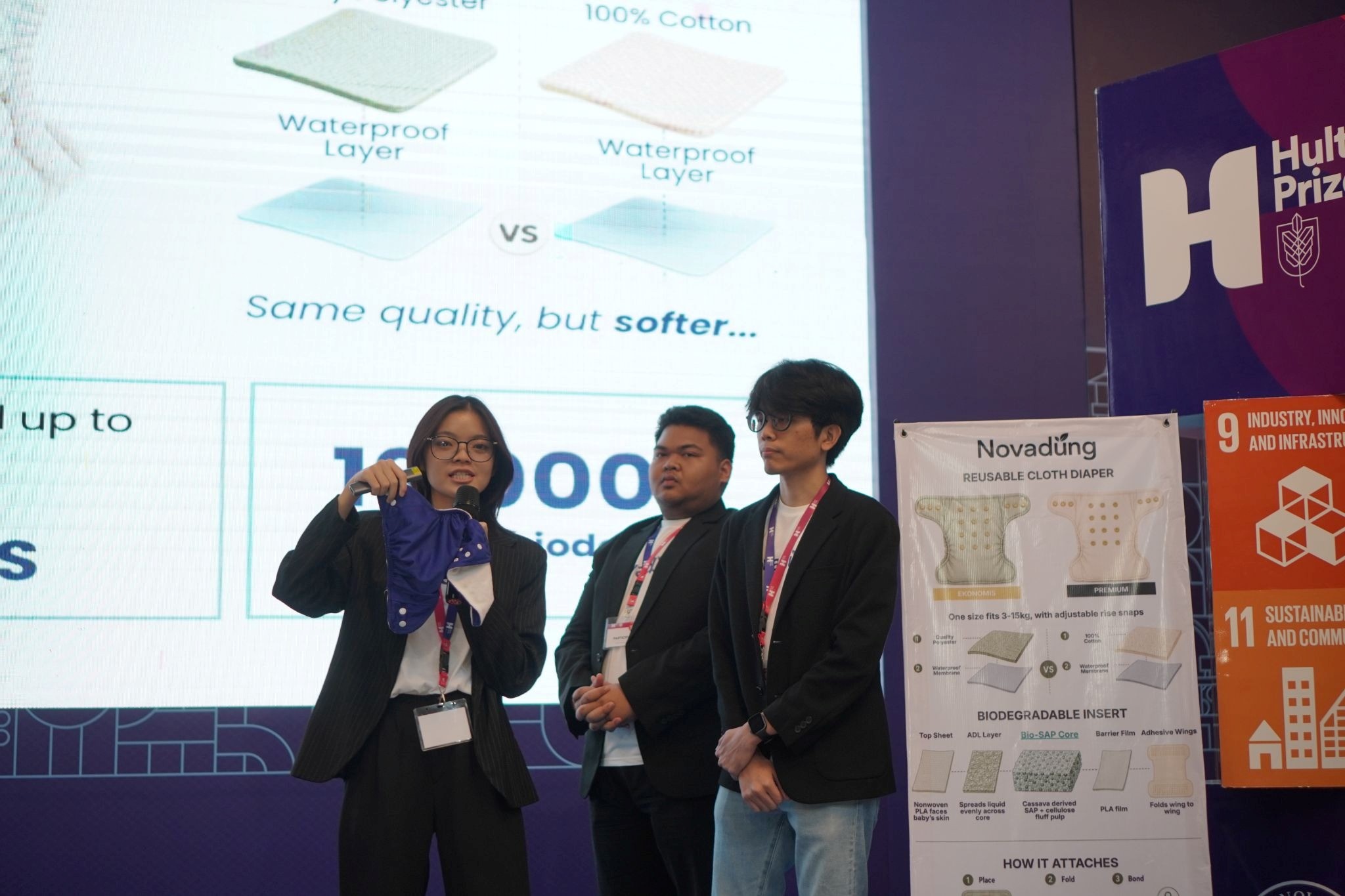
More than just delivering eco-friendly products, Novadüng also redesigned the entire childcare system. to be smarter, better, and built for everyone. This approach is one of the team's key strengths in the Hult Prize Indonesia competition.
During the development process, the team faced various challenges, both technical and internal. Each round of the competition required continuous iteration of ideas and a consistent vision among team members.
"A team's resilience isn't just evident during their pitching in front of the judges but rather in the tough moments that happen behind the scenes," Nadya said.
Novadüng is currently in the advanced testing and development phase, particularly on the insert components that come into direct contact with a baby's skin and thus require high safety and quality standards. Once that phase is complete, the team plans to proceed with the intellectual property and product legalization applications and minimum viable product (MVP) before launching to the public.
"We want to prove that sustainable childcare isn't something far away or expensive, but something real, and we're building it," said Arvyno.
Through this achievement, the Novadüng team demonstrates how cross-disciplinary collaboration at ITB can produce innovations that are not only globally competitive but also relevant in addressing future social and environmental challenges.
Reporter: Vito Egi Nandriansyah (Geophysical Engineering, 2021)
.jpeg)
.jpg)
.jpeg)