Ar-kick: ITB Lecturer's Innovation for Independent Football Training Based on Sports Science
By Anggun Nindita -
Editor M. Naufal Hafizh, S.S.
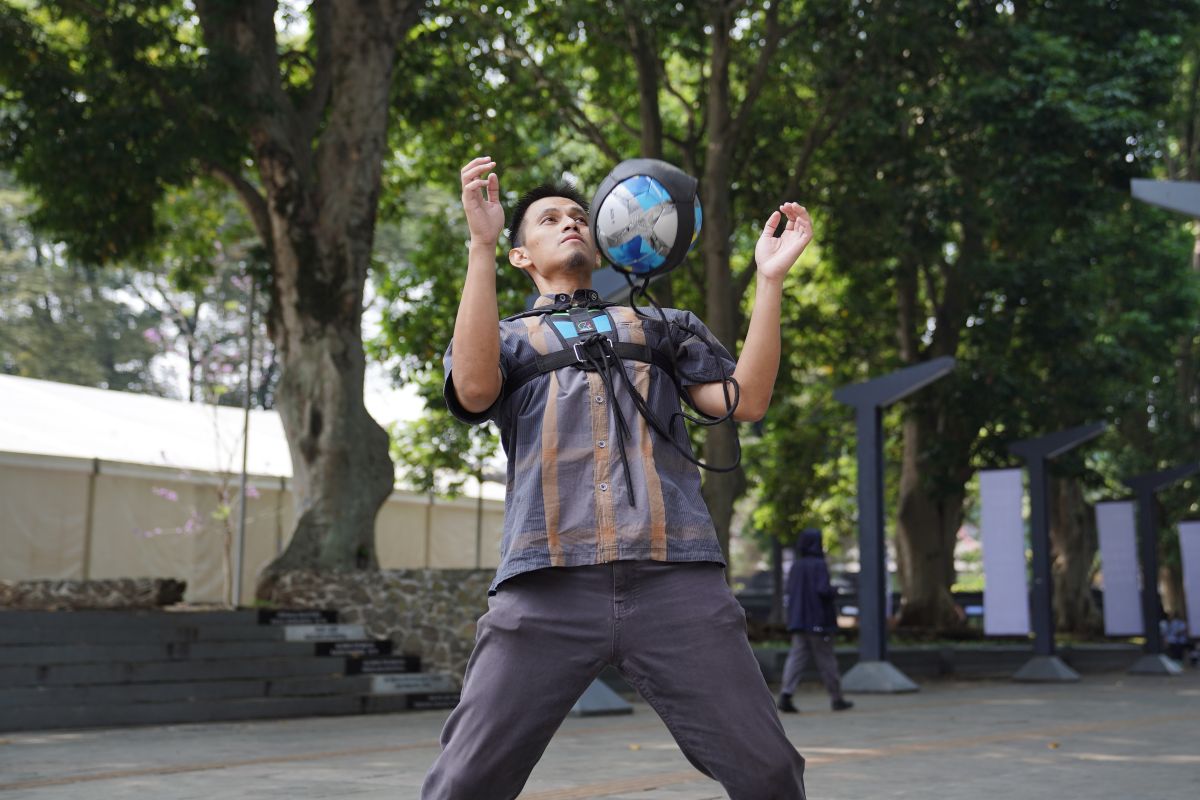
BANDUNG, itb.ac.id — Practicing passing, shooting, and ball control typically requires a football field and at least one training partner. But what if various fundamental football techniques could be practiced independently, even in a relatively confined space? This idea was brought to life by Dr. Asril Pramutadi Andi Mustari, S.Si., M.Eng., a lecturer from the Nuclear Physics and Biophysics Research Group, Faculty of Mathematics and Natural Sciences (FMIPA), Institut Teknologi Bandung (ITB), through an innovative football training device called Ar-kick.
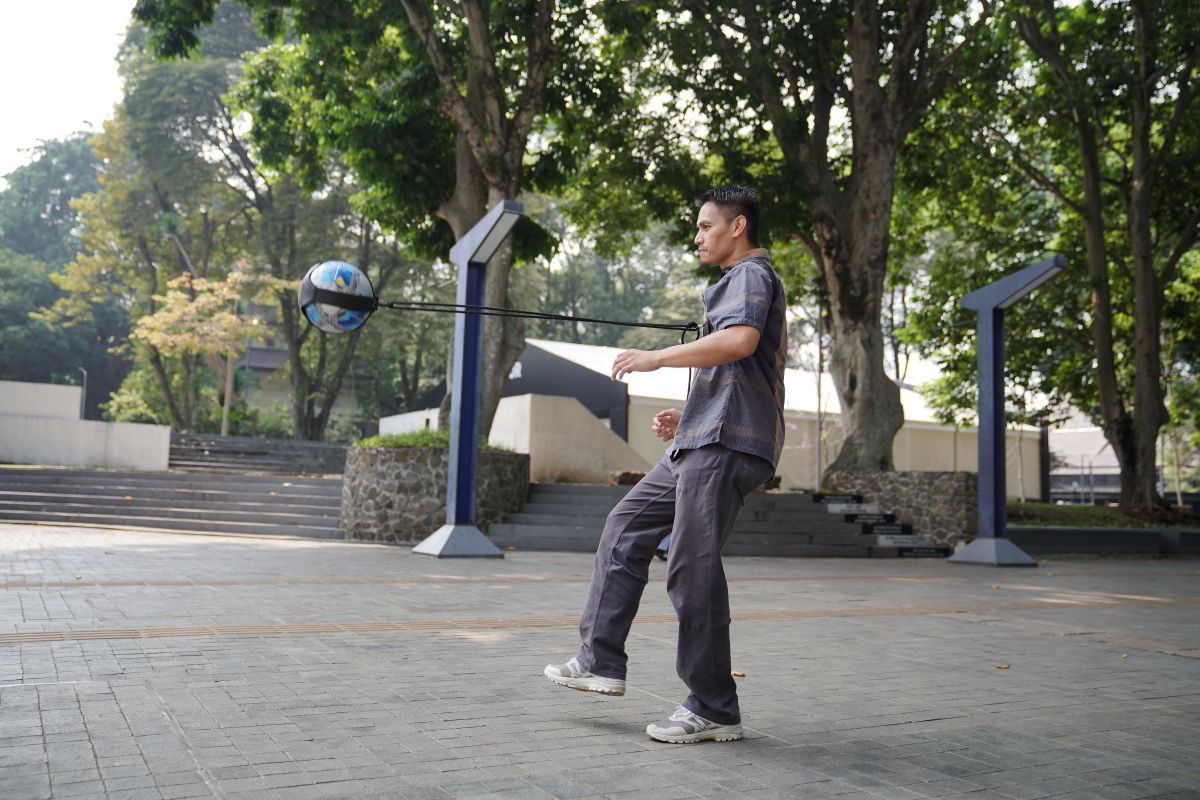
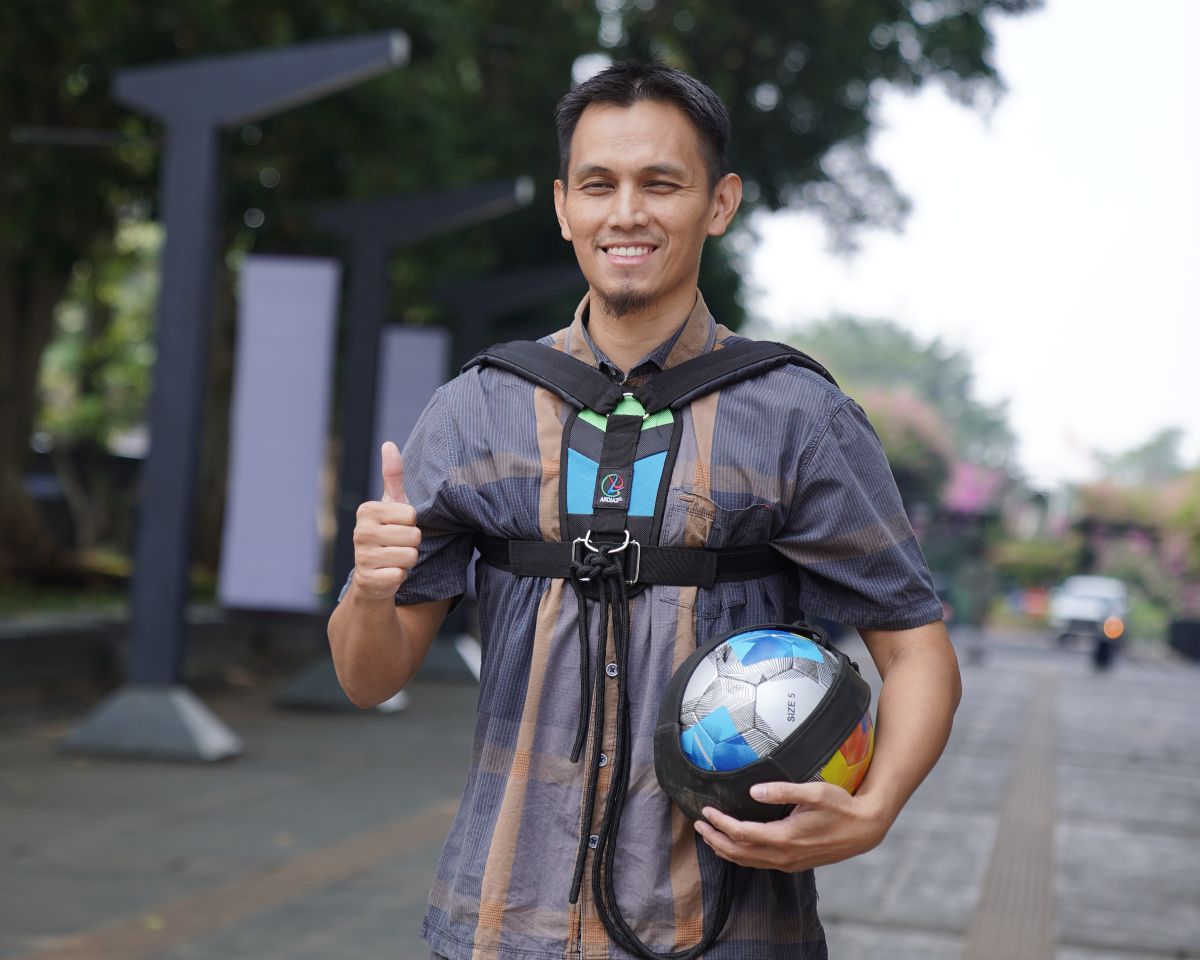
"Ar-kick is worn on the body using a chest harness that connects the player to the ball. This mechanism allows the ball to return within the player's reach after being kicked, enabling repetitive training without having to retrieve the ball continuously," he explained.
The device enables players to practice various techniques, including passing, shooting, chest and knee control, heading, and half-volleys. From the outset, its development focused on creating a tool that would allow players to practice fundamental football skills independently and in limited spaces.
Inspired by a Shoulder Injury in Japan
The idea behind Ar-kick did not originate on a football field but rather from a shoulder injury Dr. Asril sustained while in Japan in 2014. At the time, he used a medical device to support his collarbone. The design sparked an idea: what if a similar principle could be adapted to support a football training device?
"The idea was then combined with a ball holder and developed into a wearable device. Following the development process, the device began to be produced and tested in Indonesia around 2016," he said.
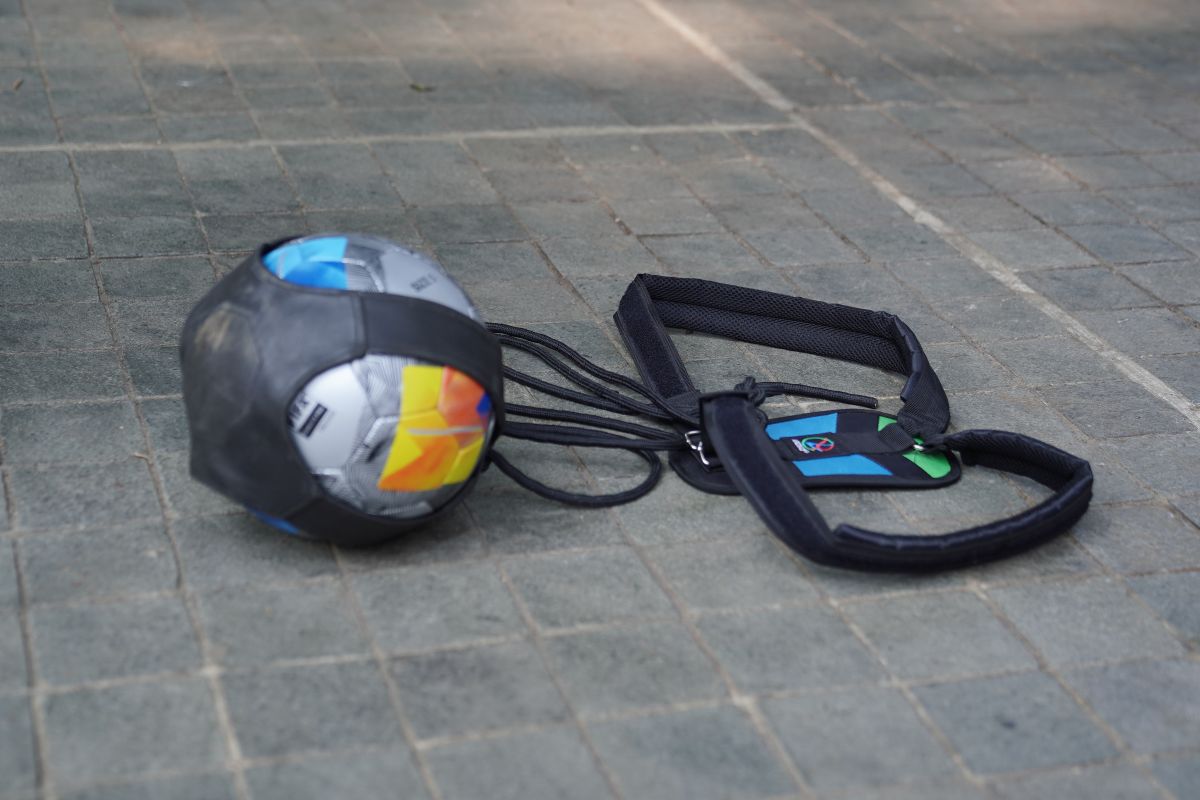
Ar-kick was designed with both functionality and comfort in mind. According to the scientific publication documenting its development, the device consists of a chest-mounted support, a connecting cord, and a ball holder.
"The support is designed like a backpack and equipped with a chest protector. Meanwhile, the connecting cord uses a kernmantle rope to ensure durability without producing the decelerating effect associated with elastic materials," he explained.
Achieving Thousands of Ball Touches
For Dr. Asril, repetition is one of the keys to developing football skills from an early age. Understanding fundamental techniques alone is not enough; players need to practice them repeatedly until the movements become increasingly natural.
With Ar-kick, a player can perform approximately 1,000 kicks in just 15 minutes of training, using either the right or left foot. This training intensity is one of the reasons the device has increasingly been targeted toward young players and students at football academies.
"This is consistent with the initial research behind its development, which emphasized the importance of repetition in developing ball mastery. The more frequently players interact with the ball, the greater their opportunity to develop fundamental movements that can be performed more naturally during matches," he said.
Initially, Ar-kick was marketed to the general public. However, as its development progressed, the device was considered particularly relevant for youth football development. Independent training allows children to increase their ball touches outside scheduled coaching sessions. To date, the device has been used by more than 2,000 users.
"Another advantage is that players can become more comfortable using their non-dominant foot. For example, a child who usually kicks with the right foot can dedicate additional practice to the left foot without having to wait for a scheduled team training session," he added.
When Football Meets Physics
Dr. Asril's academic background in physics has also brought a different perspective to the development of Ar-kick. Kicking a football is viewed not merely as an athletic skill but also as a physical phenomenon that can be observed and measured.
During the device's development, users' movements were analyzed qualitatively by comparing their body positions with those of professional football players. The analysis demonstrated that the device could be used to simulate several techniques, including passing, chest control, and side volleys.
A quantitative approach was also employed using motion-tracking software to measure biomechanical parameters. In the analysis of shooting techniques, for example, the ball's kinetic energy was recorded at approximately 7 joules just before contact with the instep. When the movement is repeated up to 1,000 times, the repetitions illustrate the substantial physical activity performed by players during training.
"This approach demonstrates the role of sports science: training is evaluated not only by the number of kicks performed but can also be studied through movement mechanics, speed, force, energy, and technical consistency," he explained.
Strengthening Players' Foundations from an Early Age
Ultimately, Ar-kick is not intended to replace coaches or team training sessions. Instead, it serves as a supplementary training tool that provides players with more opportunities to develop their fundamental skills independently.
This is particularly important because high-level football performance begins with mastery of the fundamentals, including passing accuracy, shooting quality, ball control, and the ability to use both feet. When these skills are practiced consistently from an early age, players can develop a stronger technical foundation as they progress to higher levels of competition.
From a mechanical perspective, Ar-kick's development is now considered relatively mature. During testing in Japan, the development team explored incorporating an electronic component that could automatically count the number of kicks. Dr. Asril is now beginning to shift his attention toward developing other devices to support sports training.
Advancing Sports Science Collaboration in Indonesia
According to Dr. Asril, sports technology offers considerable opportunities for development in Indonesia. However, progress requires bringing together two fields: practitioners who understand the real challenges encountered on the field and academics with the scientific and engineering expertise to develop solutions.
He encourages closer collaboration among coaches, sports practitioners, federations, and universities. Institutions with strong foundations in science and technology, such as ITB, can contribute through research in biomechanics, instrumentation, data analysis, and the development of training equipment.
"Support from sports organizations, including the Football Association of Indonesia (PSSI), is also considered essential to ensuring that sports science research and innovation can develop sustainably and address the needs of national football development," he concluded.