Through a “Cat Language Translator,” ITB Student Encourages Greater Understanding of Animals
By Khalifah Hanif - Mahasiswa Desain Interior 2023
Editor M. Naufal Hafizh, S.S.
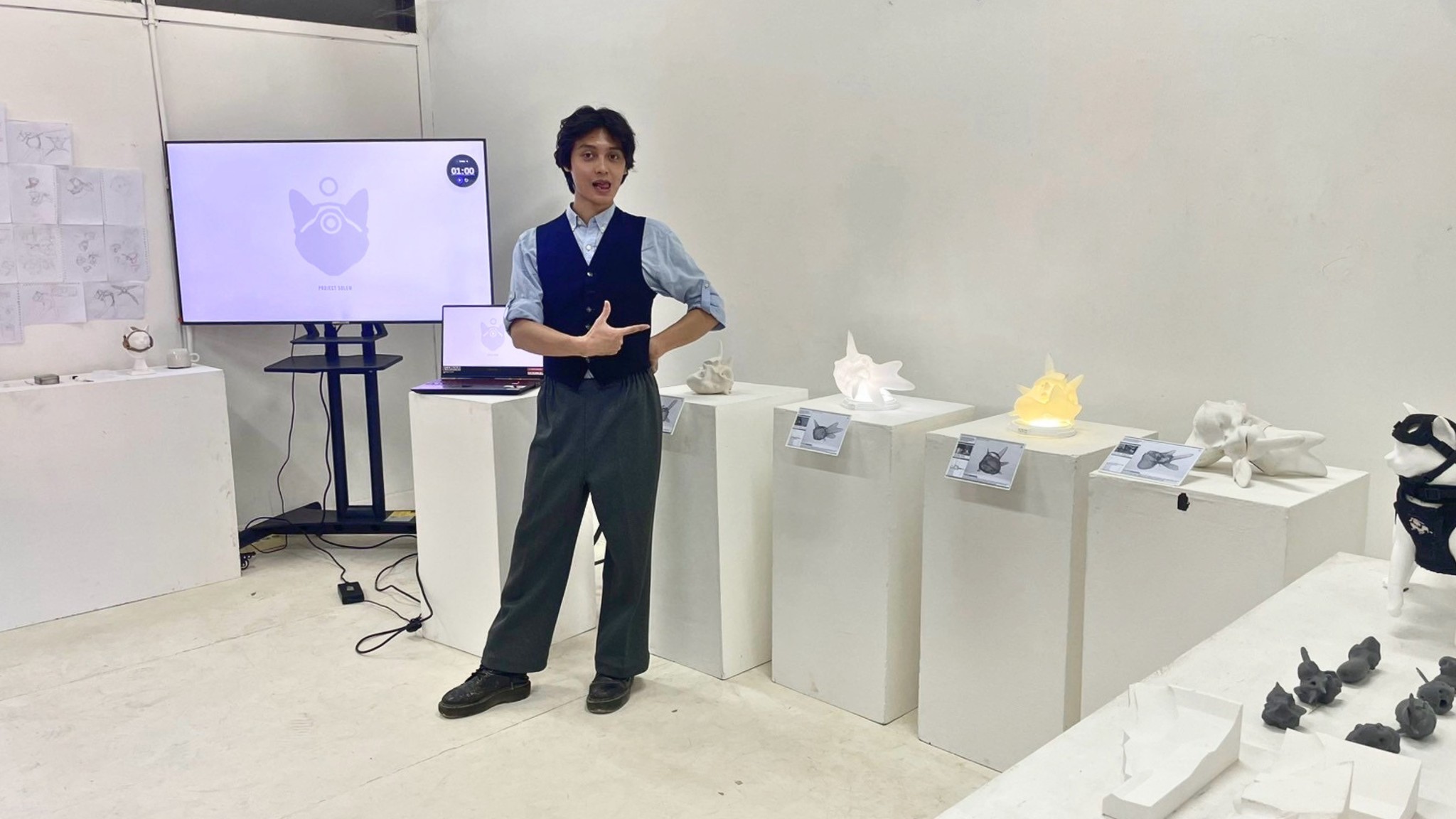
Ilalang Seta poses with his ceramic artworks during his final project defense, titled “Project Solem,” in September 2026. (Courtesy of Ilalang Seta)
BANDUNG, itb.ac.id – Gusti Ilalang Seta, a student from the Fine Arts Study Program at the Faculty of Art and Design (FSRD), Institut Teknologi Bandung (ITB), has developed three-dimensional ceramic artworks based on recordings of a cat's brainwaves as part of his final project, titled "Project Solem" (Solid Emotion). Combining art, electroencephalography (EEG) technology, and visual programming, he created six ceramic pieces representing the cat's brain activity in response to various stimuli.
The innovation was inspired by his concern over animal cruelty and the tendency of humans to understand animal life solely from a human-centered, or anthropocentric, perspective. Through Project Solem, Ilalang proposes an experimental approach to exploring the possibilities of interspecies communication through visual forms rather than language or sound.
The artworks are intended to encourage the public to reflect on the relationship between humans and animals and foster empathy toward other living beings. Beyond producing artistic works, the project demonstrates how collaboration between art, science, and technology can open new avenues for exploring nonhuman life.
Ilalang, a member of the 2021 student cohort who is also known on social media as @seeta___, developed Project Solem over approximately one and a half years under the supervision of Dr. Nurdian Ichsan, S.Sn., M.Sn., and Dr. Irma Damajanti, S.Sn., M.Sn. He presented the project during his final project defense in September 2026.
From Plant Experiments to an Interest in Animal Life
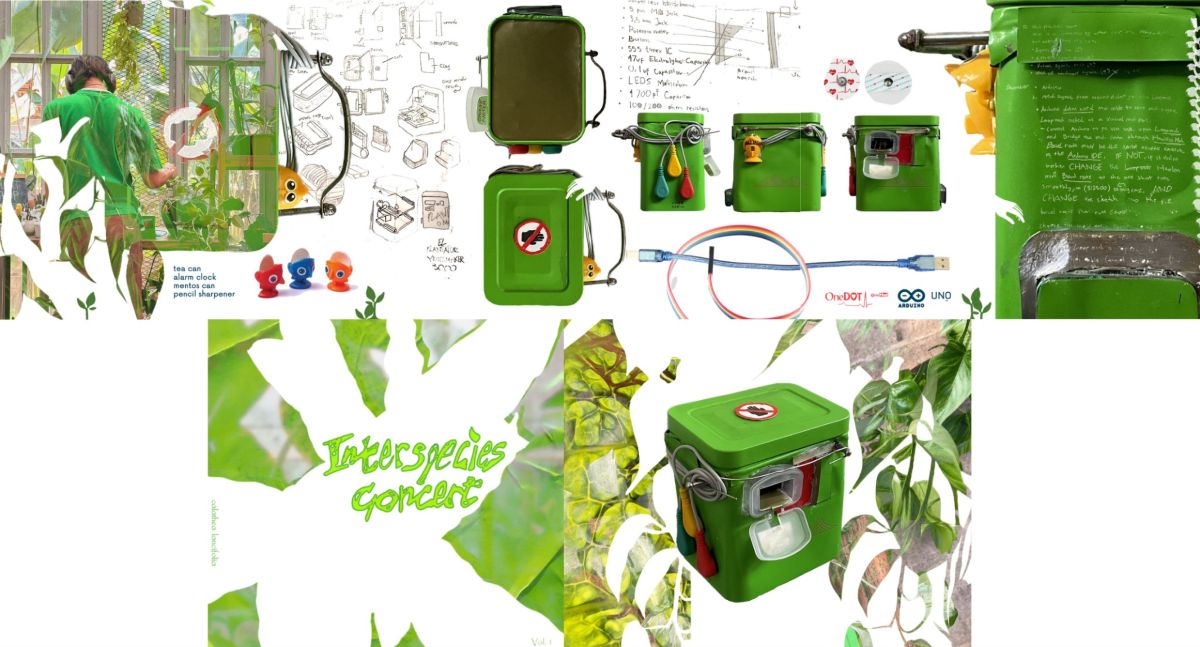
Interspecies Concert, an experimental artwork by Ilalang Seta. (Courtesy of Ilalang Seta)
Ilalang's interest in nature began long before Project Solem. He previously gained recognition for his experimental work Interspecies Concert, a device that transforms plants' bioelectrical signals into musical sounds.
This experience became one of the foundations for his exploration of the relationship between art and nonhuman life through technology.
Project Solem: Challenging Human-Centered Approaches to Understanding Animals
Ilalang began developing the concept for Project Solem during his fifth semester. He observed that many approaches to communication between humans and animals still require animals to adapt to human communication methods, such as teaching sign language to gorillas.
In his view, these approaches do not fully allow animals to express themselves through their own natural characteristics.
He therefore began exploring visual forms as a common ground for interspecies interaction, without relying on linguistic or phonetic concepts.
As a fine arts student, Ilalang considers visual forms one of the most fundamental languages in life. Prehistoric humans, for example, used animal drawings on cave walls as a means of expression and communication.
Several animal species also create visual forms through their natural behavior. Examples include the white-spotted pufferfish (Torquigener albomaculosus), which creates geometric patterns on the seabed to attract mates, and weaverbirds, which construct nests with distinctive visual structures.
Using Cats as Research Subjects While Prioritizing Animal Welfare
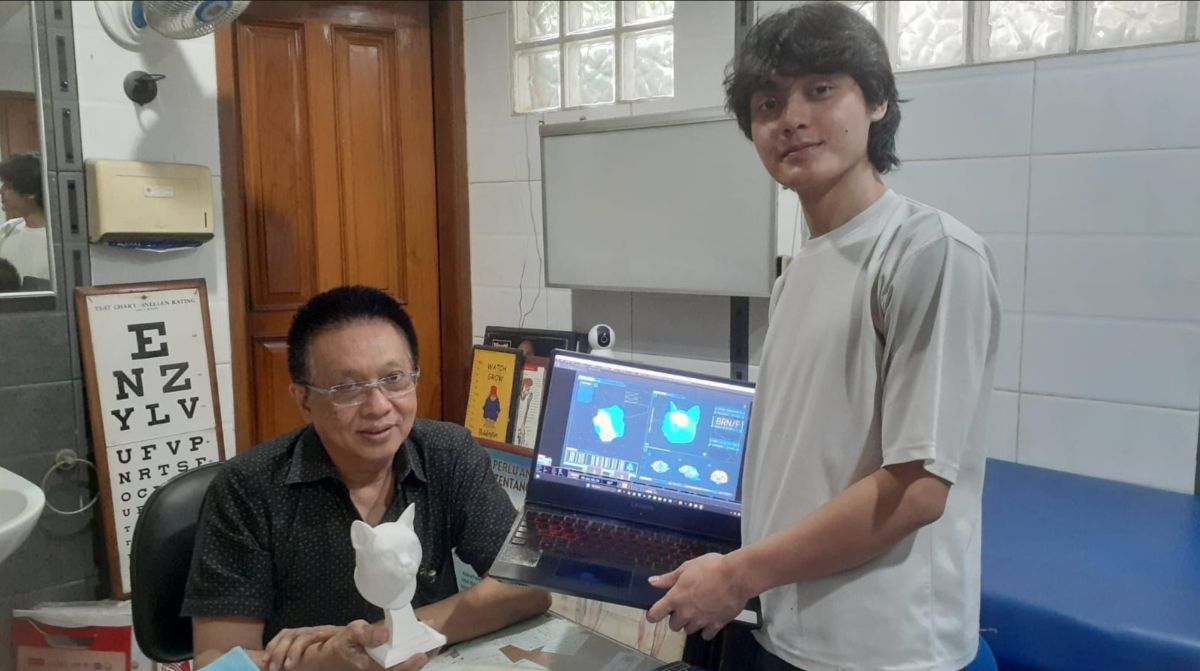
Ilalang Seta consults with neurologist Adv. dr. M. Djunaedi, Sp.N., S.H., M.H.Kes., C.Med., before conducting experiments for his final project in July 2025. (Courtesy of Ilalang Seta)
Ilalang chose cats as the initial subjects of his experiment because of their close relationship with humans while still retaining their natural instincts.
Throughout the project, he sought to prioritize animal welfare by applying BioArt ethical principles referenced from the Royal College of Art (RCA). He also consulted a neurologist before conducting the experiments.
Data collection was carried out using a noninvasive method with a custom-designed sensor. The sensor featured blunt copper contacts and ultrasound gel to facilitate electrical conductivity without procedures that could injure the animal.
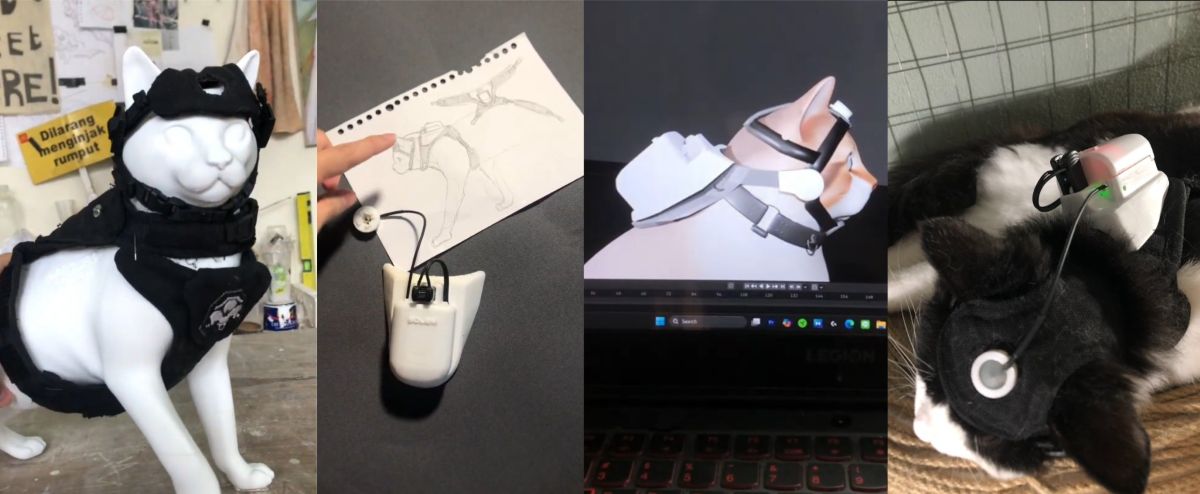
The modeling and design development process for Project Solem's experimental equipment in January 2026. (Courtesy of Ilalang Seta)
"Project Solem is my attempt to get closer to and better understand nonhuman forms of life. Animals have thoughts and feelings just like we do," Ilalang said.
Developing this interdisciplinary project presented challenges of its own. With a background in fine arts, Ilalang had to acquire knowledge beyond his primary field, including concepts of bioelectricity in EEG technology and programming techniques required to transform data into visual artworks.
Recording a Cat's Brain Activity Through a 12-Hour Experiment
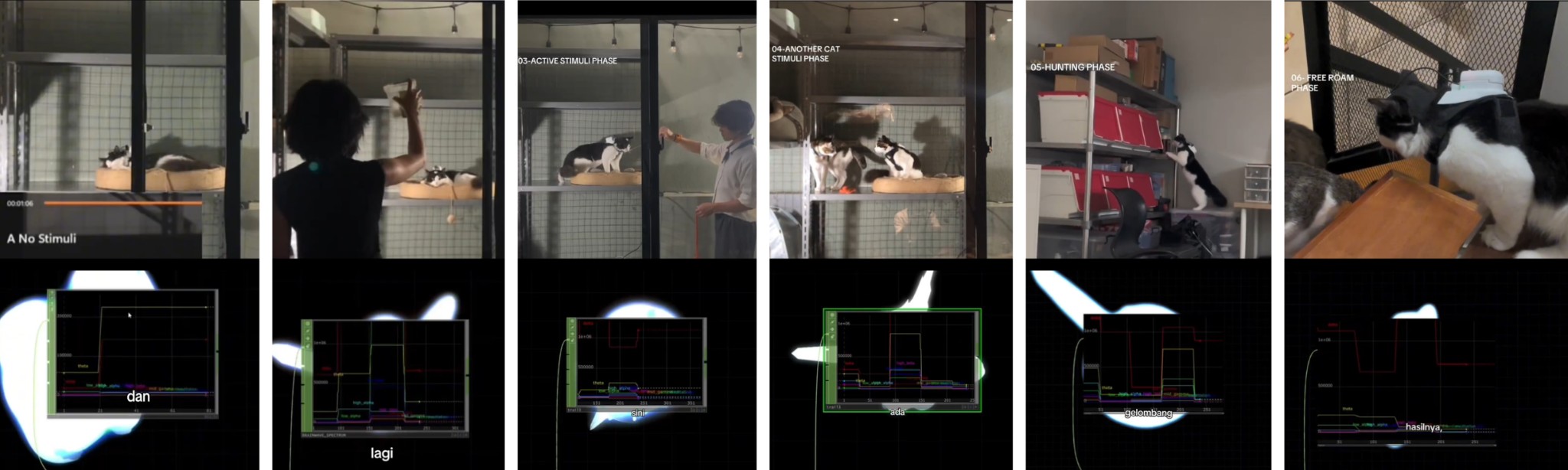
The experimental process of recording a cat's brainwaves as the basis for Project Solem's ceramic artworks in January 2026. (Courtesy of Ilalang Seta)
To collect data, Ilalang used an EEG device to record the cat's electrical brain activity for six hours. The recordings covered six conditions or stimuli: a calm state, responses to sounds, physical interaction, encounters with another cat, simulated hunting, and free exploration.
Including preparation, documentation, and subsequent data processing, the entire experimental procedure took 12 hours in a single day.
A spike in the recorded signal when the cat was called by a human during the second experimental condition of Project Solem in January 2026. (Courtesy of Ilalang Seta)
One particularly memorable moment occurred when the EEG recording showed a signal spike as the cat responded to being called by its owner.
The response became an emotional experience for the owner, who witnessed changes in their pet's brain activity captured by the device.
For Ilalang, this moment demonstrated the potential of biological data-based art to create aesthetic and emotional experiences in human-animal relationships. Nevertheless, changes in EEG signals do not, on their own, establish the specific emotions a cat may be experiencing.
Transforming Brainwave Data into Six Ceramic Artworks
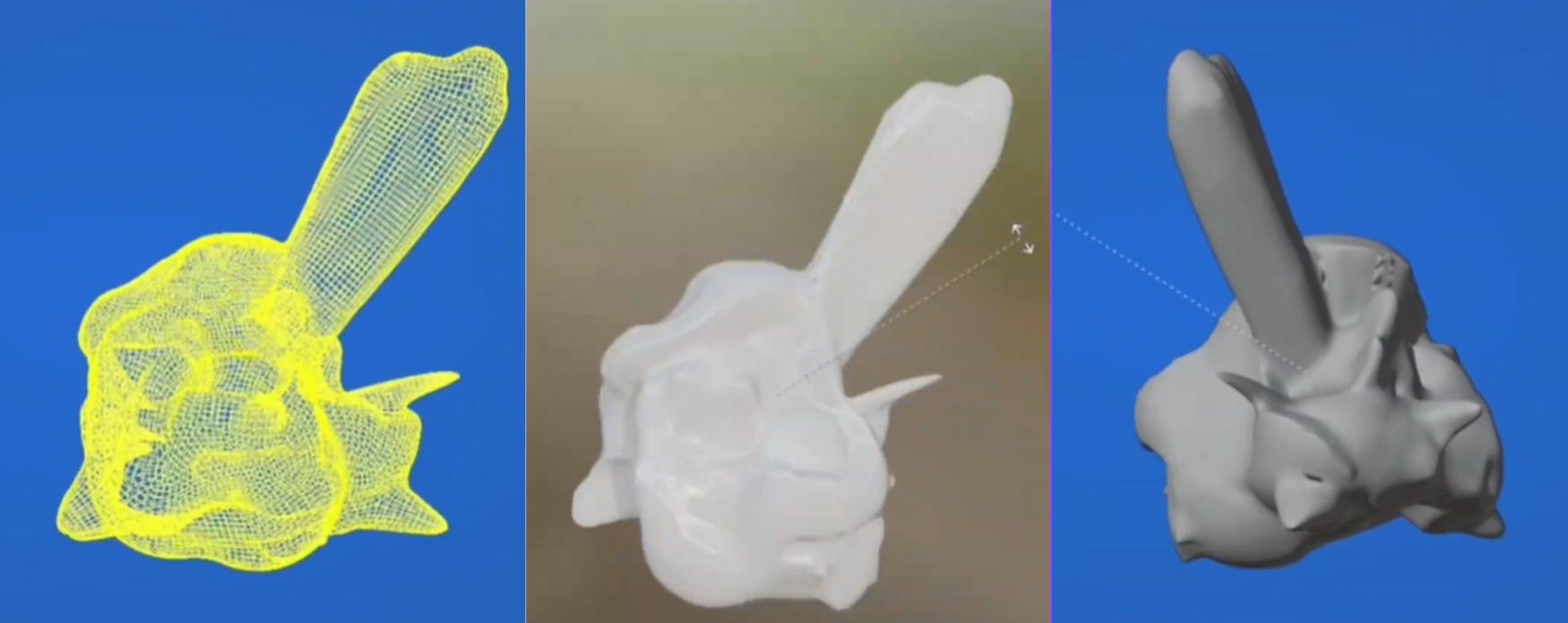
After completing data collection, Ilalang processed the EEG signals into three-dimensional geometric visualizations using TouchDesigner software. The visual development process took approximately six months.
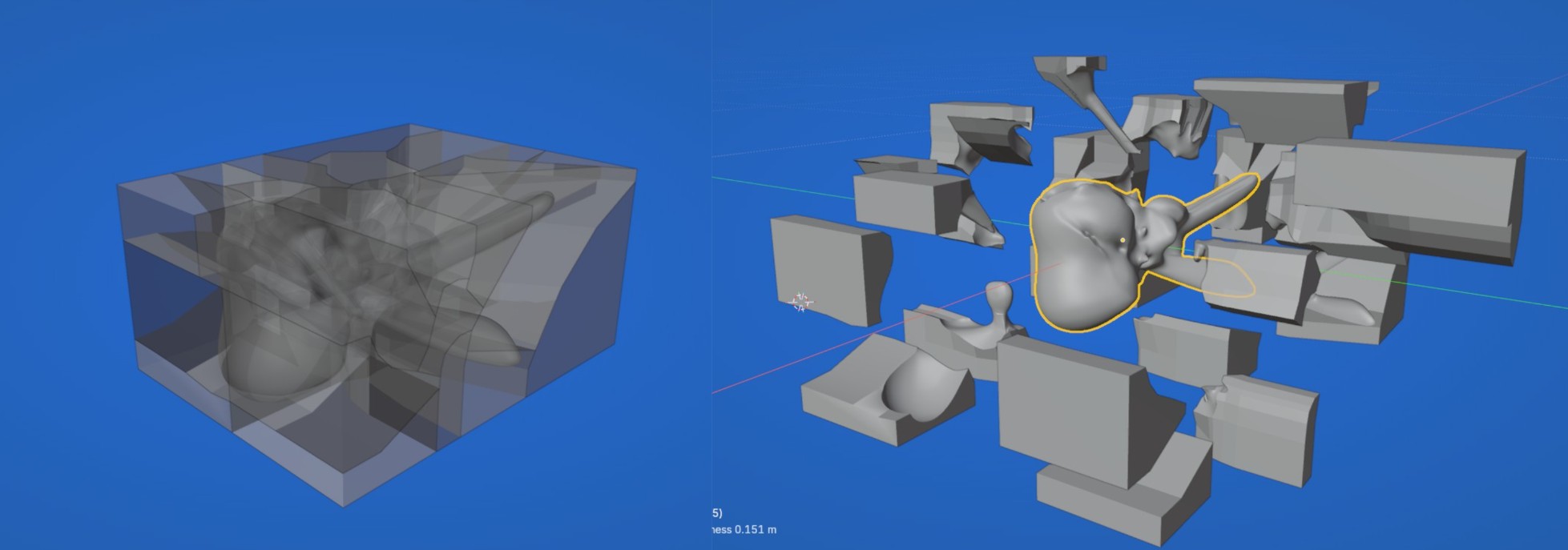
The process of creating a plaster mold consisting of 23 separate sections for a single artwork in 2026. (Courtesy of Ilalang Seta)
The next stage involved transforming the digital geometry into ceramic artworks.
During the process, Ilalang faced an artistic dilemma. He wanted to minimize manual interpretation and intervention so that the final artworks would closely follow the forms generated from the EEG data.
He therefore chose the slip-casting technique, which allowed the ceramic forms to replicate the digitally processed geometry. Producing the six ceramic pieces took approximately two months.
The complexity of the forms posed another challenge. To produce one of the artworks, Ilalang had to design a specialized plaster mold consisting of 23 separate sections.
Choosing Bone China to Represent the Fragility of Emotions
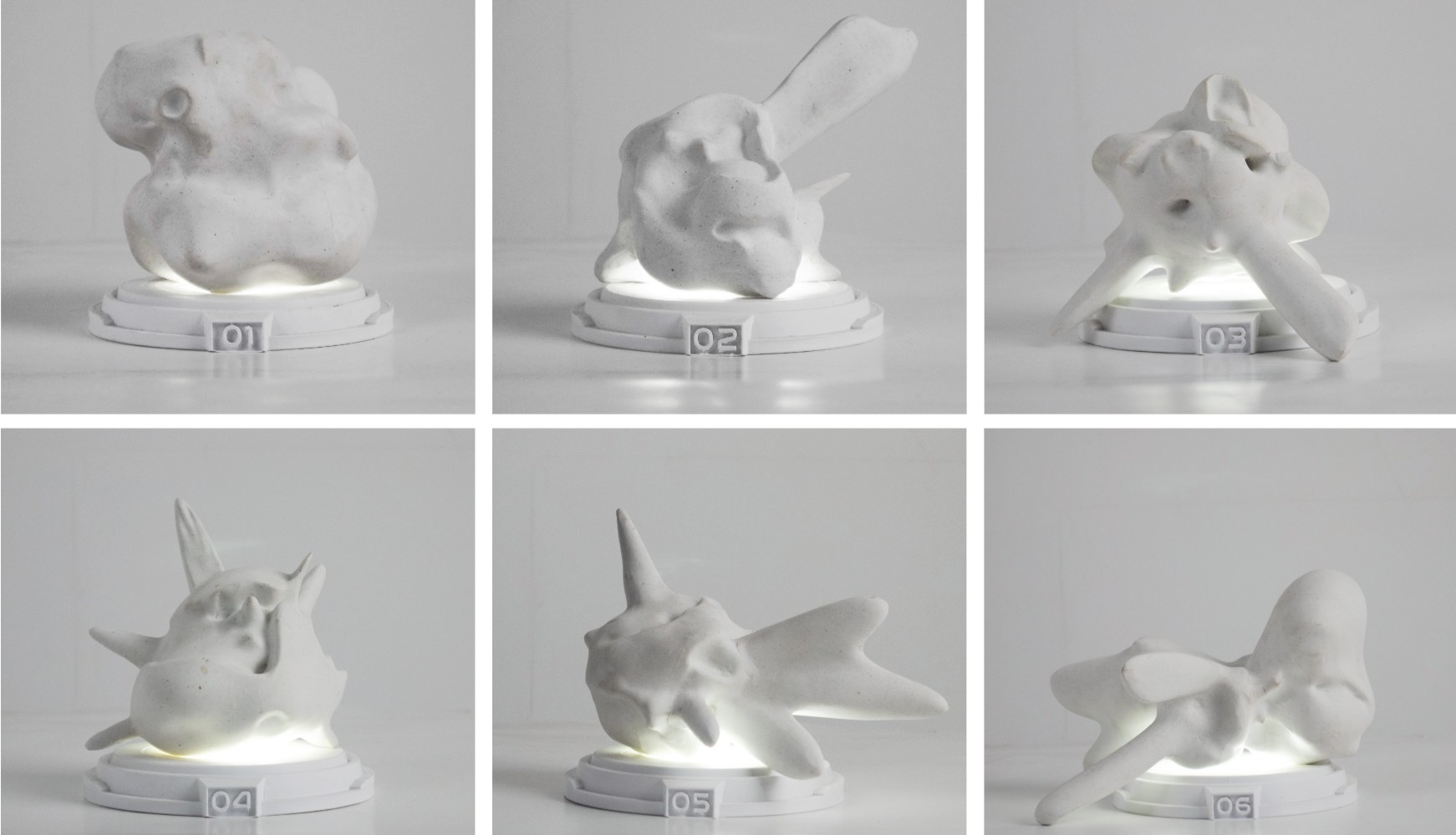
The six final ceramic artworks made from bone china for Ilalang Seta's final project, Project Solem, in September 2026. (Courtesy of Ilalang Seta)
Beyond the production techniques, material selection played an important role in Ilalang's creative process.
Initially, he planned to use stoneware. However, the firing process produced a cream-colored finish, whereas he wanted a pure white appearance that would direct viewers' attention to the artworks' shapes and contours.
Ilalang eventually selected bone china, a type of ceramic material that incorporates animal bone ash as one of its components.
He chose the material for its delicate, fragile, and lightweight qualities, which aligned with his artistic concept of animal emotions.
He also preferred ceramics over plastic objects produced through 3D printing because he considered the physical and symbolic characteristics of ceramics more appropriate for the project.
The use of bone china further established a symbolic connection between the artistic medium and the living beings at the center of his exploration.
Continuing His Exploration of Environmentally Inspired Art
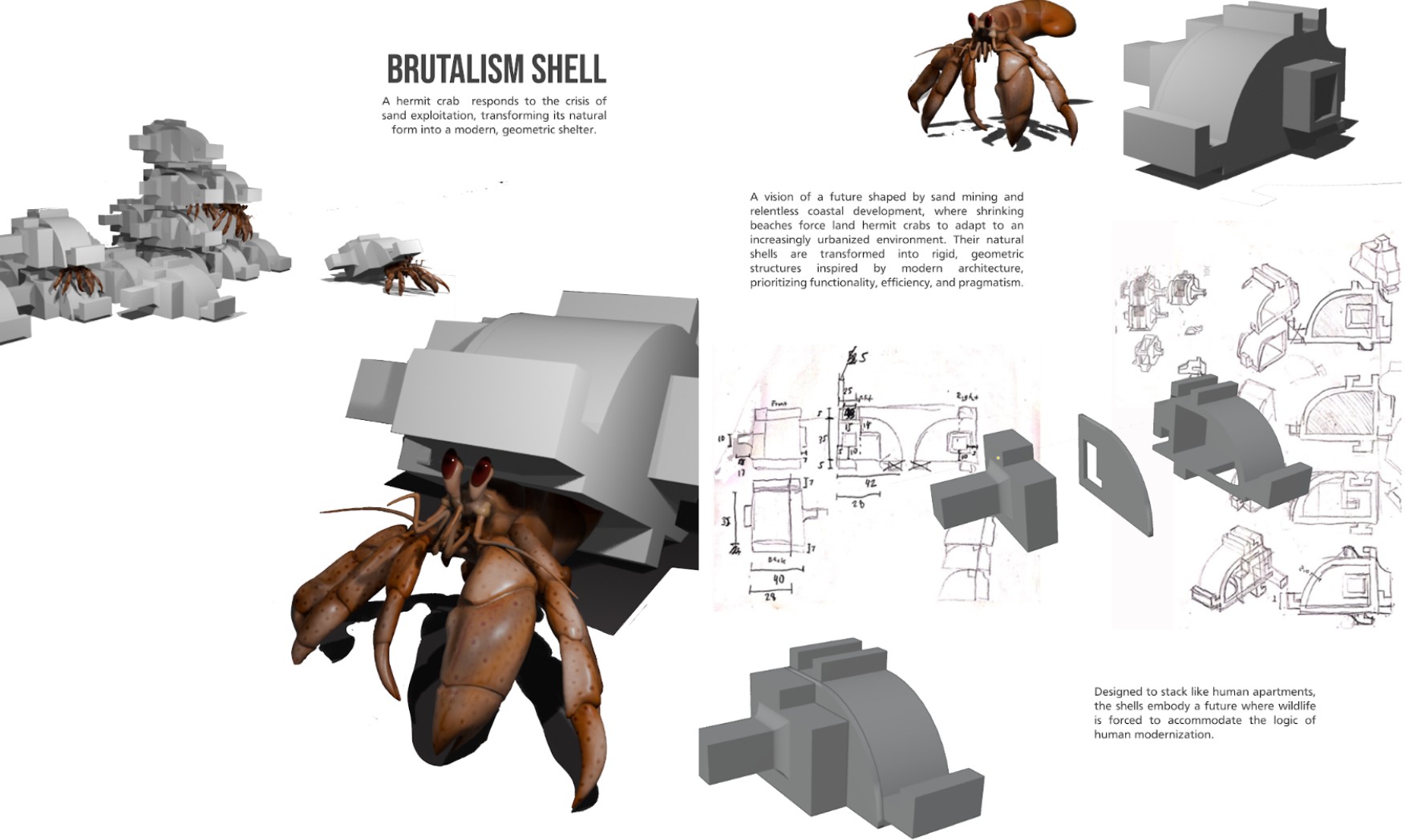
Ilalang Seta's latest project, scheduled for release in November 2026, explores the coastal sand crisis through the lives of hermit crabs. (Courtesy of Ilalang Seta)
Following his final project defense in September 2026, Ilalang began submitting Project Solem to several art exhibitions.
Through these exhibitions, he hopes to encourage broader public discussions about human-animal relationships and the possibilities of interspecies interaction through art.
He is also preparing a new project exploring the relationship between coastal environments and hermit crabs as an artistic response to the issue of coastal sand depletion.
Encouraging Greater Empathy Toward Animals
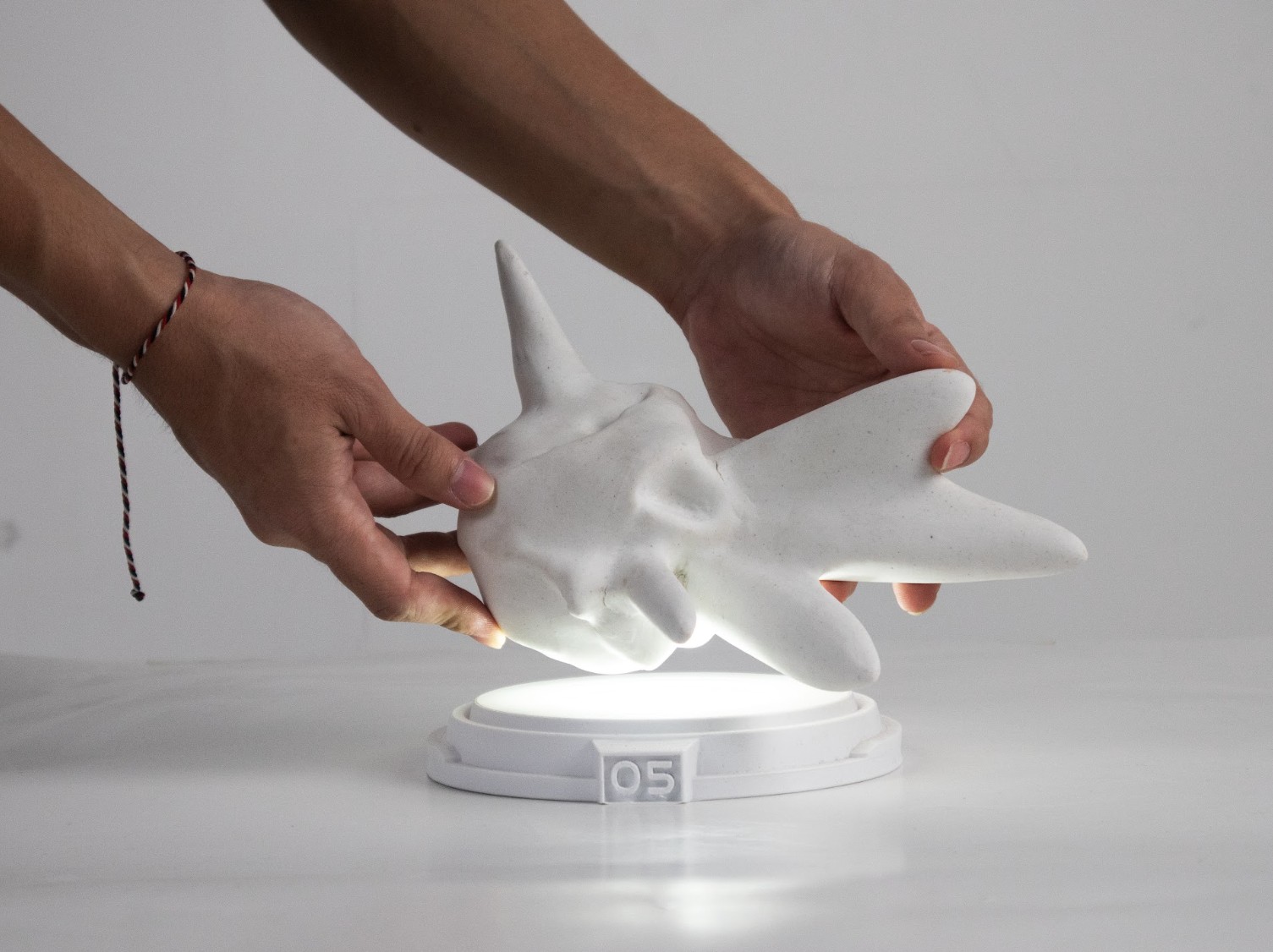
One of the ceramic artworks created by Ilalang Seta for his final project, Project Solem, in September 2026. (Courtesy of Ilalang Seta)
Through Project Solem, Ilalang hopes to encourage the public to view animal life from a different perspective.
The ceramic pieces are more than visual objects. They serve as a medium for presenting physical representations of biological activity in animals that would otherwise remain invisible to the human eye.
He hopes that visitors' interactions with the artworks will inspire reflection on the existence, experiences, and emotional relationships between humans and other living beings.
In this way, Project Solem is not only an exploration of art and technology but also an effort to encourage a more empathetic and respectful approach to interspecies relationships and animal life.
A Message to ITB Students: Create Art Based on Your Interests and Potential
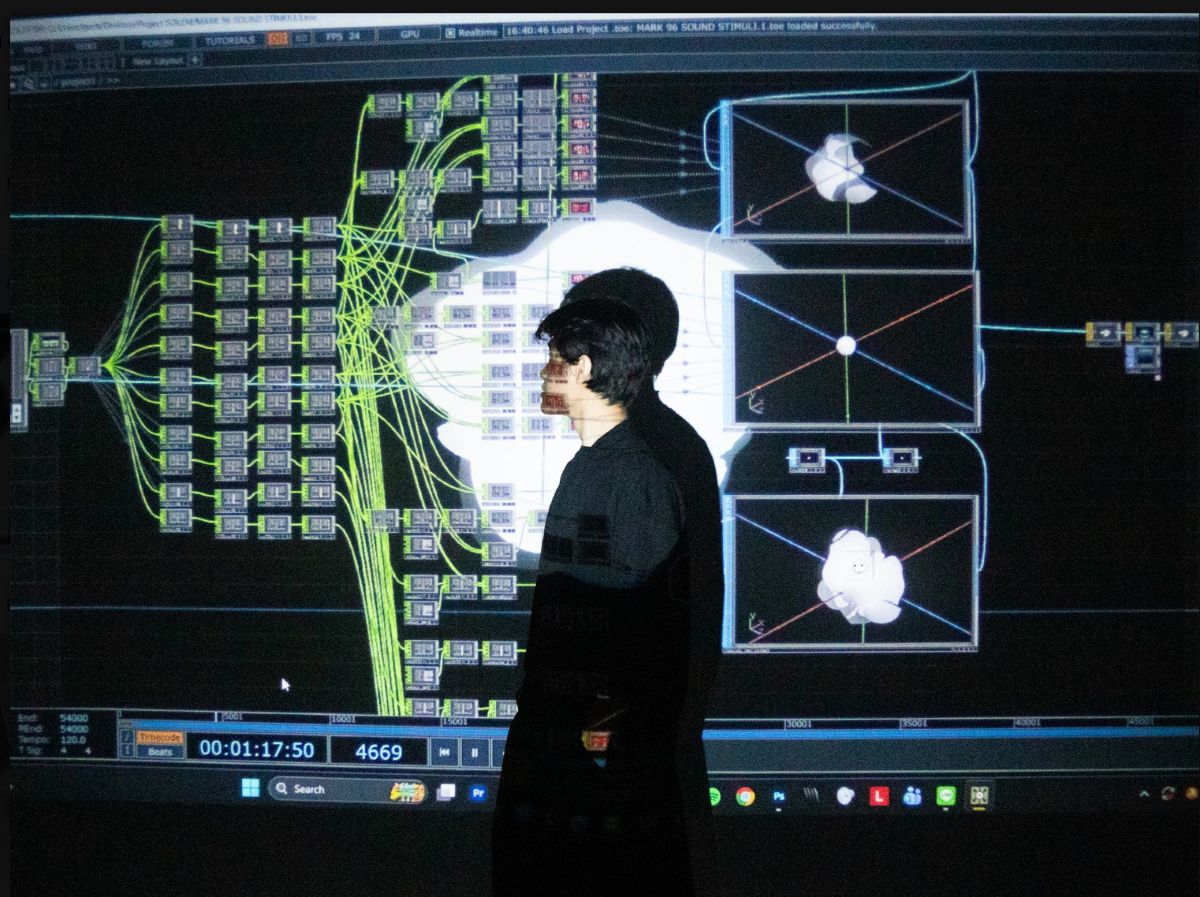
A photoshoot featuring Ilalang Seta for his final project defense, titled Project Solem, in September 2026. (Courtesy of Ilalang Seta)
Developing Project Solem also taught Ilalang the importance of having the courage to explore fields beyond one's primary academic discipline.
He explained that his interest in technology and design principles had emerged early in his academic journey, when he had initially considered studying Product Design.
Although he ultimately chose the Fine Arts Study Program, he was still able to combine these interests through experimental artistic practices involving technology, programming, and science.
Ilalang encouraged fellow ITB students who are developing their own projects to recognize their interests and potential and not hesitate to explore new approaches.
"Start discovering what you truly enjoy. Create something you love and enjoy the process. Your work will turn out well when the idea comes from within because you genuinely understand what you want to create," Ilalang said.