Minister of Higher Education, Science, and Technology Emphasizes the Importance of Impact-Oriented University Governance on Second Day of AKPT
By Anggun Nindita
Editor Anggun Nindita
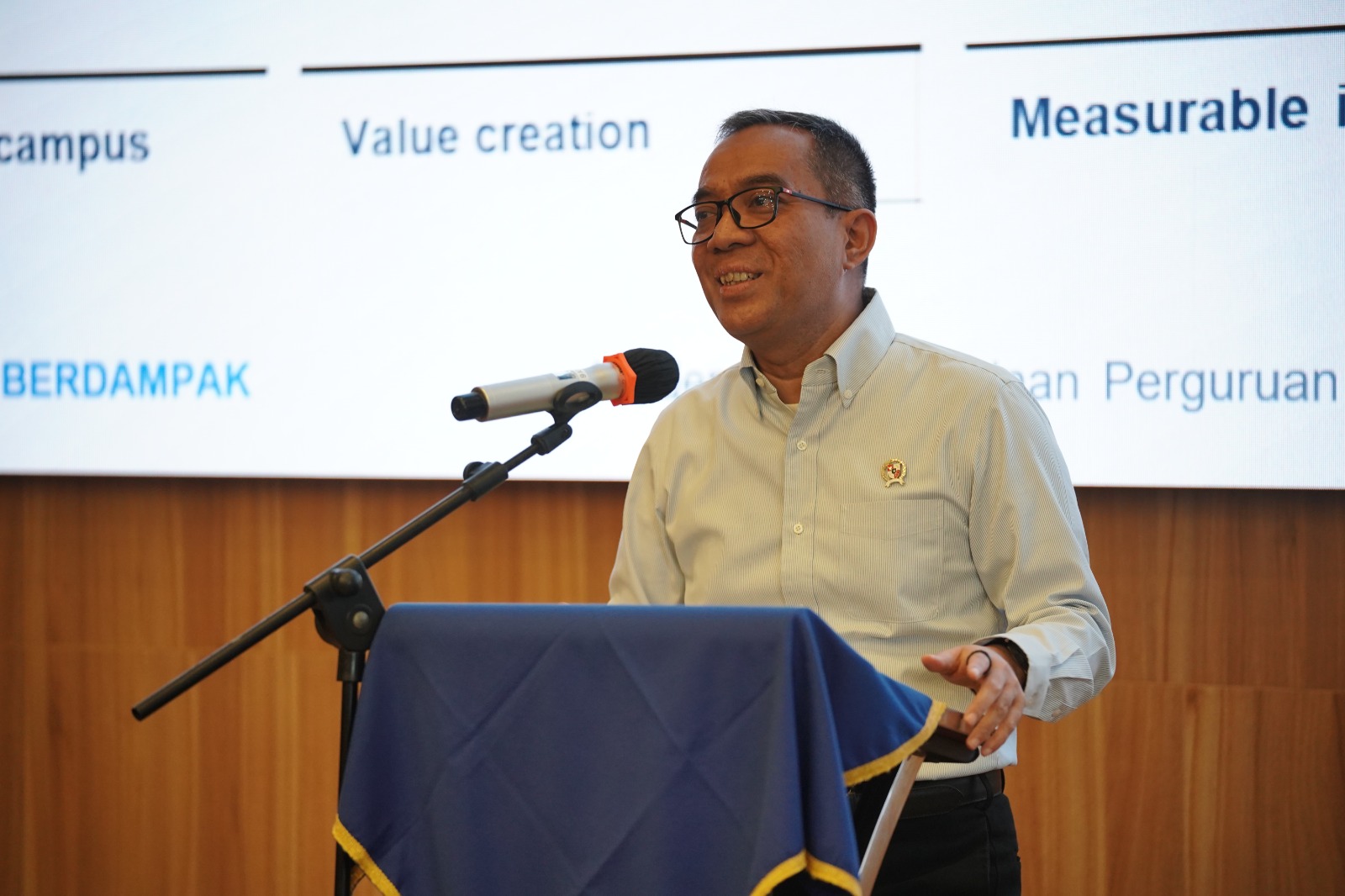
BANDUNG, itb.ac.id — Indonesia’s Minister of Higher Education, Science, and Technology, Prof. Brian Yuliarto, Ph.D., emphasized that the success of higher education institutions should not be measured solely by scientific publications, academic reputation, or leadership positions, but also by the extent to which knowledge, research, and innovation deliver tangible benefits to society.
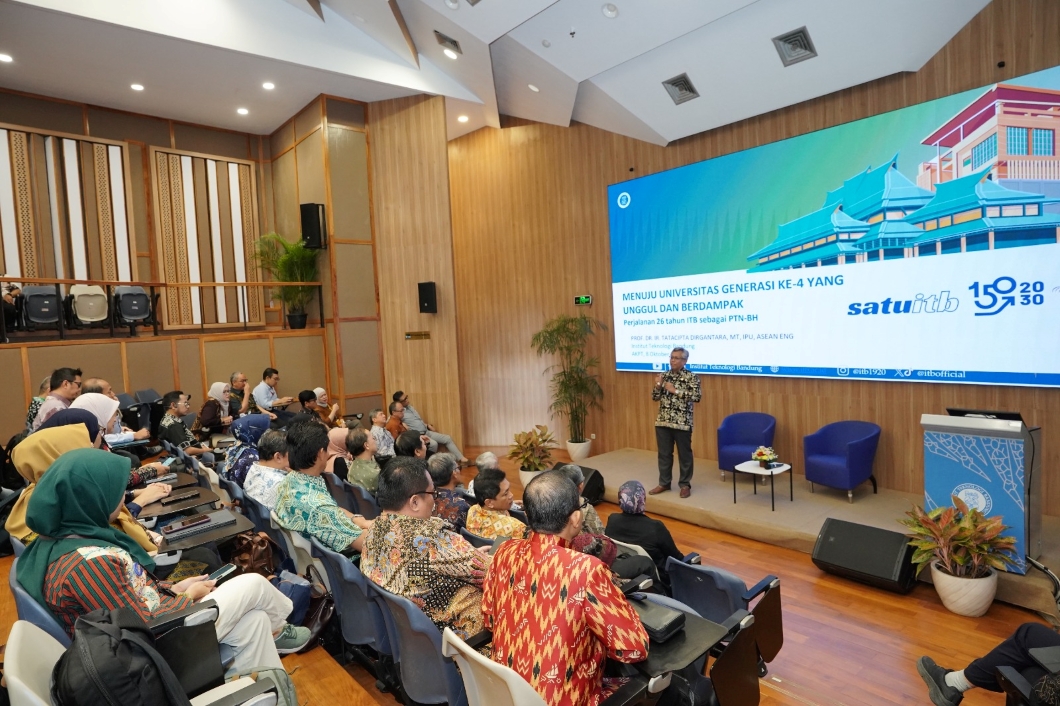
He conveyed this message on the second day of the 2026 Higher Education Leadership Academy (AKPT), held at the Nemangkawi Auditorium, Freeport Building, School of Business and Management, Institut Teknologi Bandung (SBM ITB), on Friday (October 9, 2026).
In his presentation titled Institutional Transformation & Innovation, Prof. Brian explained that higher education institutions are facing significant changes driven by advances in digital technology, artificial intelligence (AI), globalization, and geopolitical dynamics. These developments require universities to become more adaptive, innovative, and capable of creating both economic and social value.
“Universities must do more than demonstrate excellence on paper. They must be able to adapt, create value, and deliver tangible impact,” he stated.
According to Prof. Brian, universities need to transform from institutions that merely produce and disseminate knowledge into drivers of innovation capable of addressing societal needs. Therefore, strengthening applied research, research commercialization, and collaboration with industry has become increasingly important.
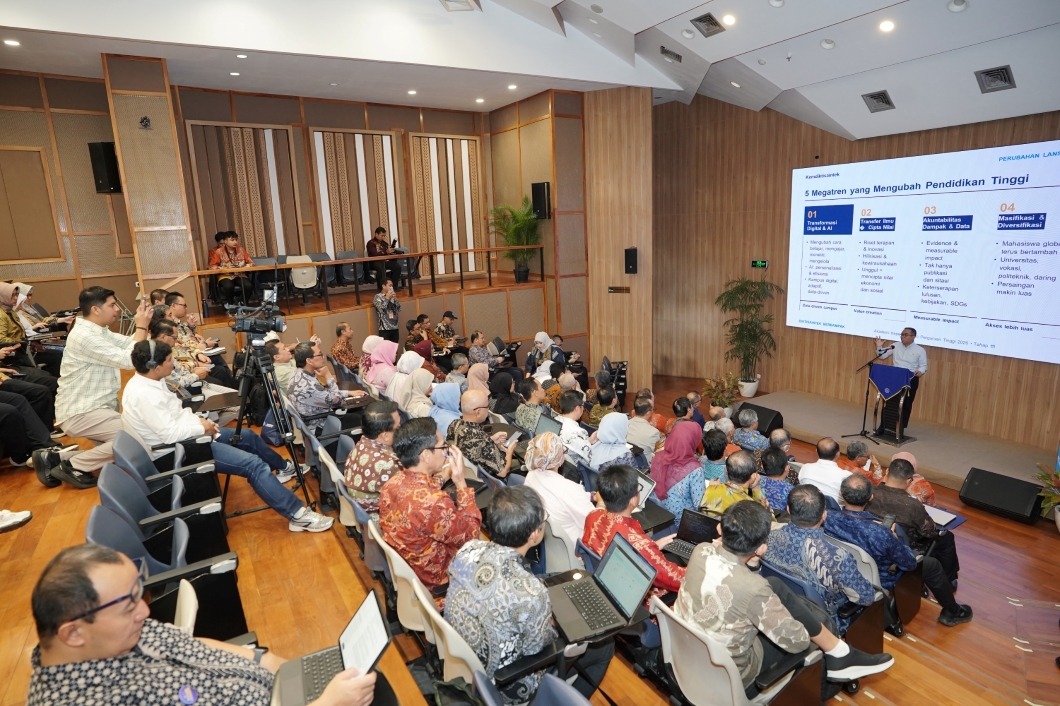
Prof. Brian emphasized that scientific publications remain a fundamental pillar of knowledge development. Strong research can lead to valuable discoveries while creating opportunities for commercialization.
“However, research outcomes are expected to go beyond publications and evolve into technologies, innovations, social solutions, and economic value,” he said.
He also reminded participants that the highest achievement of an academic is not simply becoming a university rector or holding another administrative leadership position. In his view, knowledge reaches its greatest value when it can be utilized for the benefit of society.
In line with this perspective, he encouraged universities to strengthen their academic culture by providing incentives and recognition for lecturers and researchers whose work generates meaningful impact. The role of professors must also continue to be demonstrated through the implementation of the Tridharma of Higher Education, particularly research and community service.
Adaptive Leadership for Higher Education Transformation
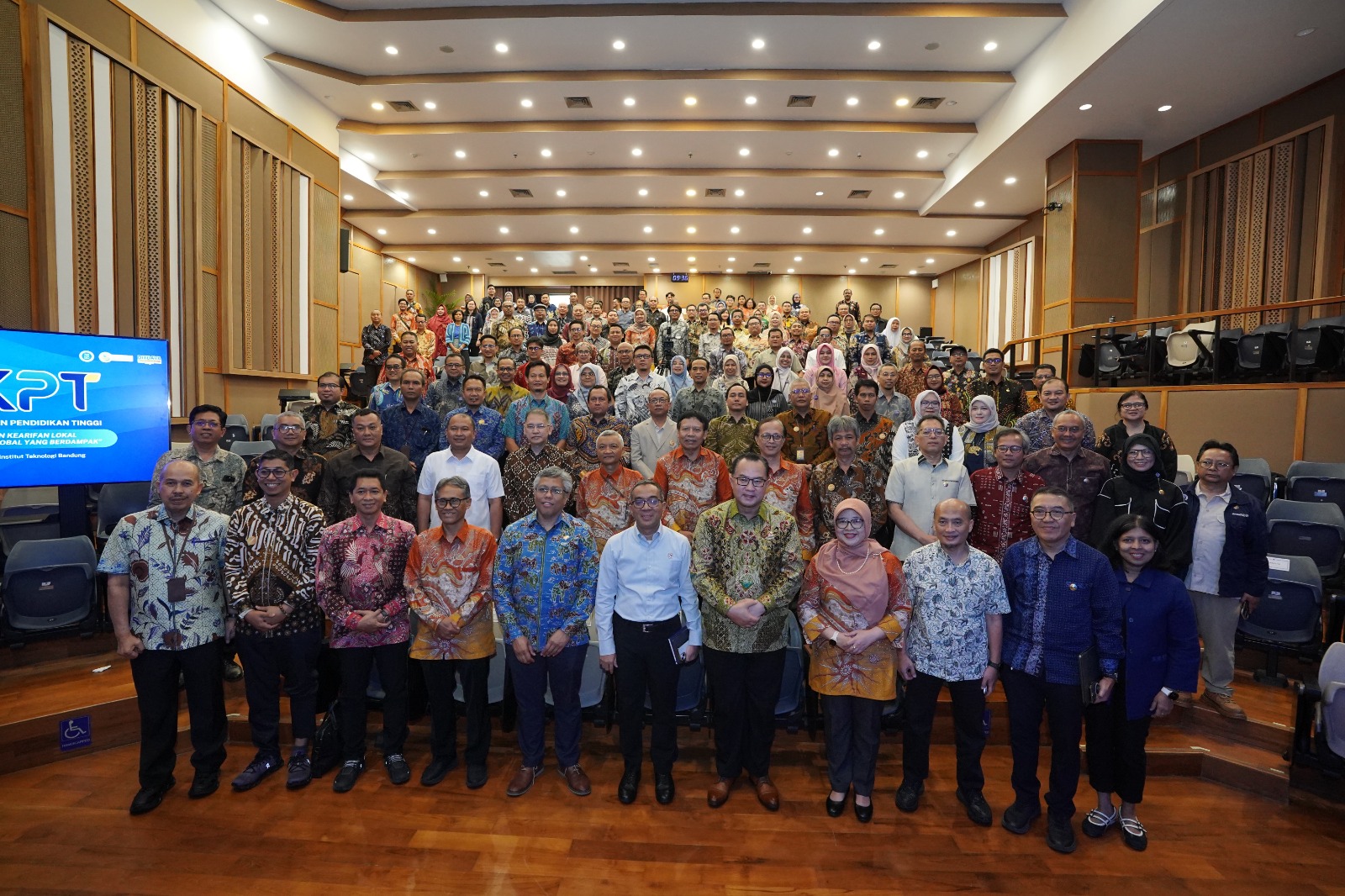
Prof. Brian also highlighted several challenges facing Indonesia’s higher education sector, including equitable access to education, limited research investment, disparities in institutional capacity, and the alignment of graduates’ competencies with labor market demands.
“On the other hand, the adoption of AI and digitalization presents opportunities to improve the quality of teaching, research, and university governance. Higher education institutions must also strengthen AI literacy, data governance, and the development of future-oriented competencies to remain relevant amid ongoing changes,” he explained.
He further emphasized that university leadership must be capable of anticipating change, adapting, innovating, building collaborations, and generating meaningful impact.
“The management of assets, resources, and academic programs must also be carried out effectively to strengthen institutional excellence,” he added.
AKPT is a program initiated by the Ministry of Higher Education, Science, and Technology to strengthen leadership capacity and governance in higher education institutions. Following its earlier sessions at the ministry and Universitas Gadjah Mada (UGM), the third phase of the program was held at ITB and is scheduled to continue at Universitas Indonesia (UI).
Through this forum, university leaders are expected to exchange experiences and best practices in institutional management while strengthening collaboration to advance Indonesian higher education that is excellent, adaptive, and capable of making meaningful contributions to national development.