ITB Students Earn National Recognition for Developing a More Integrated Digital Payment Solution
By Rasya Ihza Ramadhan - Mahasiswa Teknik Fisika, 2023
Editor M. Naufal Hafizh, S.S.

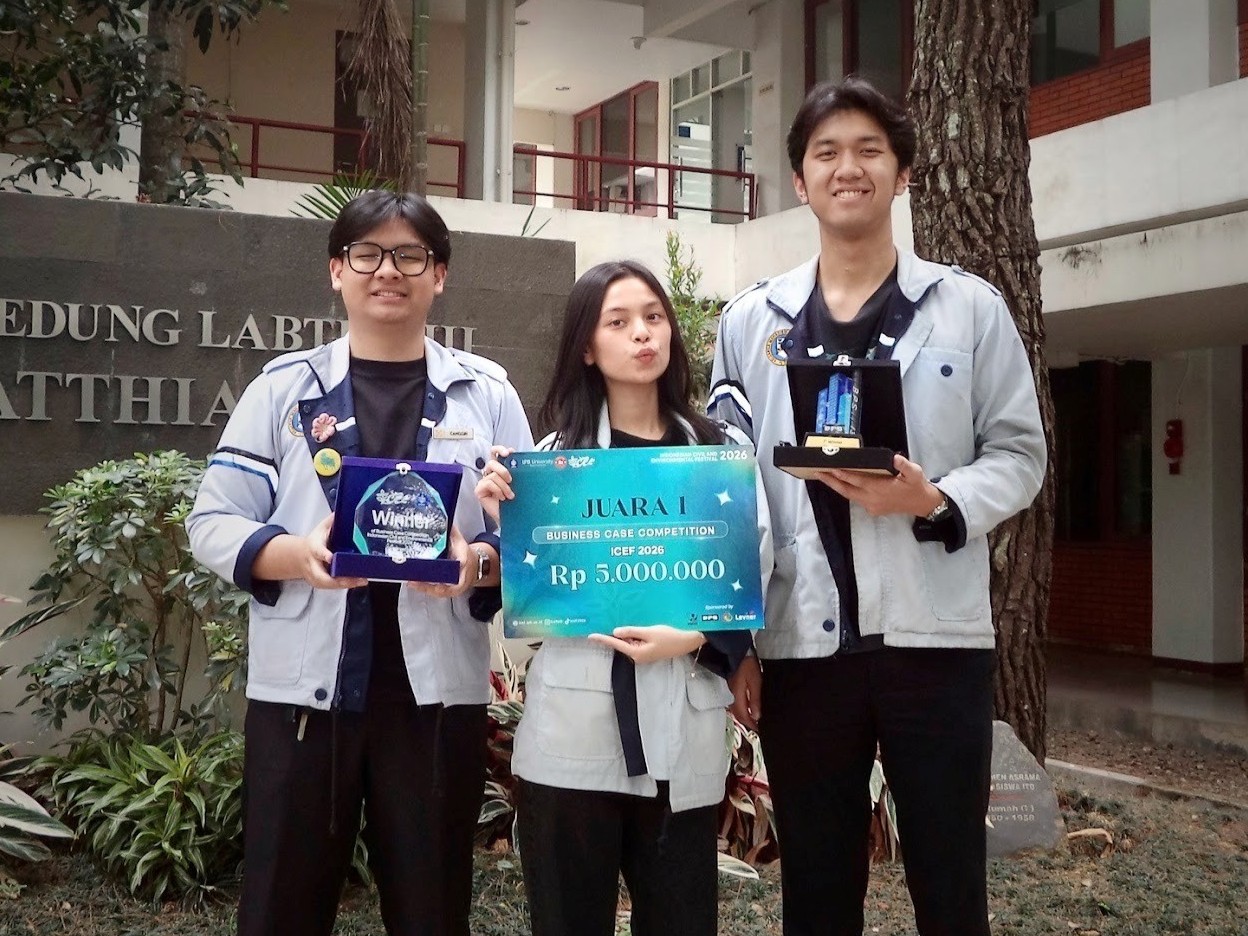
ITB's Kamojang Team won second place in the Business Case Competition at the IPB University Business Festival 2026 in Bogor on Sunday (October 4, 2026). (Photo: Kamojang Team)
BOGOR, itb.ac.id — Three students from Institut Teknologi Bandung (ITB), representing the Kamojang Team, secured second place in the Business Case Competition (BCC) at the IPB University Business Festival 2026, organized by UKM Century IPB on October 3–4, 2026, at IPB University, Bogor. Through their proposed solution, #YourEverydayCompanion, the team introduced a digital payment service development strategy that goes beyond transactions and promotions by helping users plan their activities, manage expenses, and develop more integrated payment habits.
The idea was developed to address the challenge of customer loyalty amid growing competition among digital payment applications. With numerous services available, users can easily switch between platforms, while promotions such as cashback offers do not necessarily encourage long-term engagement. By proposing features tailored to everyday needs, the Kamojang Team presented an approach that could provide users with a more convenient payment experience while helping service providers strengthen customer loyalty.
The team consisted of Clarissa Pramesti Tiara Puteri, a 2023 Industrial Engineering student, along with Khael Jonathan Hutabarat and Muhammad Arifin Jurais, both from the Engineering Management Class of 2023.
Building Customer Loyalty Beyond Promotions
The competition challenged participants to analyze business problems and develop realistic, implementable strategic solutions. As part of the competition, the Kamojang Team analyzed a digital payment application.
Based on their analysis, the team identified that competition among digital payment services is not solely determined by the incentives offered, but also by how effectively an application becomes part of users' daily routines. Promotions such as cashback offers may encourage short-term transactions but do not necessarily foster sustained usage.
To address this challenge, the team developed #YourEverydayCompanion through two complementary proposals: PayPay Everyday and PayPay Stars. PayPay Everyday was designed to support users' daily activities and transaction needs, while PayPay Stars introduced an incentive mechanism to encourage repeat transactions.
"We believe that loyalty cannot be built through rewards alone. An application also needs to be part of users' daily journeys, from planning their expenses to reviewing their transactions. PayPay Everyday establishes that relevance, while PayPay Stars provides incentives that encourage users to return and make transactions," Jurais said.
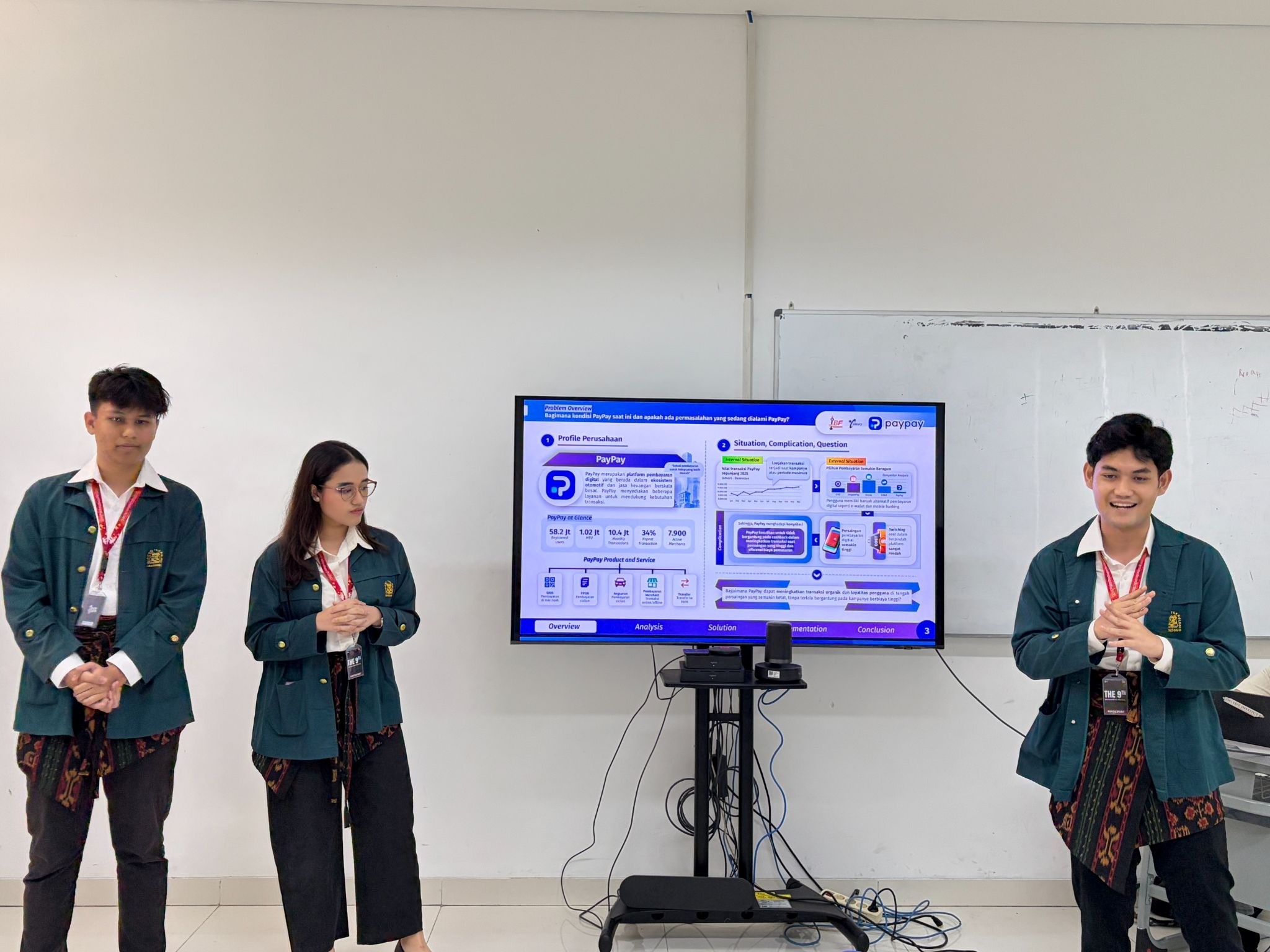
The Kamojang Team presents its #YourEverydayCompanion solution during the final round of the IPB University Business Festival 2026 in Bogor on Saturday (October 3, 2026). (Photo: Kamojang Team)
Understanding the Customer Journey as the Foundation of the Solution
In developing their proposal, the Kamojang Team applied the Customer Journey Mapping method to examine user experiences before, during, and after their daily activities. Through this approach, the team identified six pain points across four stages: preparation, the beginning of an activity, during the activity, and after the activity.
During the preparation stage, users may not realize that their balance is running low or that they need to top up a separate electronic money card to use the KRL commuter rail service. At the beginning of their activities, reliance on physical electronic money cards also prevents a fully integrated payment experience.
While carrying out their activities, users may still need to switch between applications to find dining and entertainment options that fit their budgets. Meanwhile, after completing their activities, unmonitored spending may leave them with insufficient funds for their return journey.
"We translated these six pain points into PayPay Everyday. PayPay is not intended to be used only when users make payments, but to accompany them throughout their daily journey: helping them plan expenses, make transactions, discover activities, and review their spending at the end of the day," Khael explained.
According to the team, this development opportunity is particularly relevant to younger generations. Based on their analysis, Generation Z accounts for 43 percent of PayPay's user base, with frequent transactions spread across various applications. This presents an opportunity for digital payment services not only to facilitate transactions but also to help users manage their spending.
"Rather than continuously competing through cashback promotions, PayPay could encourage habitual use by becoming more relevant to users' everyday needs," Clarissa said.
This approach became one of the distinguishing features of the Kamojang Team's proposal. Instead of merely introducing additional incentives, the team sought to connect service features, transaction habits, and user needs into a more integrated experience.
Through #YourEverydayCompanion, the team hopes to demonstrate that the development of digital payment services should begin with a thorough understanding of user needs. Their proposed solution also highlights the potential of a user experience-based approach to strengthening customer loyalty without relying solely on promotional incentives.