ITB Contributes to ISF 2026, Promotes Research-Based Solutions to Tackle Air Pollution
By --- -
Editor Anggun Nindita
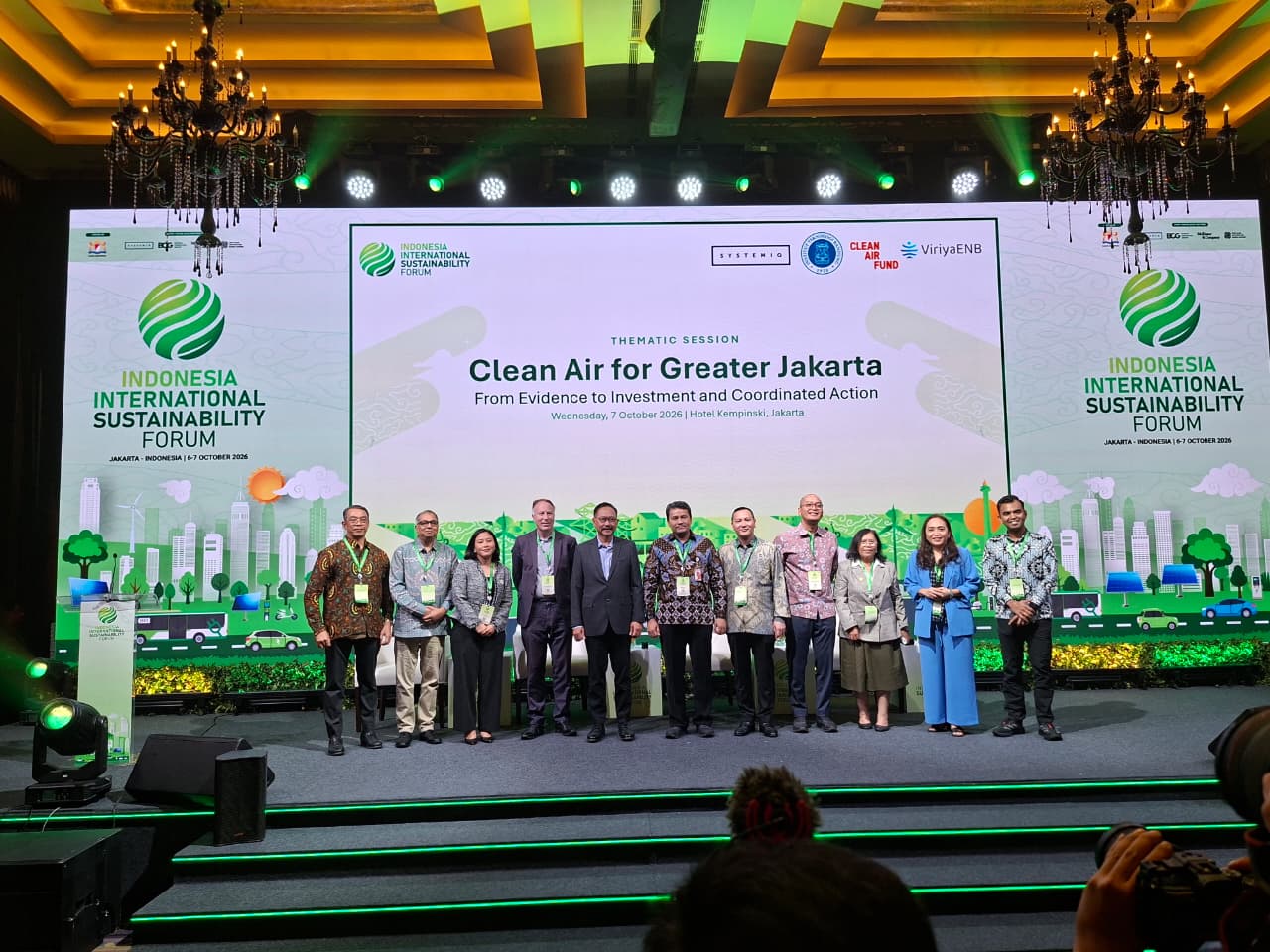
BANDUNG, itb.ac.id — Institut Teknologi Bandung (ITB), through its researchers, contributed to efforts to control air pollution in Indonesia at the Indonesia International Sustainability Forum (ISF) 2026, held in Jakarta on Wednesday (October 7, 2026). During the forum, ITB presented research findings on the sources and dispersion patterns of air pollutants in Jakarta and its surrounding areas, while advocating for science-based policies to improve air quality.
On this occasion, ITB also submitted its research findings to the National Development Planning Agency (Bappenas) and the Regional Development Planning Agencies (Bappeda) as a scientific contribution to supporting policy formulation and development planning that takes air quality into consideration.
ITB's participation began with opening remarks delivered by the Deputy Director for the Development of Centers, Research Centers, and Centers of Excellence in Science and Technology at ITB's Directorate of Research and Innovation (DRI), Dr. Grandprix Thomryes Marth Kadja, M.Si.
In his opening remarks, he highlighted ITB's research and innovation contributions to sustainable development, including the advancement of scientific studies that can help address various environmental challenges.
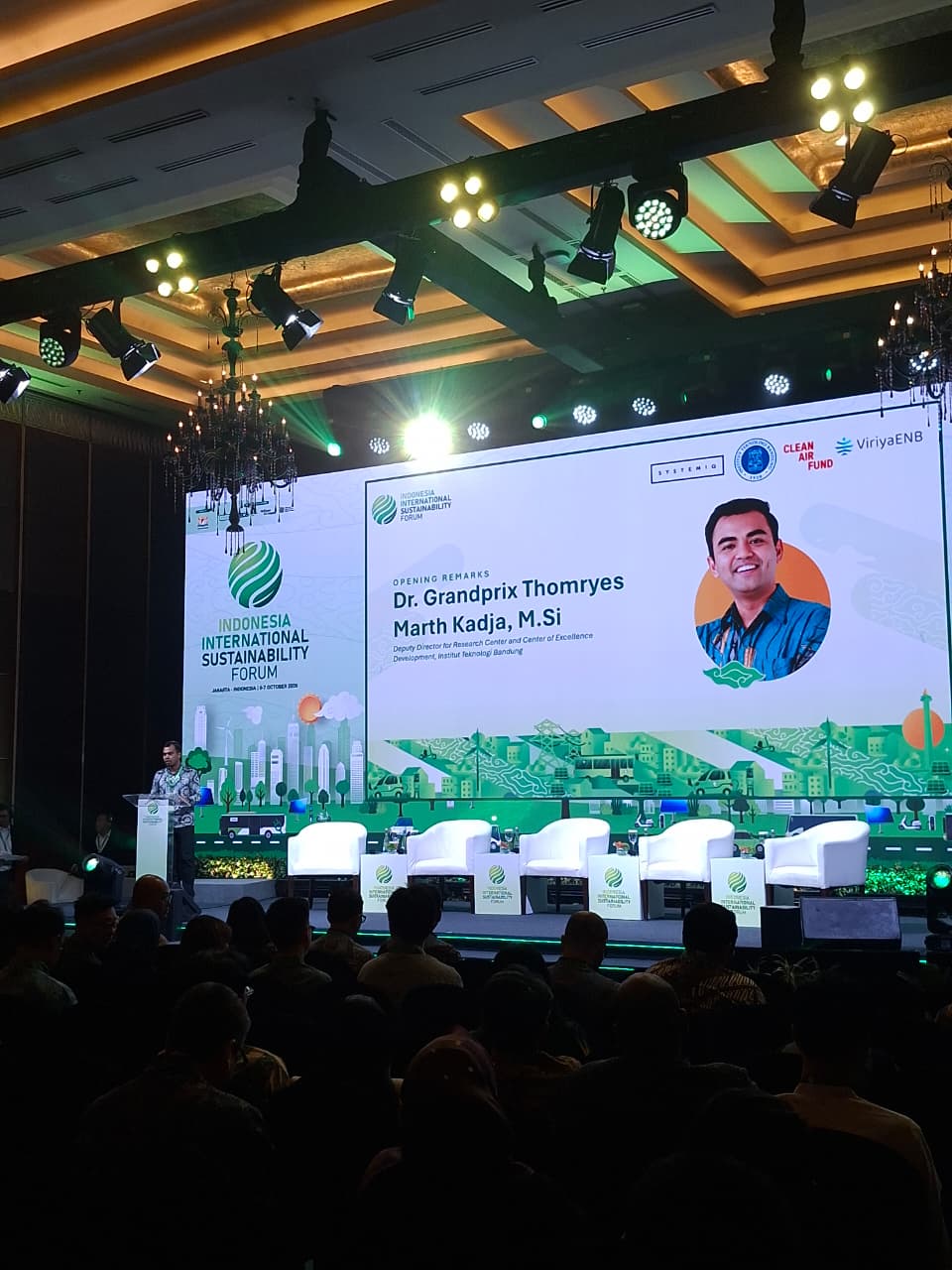
Caption: Opening remarks by Dr. Grandprix Thomryes Marth Kadja, M.Si.
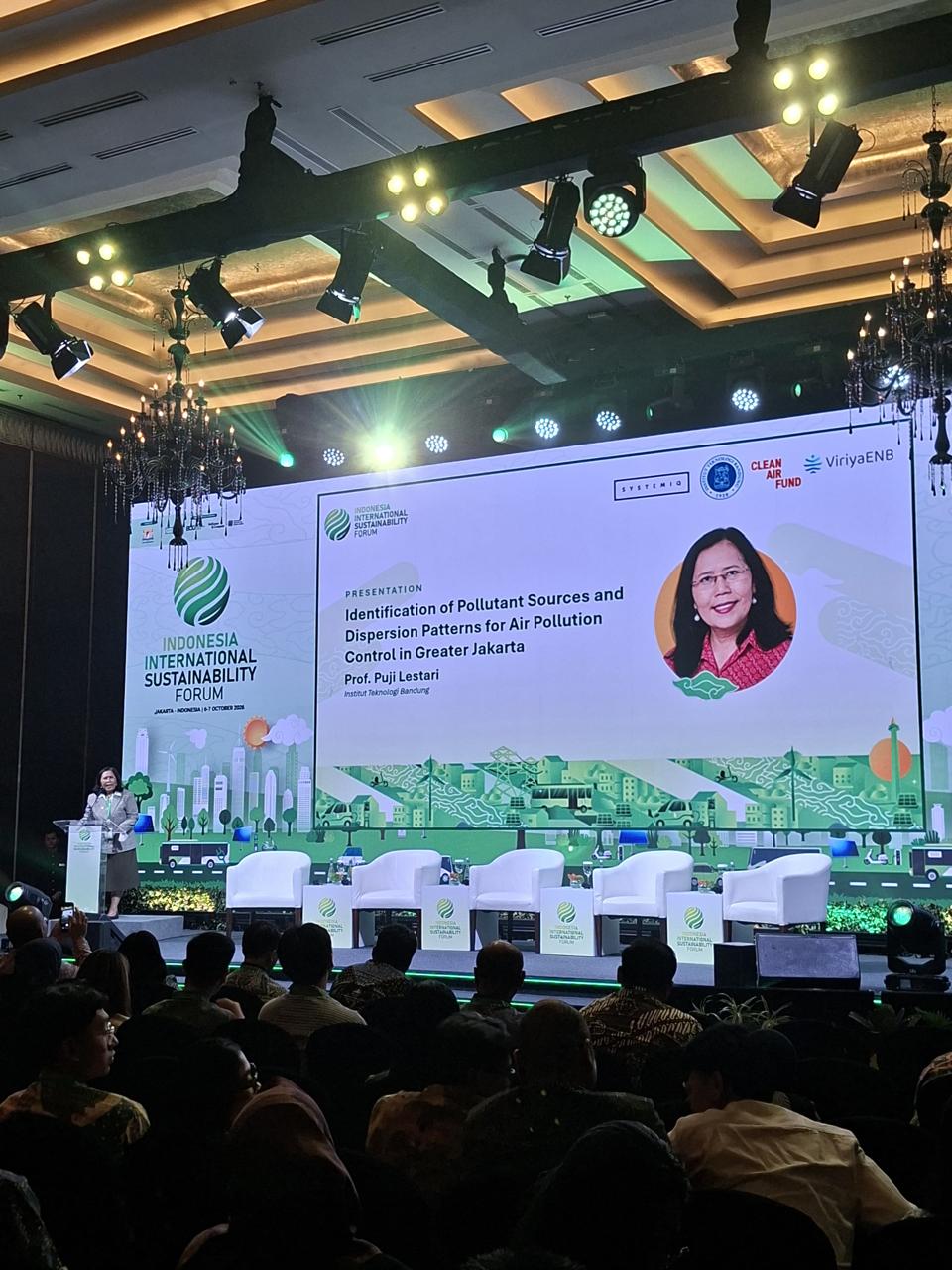
The main session continued with a presentation by Prof. Ir. Puji Lestari, Ph.D., a Professor at ITB's Faculty of Civil and Environmental Engineering (FTSL) and Head of the Air and Waste Management Research Group. She presented a study entitled "Identification of Pollutant Sources and Dispersion Patterns for Air Pollution Control in Greater Jakarta."
Funded by ViriyaENB, the study aims to provide a scientific foundation for developing more effective air pollution control strategies, particularly in the Greater Jakarta metropolitan area, comprising Jakarta, Bogor, Depok, Tangerang, and Bekasi (Jabodetabek). ViriyaENB's support has also helped advance research that can inform policymaking to improve air quality.
ITB Research Reveals That Jakarta's Air Pollution Is Influenced by Surrounding Areas
One of the key findings of ITB's research revealed that approximately 38.5 percent of fine particulate matter (PM2.5) in Jakarta originates from surrounding areas. This finding demonstrates that air pollution is influenced not only by activities within the city but also by emission sources in neighboring regions.
PM2.5 refers to extremely fine airborne particles with a diameter of 2.5 micrometers or less. These particles can penetrate deep into the respiratory system and pose risks to human health.
Prof. Puji emphasized that understanding pollutant sources and dispersion patterns is essential for developing effective air pollution control strategies. Through a scientific approach, the government can identify emission sources and formulate more targeted policies.
"The data serve as a scientific foundation that policymakers can use to inform their decisions," she said.
The research findings also underscore the importance of interregional collaboration. Efforts to improve Jakarta's air quality cannot be carried out in isolation but require coordination among neighboring regions to address interconnected sources of pollution.
ITB Researchers Recommend Five Strategies to Control Air Pollution
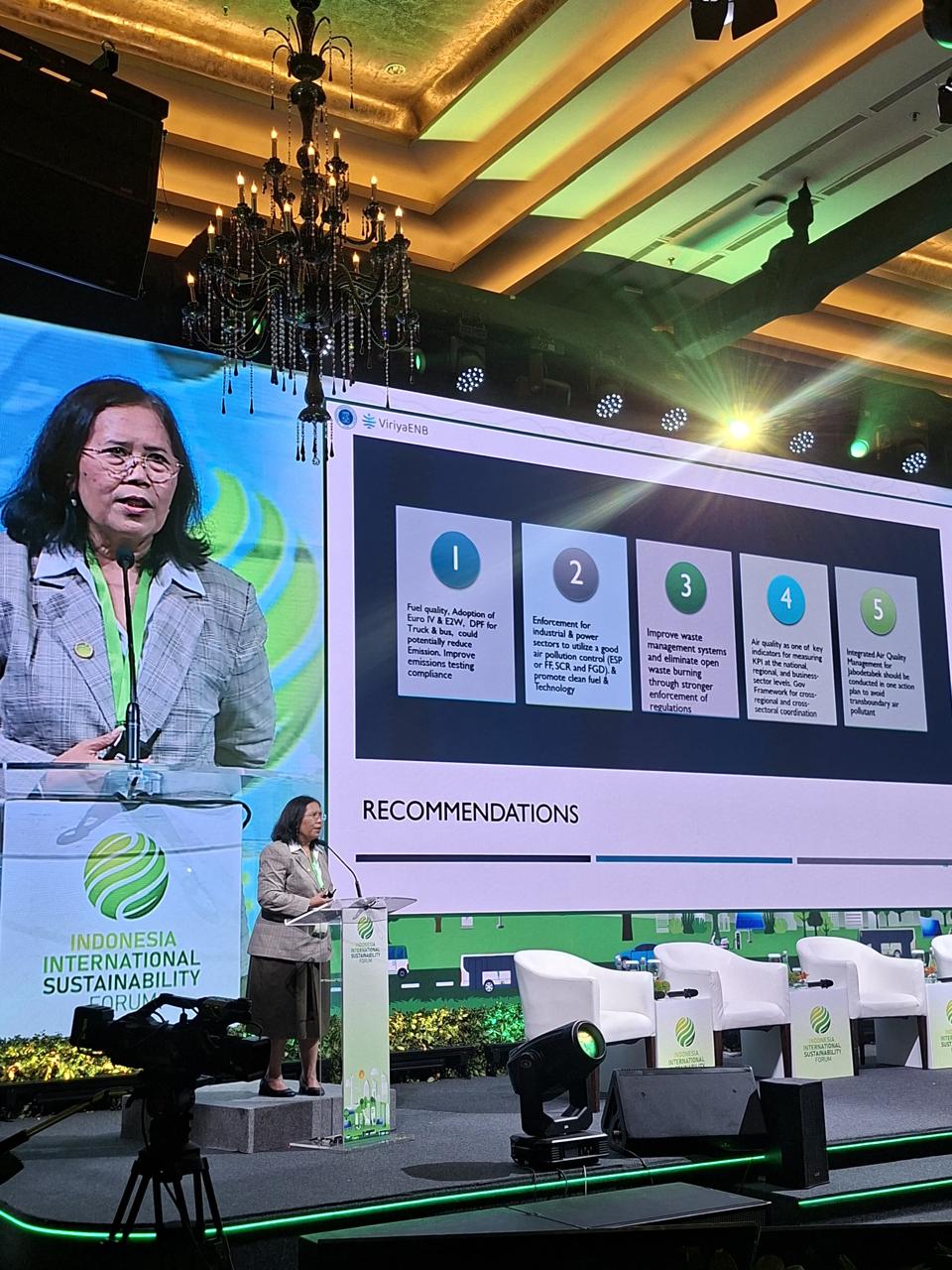
Building on the research findings, the ITB team formulated several strategic recommendations to accelerate air pollution control efforts across Greater Jakarta. These recommendations cover five key areas: transportation, industry and power generation, waste management, performance indicators, and integrated air quality management.
In the transportation sector, ITB researchers recommended implementing Euro IV emission standards, increasing the adoption of electric vehicles, mandating the use of diesel particulate filters (DPFs), and enforcing stricter vehicle emission testing. These measures aim to reduce transportation-related emissions that contribute to urban air pollution.
Meanwhile, in the industrial and power generation sectors, the researchers encouraged the adoption of emission control technologies, such as electrostatic precipitators (ESPs), selective catalytic reduction (SCR), and flue gas desulfurization (FGD), alongside greater utilization of clean energy.
In waste management, the recommendations focus on eliminating open waste burning through stricter regulatory enforcement. This measure is considered essential to reducing air pollution caused by uncontrolled waste management practices.
Beyond these technical measures, ITB researchers emphasized the need to establish air quality as a key performance indicator (KPI) at the national, regional, and business-sector levels.
"I hope that air quality will be included as one of the key indicators in national and regional development, as well as across business sectors," Prof. Puji said.
Another recommendation involves implementing integrated air quality management through a unified action plan for the Greater Jakarta region. This approach is expected to strengthen interregional coordination in addressing air pollution that crosses administrative boundaries.
ITB Research Supports the Development of Jakarta's Clean Air Investment Roadmap
In addition to generating policy recommendations, ITB's research served as a foundation for the development of the Jakarta Clean Air Investment Roadmap, launched by Systemiq during the forum.
The roadmap was developed based on ITB's emissions inventory and focuses on three main sectors: transportation, industry, and waste management.
It identifies investment opportunities to accelerate the adoption of environmentally friendly technologies, including vehicle electrification, public transportation development, and emission control in the waste management sector.
According to the roadmap, approximately USD 900 million in catalytic funding will be required between 2027 and 2030 to stimulate broader investment, with the potential to mobilize up to USD 53 billion in investment from the private sector and financial markets.
ITB's involvement demonstrates that university research not only contributes to scientific advancement but can also serve as a foundation for policy development, the identification of development priorities, and the creation of investment opportunities that support environmental improvement.
Through its participation in ISF 2026, ITB reaffirmed its role in delivering science-based solutions to environmental challenges. Collaboration among academics, government institutions, industries, and other stakeholders is expected to accelerate the translation of research findings into concrete actions toward cleaner, healthier, and more sustainable air quality.