ITB Scientific Lecture by Prof. Ardiyan Harimawan: Bioelectrochemical Engineering for Sustainable Chemical Engineering
By Andre Otniel Panggabean - Mahasiswa Perencanaan Wilayah dan Kota, 2022
Editor M. Naufal Hafizh, S.S.
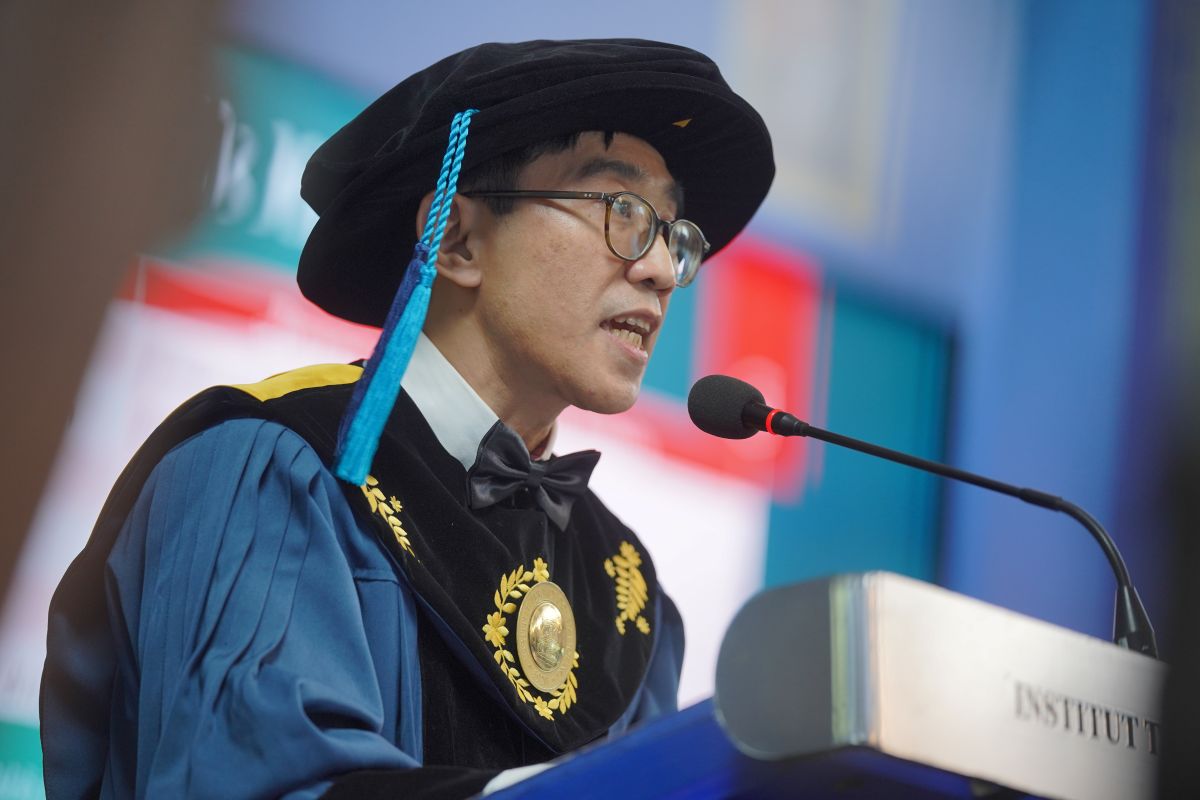
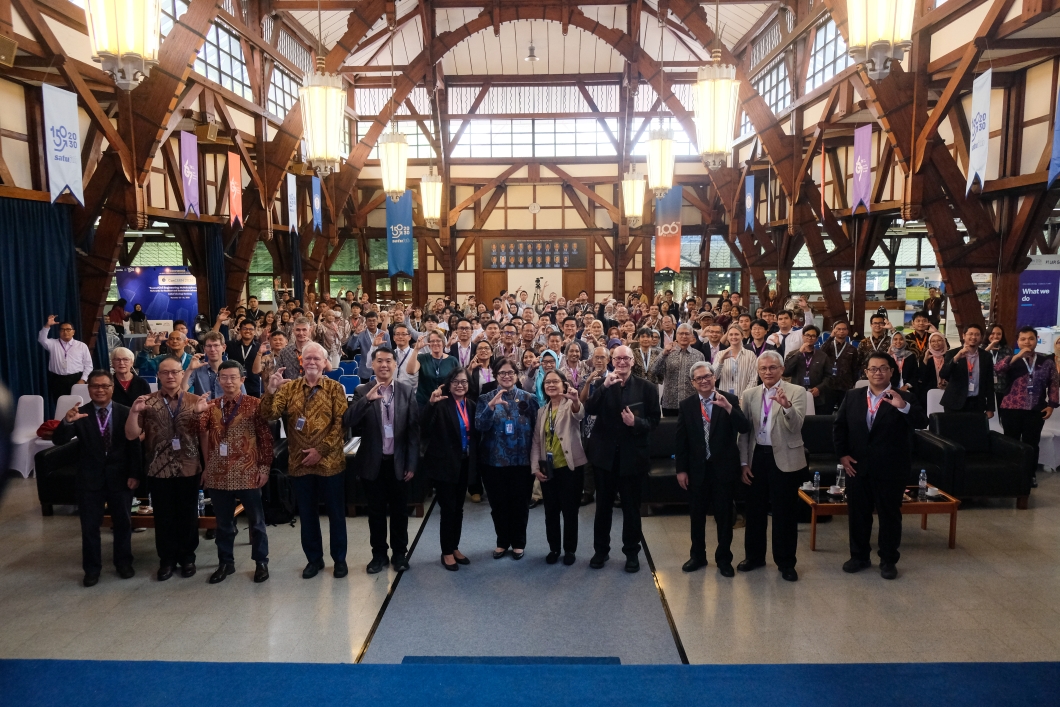
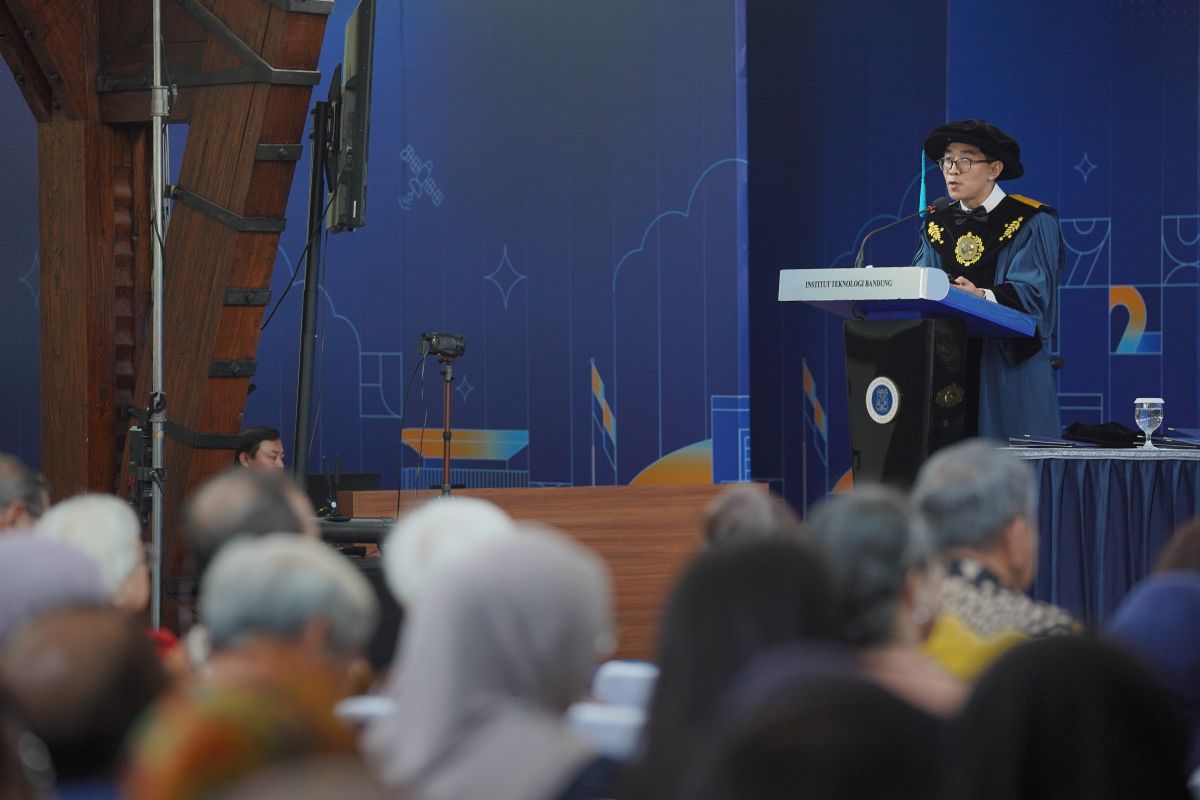
BANDUNG, itb.ac.id – The ITB Professors’ Forum organised the ITB Professors’ Scientific Lecture in the West Hall, ITB Ganesha Campus, on Saturday (8 August 2026). On this occasion, Prof. Ardiyan Harimawan, S.T., M.Eng., Ph.D. from the Faculty of Industrial Technology (FTI) at ITB delivered a scientific lecture entitled “Bioelectrochemical Engineering for Sustainable Chemical Engineering”.
Prof. Ardiyan explained that a paradigm shift in Chemical Engineering has placed energy efficiency, minimisation, resource recovery, the circular economy, and decarbonisation at the centre of the development of modern Chemical Engineering science and practice. This shift is also characterised by the increasingly significant role of biological systems.
Microorganisms, previously known primarily for their role in fermentation and waste treatment, are now also being utilized to understand interactions with materials, electron transfer, corrosion processes, and even energy recovery from wastewater. Bioelectrochemical engineering subsequently integrates biological and electrochemical systems to study the interactions between microorganisms and materials, electron transfer, compound transformation, and the performance of a system.
One of the studies presented concerned biocorrosion in biodiesel storage tanks. The increased use of biodiesel in Indonesia through government programmes from B5 to B35 has also presented challenges for storage and distribution systems. Biodiesel is more prone to absorbing water, oxidising and degrading, which can promote the growth of microorganisms and the formation of biofilms on material surfaces. Micro-organism activity can produce corrosive compounds that accelerate material degradation. Research shows that biofilms not only influence the corrosion rate but can also trigger pitting corrosion due to the formation of a microenvironment characterised by gradients in oxygen, pH, nutrients and metabolic products. These findings form the basis for the development of more preventative and predictive biocorrosion mitigation strategies through prevention, monitoring and intervention based on system conditions.
The principles of material interaction and electron transfer studied in biocorrosion have subsequently been applied in microbial fuel cells (MFCs) to generate electrical energy from wastewater. In this system, microorganisms break down organic compounds in the anode chamber and produce electrons and protons. Electrons flow through an electrical circuit towards the cathode, whilst protons move through the electrolyte and membrane to facilitate the reduction of oxygen to water.
“This means that through this MFC system, we can treat wastewater whilst simultaneously generating electricity,” he said. The development of MFCs requires the integration of reactor engineering, transport phenomena, materials science, microbiology and electrochemistry.
Research using tapioca wastewater has shown that the distance between the anode and cathode electrodes affects the electrical power generated. A shorter electrode distance increases the efficiency of proton and electron transfer, thereby reducing internal resistance and improving system performance.
In addition to electrode configuration, the biofilm also plays a crucial role in facilitating electron transfer to the electrodes. Observations indicate that the structure and characteristics of the biofilm influence electron transfer efficiency; meanwhile, the higher the organic matter content in the wastewater, the greater the potential for electricity generation due to the availability of more electron sources. However, these conditions also increase the complexity of the biological process, meaning the system takes longer to reach a stable state.
Following the MFC research, development was subsequently directed towards resource recovery via microalgae-based bioreactor systems. Microalgae were selected because they are capable of utilising light, carbon dioxide and nutrients in wastewater to produce biomass through photosynthesis and respiration.
This biomass can be utilised to produce value-added products such as lipids, proteins, carbohydrates and pigments. This approach enables wastewater and carbon dioxide to be viewed not merely as an environmental burden, but also as resources that can be converted into useful products. Consequently, the development of microalgae technology also requires reactor engineering to provide optimal growth conditions.
To improve control over microalgal growth, Prof. Ardiyan developed a membrane photobioreactor (MPBR) that integrates microalgal cultivation with membrane technology. The research utilised palm oil mill effluent (POME) sourced from PTPN Cikasungka, Bogor, with the system scaled up from 1 litre to 30 litres and eventually to 300 litres.
The research findings indicate that MPBR performance is influenced by operating conditions, particularly the balance between wastewater treatment rate, microalgal growth and the production of value-added compounds. Increased aeration accelerates microalgal growth by enhancing photosynthesis, whilst reduced aeration results in better removal of organic matter. Changes in liquid residence time also reveal a trade-off between microalgal productivity and wastewater treatment efficiency, and can influence the accumulation of compounds such as beta-carotene and lipids.
Despite its advantages, the MPBR also faces the challenge of membrane fouling, namely the formation of a biofilm layer and the accumulation of biomass on the membrane surface, which can reduce flux and system performance. The research findings show that the reaction rate influences fouling formation and membrane flux stability. Critical flux is a key parameter for determining operating conditions that can minimise fouling without reducing system productivity.
“These findings provide an important foundation for the development of a more reliable MPBR that is also ready for application on a larger scale,” said Prof. Ardiyan.
Through these various studies, Prof. Ardiyan emphasised the importance of integrating various disciplines in the development of bioelectrochemical engineering, ranging from microbiology, materials science, transport phenomena, reactor engineering, to membrane technology. Such integration is necessary to produce solutions that support sustainability and the circular economy.
He also noted that energy and environmental challenges can be viewed as opportunities to create added value through innovations in Chemical Engineering.
“By understanding the interactions between microorganisms, materials and electron transfer, we can develop technologies capable of recovering resources whilst supporting sustainable development,” he said.