ITB Students Create SingWave, a Communication Tool for Deaf and Mute Students to Facilitate Learning in Regular Schools
By M. Naufal Hafizh, S.S.
Editor M. Naufal Hafizh, S.S.
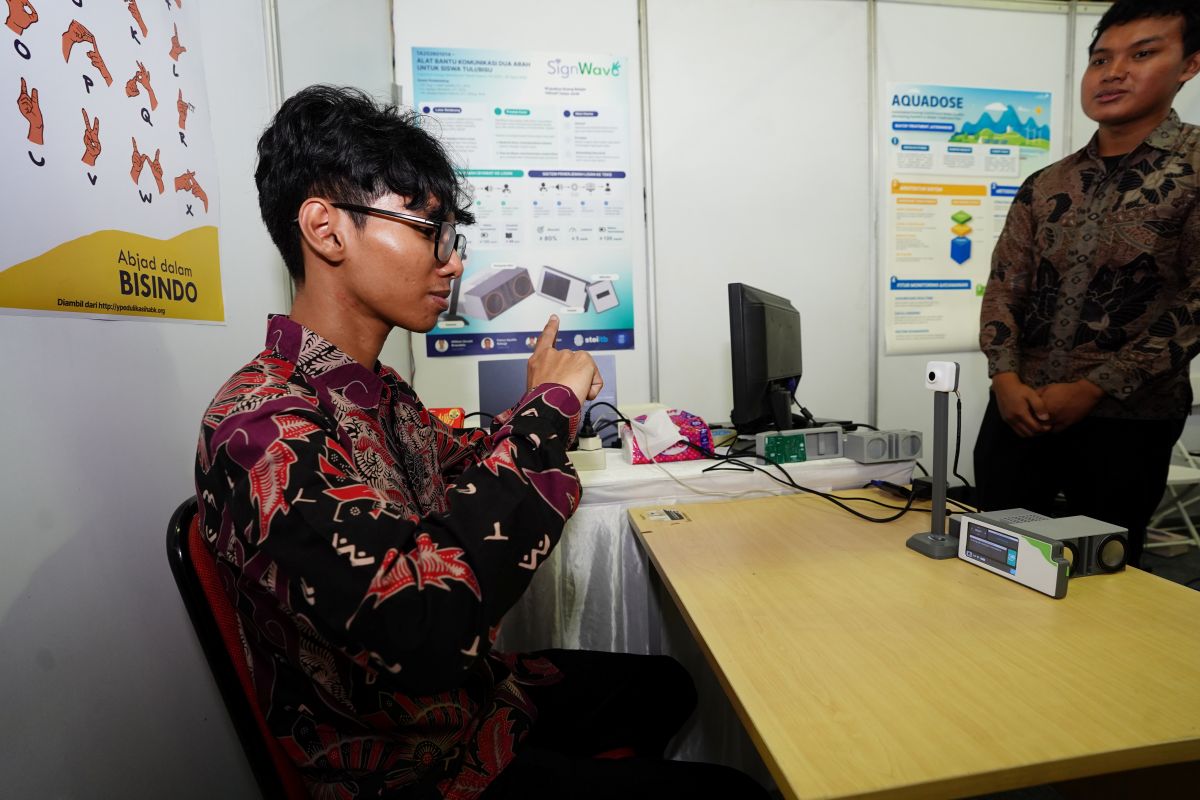
BANDUNG, itb.ac.id — Three students from the Electrical Engineering Program, School of Electrical Engineering and Informatics (STEI) at Institut Teknologi Bandung (ITB), developed SignWave, a two-way communication tool based on artificial intelligence to support the learning of deaf and mute students in regular schools. Through a speech-to-text and sign-to-speech translation system, this device is designed to reduce communication barriers between students and teachers directly in the classroom.
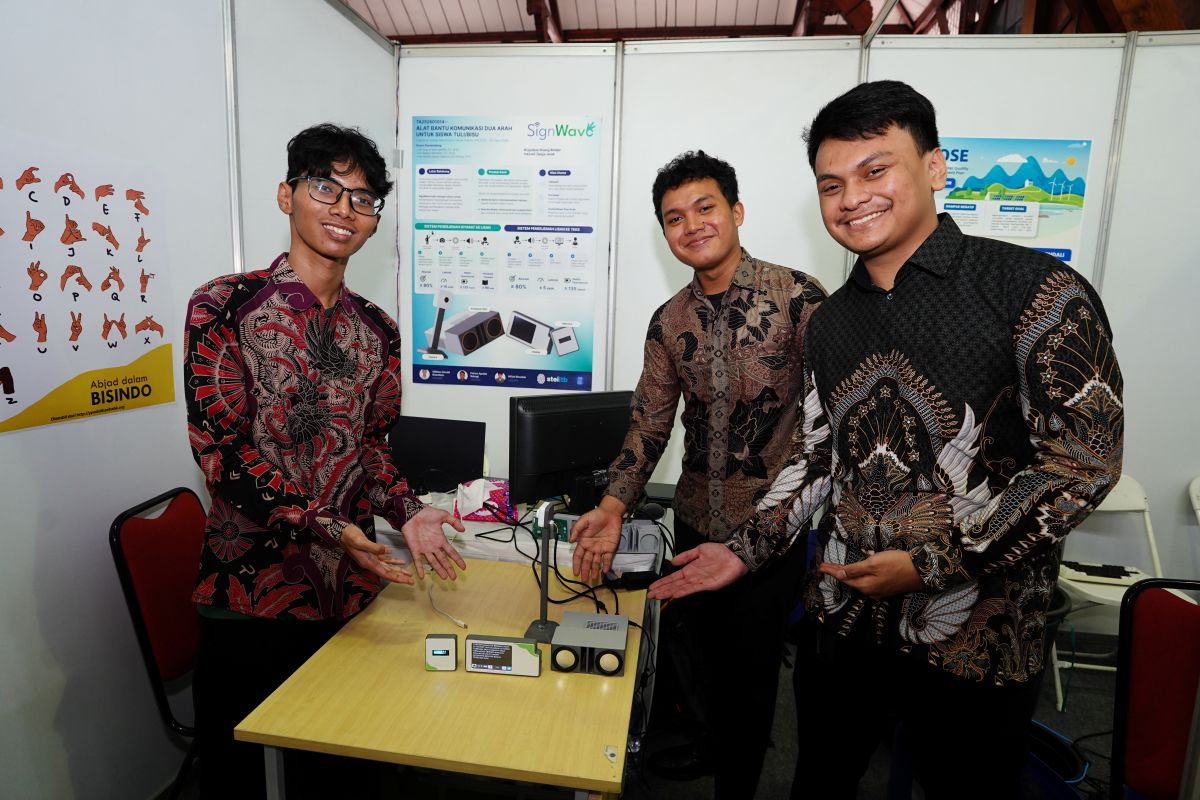
SignWave was developed by William Gerald Briandelo, Fairuz Apiulla Rahagi, and Hifzhi Dinullah, ITB Electrical Engineering students from the class of 2022, as part of their Capstone Design presentation at EE Days 2026.
This innovation was developed to address limited access to inclusive education, especially for students in areas with special needs schools (SLB), inclusive schools, or limited internet access.
With local processing on embedded devices, SignWave can operate with low latency without relying on a fast internet connection. This system allows for more flexible implementation of inclusive learning support technology, including in schools in 3T (Disadvantaged, Frontier, and Outermost) areas.
Real Experience Inspires Innovation
The inspiration for developing SignWave stemmed from a firsthand experience on the ITB campus several years ago. At the time, a deaf student had to lip-read the lecturer's movements throughout the lecture to understand the material. When asking questions or providing feedback, the student had to write down what he wanted to convey.
"Lip-reading and manual writing on paper are very difficult and time-consuming for students. SignWave is here to bridge this gap so that classroom interactions can occur naturally and smoothly," said Hifzhi Dinullah, Tuesday (June 23, 2026).
This problem then became the basis for the development of a device that not only helps students receive information from teachers but also allows them to convey their responses to the classroom environment.
Two-Way Communication, from Sign to Speech and Speech to Text
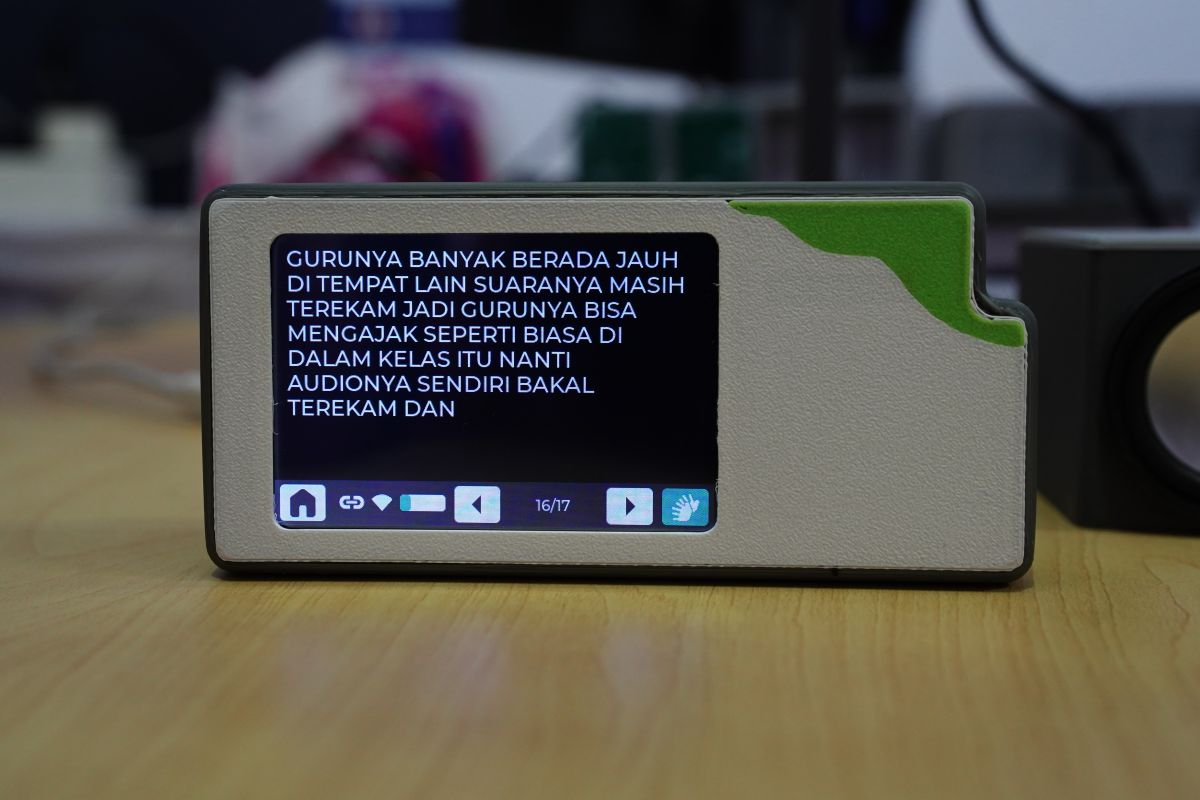
SignWave integrates two main systems: a sign-to-speech translator and a speech-to-text translator.
In the sign-to-speech translator system, students convey information using sign language. These movements are captured by a camera, then processed by the system and translated into speech so that the information can be received by the teacher.
Based on development results, this system has an accuracy of at least 80 percent, a maximum latency of 10 seconds, and an operational time of at least 135 minutes. The system's library currently has recorded at least 86 sign language vocabulary words.
Meanwhile, in the speech-to-text translator system, the teacher delivers material orally. Voice is captured through a microphone and processed into text, which is then displayed on the screen for students to read. This system has an accuracy of at least 80 percent, a maximum latency of 5 seconds, and an operational time of at least 135 minutes.
The SignWave device consists of several key components, including a camera, a minicomputer, a display, and a microphone. The integration of these devices enables two-way communication within a single system.
Understanding Technical Terms and Adding New Vocabulary
SignWave is not only developed to translate basic communication. The device has been tested to understand a variety of technical terms in learning, from mathematical algebra to electrical engineering concepts such as the NPN transistor.
Users can also independently add new vocabulary to the system's library. This capability allows SignWave to be continuously adapted to the needs of the subject and the user's environment.
In its development, the team placed three key values on SignWave: inclusivity, portability, and two-way communication. The system is designed to support more equitable interactions between teachers and students, be compact enough for use in a variety of classroom environments, and provide rapid response to support more natural and effective interactions.