Proposed Javan Rhino Translocation: ITB Expert Emphasizes the Importance of Scientific Assessment
By Anggun Nindita
Editor Anggun Nindita
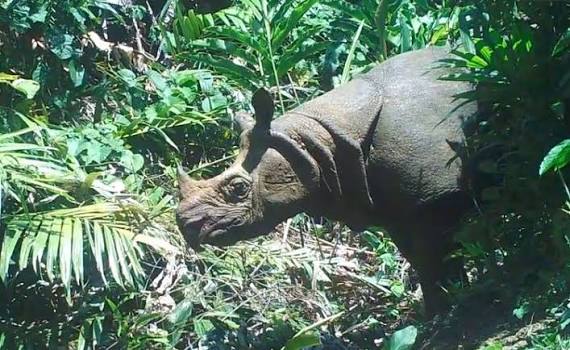
Doc. Kementerian Kehutanan RI
BANDUNG, itb.ac.id – A proposal to relocate some Javan rhinoceroses (Rhinoceros sondaicus) from Ujung Kulon National Park in Banten to Alas Purwo National Park in East Java has drawn public attention. The proposal to establish a second habitat aims to reduce the risk of extinction from natural disasters, including earthquakes, tsunamis, and volcanic activity, as the species' only remaining wild population is currently confined to a single area.
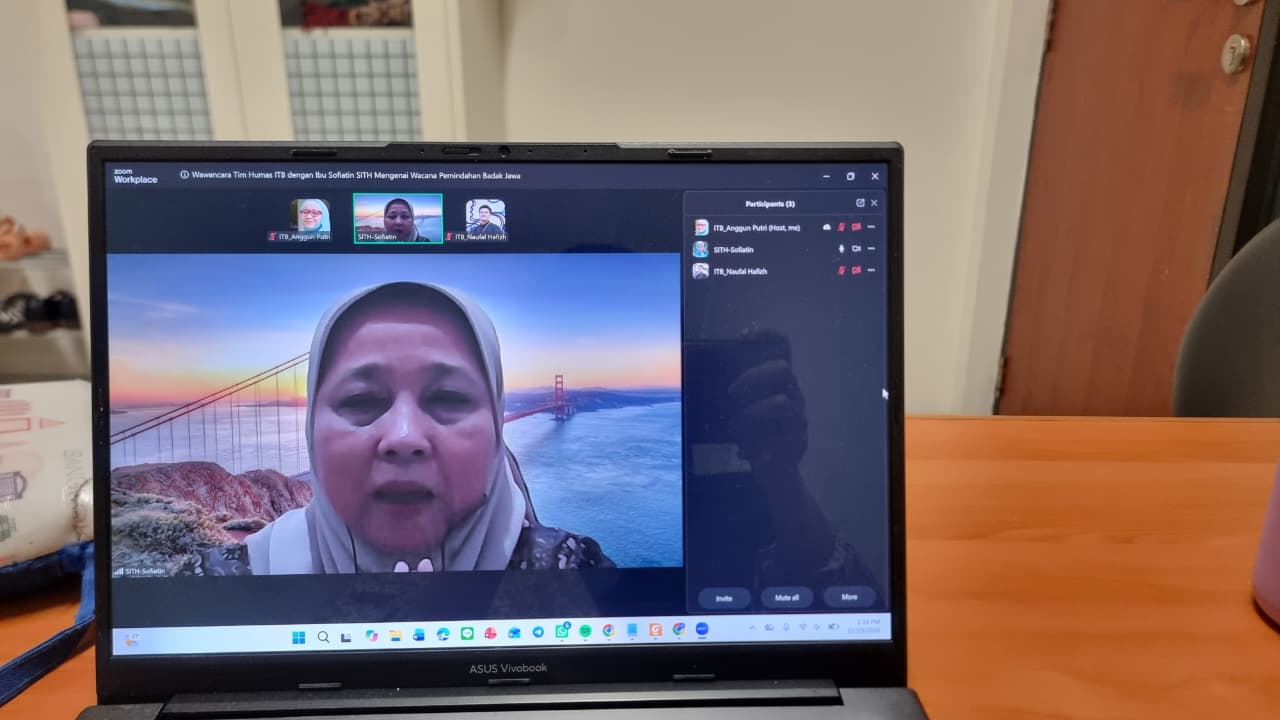
Responding to the proposal, Dr. Ir. Sofiatin, S.Hut., M.Si., a lecturer from the Biological Resources Management Research Group at the School of Life Sciences and Technology, Institut Teknologi Bandung (SITH ITB), emphasized that the translocation of Javan rhinoceroses requires a comprehensive multidisciplinary scientific assessment.
"This initiative is not merely about moving animals from one location to another, but about reestablishing a self-sustaining population to ensure the long-term survival of the species," she said.
According to Sofiatin, translocation could serve as one conservation strategy to reduce the extinction risk facing the Javan rhinoceros, which is classified as Critically Endangered. However, its success depends heavily on habitat suitability, food availability, animal health, protected-area security, and support from surrounding communities.
Habitat Suitability as a Key Consideration
Sofiatin explained that any potential new habitat must be capable of meeting the ecological needs of Javan rhinoceroses. Her research conducted in Ujung Kulon National Park between 2015 and 2016 identified approximately 80 plant species consumed by Javan rhinoceroses, while earlier studies recorded around 120 food plant species.
"In addition to food plant diversity, suitable habitats must have open to semi-open canopies to support the growth of food plants, as well as dense canopies that provide cover and shelter for Javan rhinoceroses. The availability of freshwater, wallowing sites, minerals, suitable topography, temperature, humidity, and environmental carrying capacity are also important factors," she explained.
Relocating rhinoceroses to areas far from their original habitat presents several risks, ranging from stress during transportation to difficulties adapting to a new environment. Therefore, Sofiatin emphasized the importance of conducting a thorough habitat assessment before any translocation takes place.
In addition to Alas Purwo, areas geographically closer to Ujung Kulon, such as the Cikepuh Wildlife Reserve in Sukabumi, West Java, have also been considered in previous risk assessments.
"Nevertheless, every potential alternative site still requires scientific research to determine its suitability," she noted.
Strengthening Conservation Efforts in Ujung Kulon
Sofiatin explained that the concentration of the entire Javan rhinoceros population in a single area exposes the species to various threats, including natural disasters, diseases, limited habitat availability, and the risk of inbreeding, which can reduce genetic diversity.
Another challenge is the spread of the langkap palm (Arenga obtusifolia), which can suppress the growth of understory vegetation that serves as an important food source for Javan rhinoceroses.
Based on population modeling conducted in her research using Vortex software, Javan rhinoceroses still have a chance of surviving over a 50-year period. However, under certain scenarios, the population could decline to approximately half its initial size, reaching around 33 individuals. These results represent simulations based on the conditions and assumptions used in the study, rather than definitive predictions of future population numbers.
"These findings indicate that Ujung Kulon National Park still has the potential to support the long-term survival of Javan rhinoceroses, provided that habitat management and threat mitigation are implemented consistently," she stated.
According to Sofiatin, conservation efforts can be strengthened through population monitoring by the Rhino Monitoring Unit (RMU), health surveillance by the Rhino Health Unit (RHU), and the adoption of technologies such as artificial intelligence (AI)-enabled camera traps, thermal drones, and smart patrol systems.
"In addition, managing the spread of langkap palms, conducting genetic and reproductive research, preventing poaching, and strengthening collaborative funding among the government, conservation organizations, universities, and local communities must remain priorities," she explained.
Sofiatin emphasized that Javan rhinoceros translocation should be viewed as a long-term conservation strategy requiring scientific preparedness and comprehensive risk management. Strengthening protection in the species' original habitat and conducting research into potential second habitats can proceed simultaneously to safeguard its future.
"Through science-based approaches, technology, and collaboration among various stakeholders, conservation efforts are expected to ensure that Javan rhinoceroses continue to survive and reproduce as an integral part of Indonesia's rich biodiversity," she concluded.