Professor Mochammad Chaerul's Scientific Oration: Solid Waste Systems Engineering for Sustainable Management
By Chysara Rabani - Mahasiswa Teknik Pertambangan, 2022
Editor M. Naufal Hafizh, S.S.
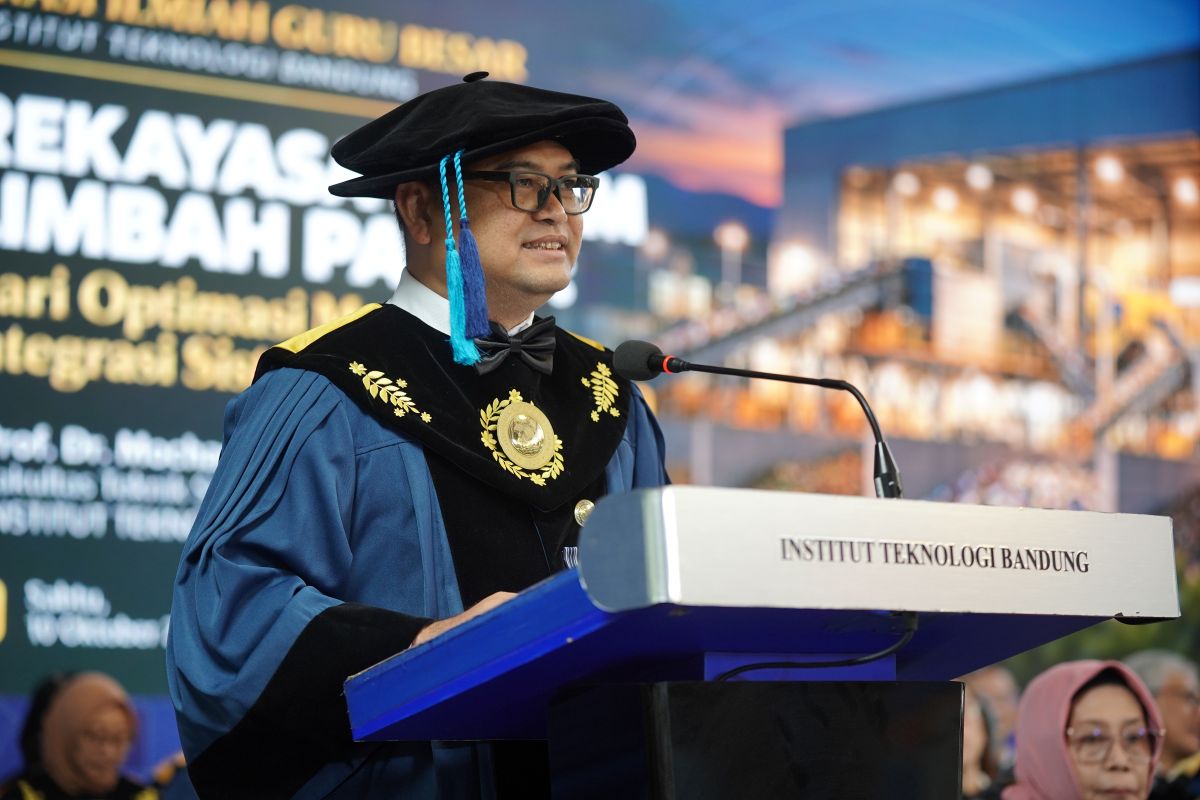
BANDUNG, itb.ac.id – The Forum of Professors of Institut Teknologi Bandung (ITB) held a Professor's Scientific Oration at the West Hall, ITB Ganesha Campus, on Saturday (October 10, 2026). Prof. Dr. Mochammad Chaerul, S.T., M.T., from ITB's Faculty of Civil and Environmental Engineering (FTSL), delivered an oration entitled "Solid Waste Systems Engineering: From Optimization to Sustainable Systems Integration."
In his oration, Prof. Chaerul explained that waste is an inevitable consequence of human activities, generated throughout various stages of daily life, even before an item is discarded in a trash bin. Solid waste is generally classified into domestic and industrial waste based on five parameters: quantity, composition, quality, continuity, and spatial distribution, collectively known as 4K1S.
Waste Management as a Systems Challenge
Solid waste management involves a series of interconnected processes, from waste generation and collection to transportation, treatment, and final disposal. Each stage influences technical, environmental, economic, social, and institutional aspects. This complexity means that decisions made at one stage can affect the entire system.
"Solid waste management is a systems challenge, not merely a technological challenge," he said. This principle serves as the foundation of the solid waste systems engineering approach.
The approach applies engineering principles to design, operate, optimize, and evaluate all components of waste management in an integrated manner, aiming to develop systems that are effective, efficient, sustainable, and socially acceptable.
Optimization and Multidimensional Decision-Making
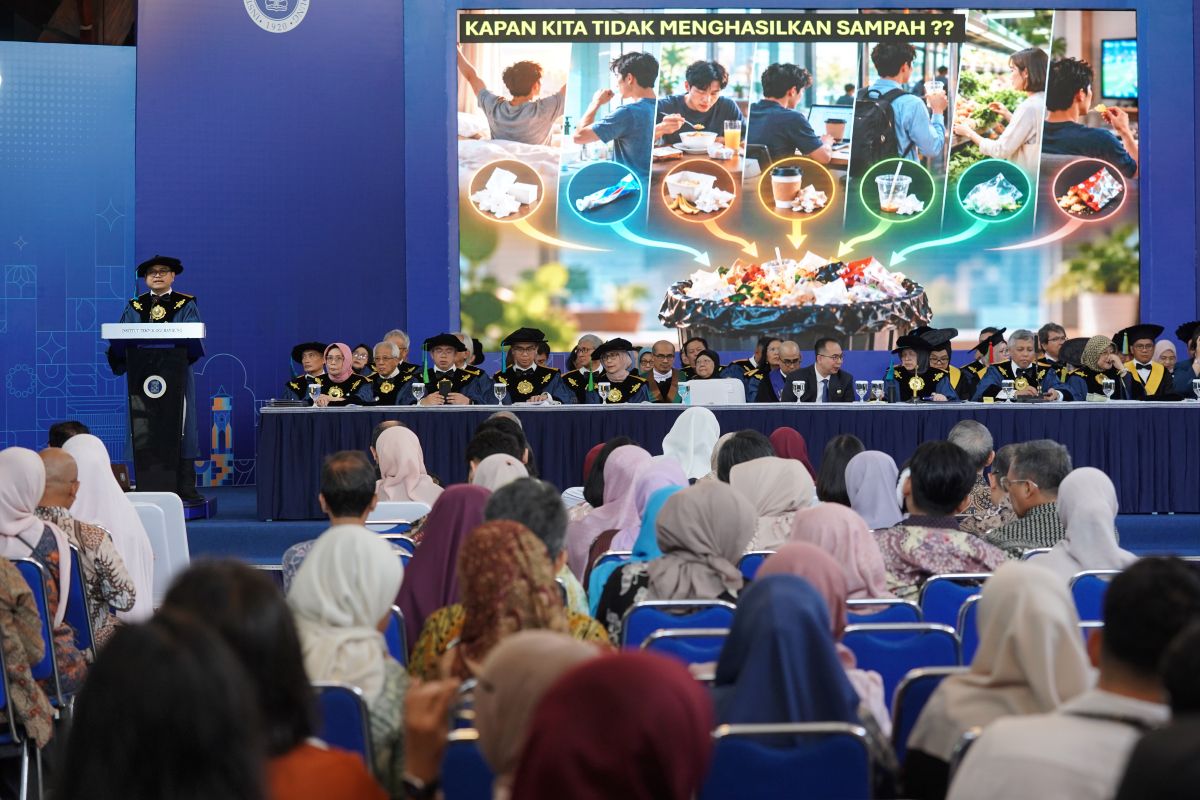
In practice, the interests of various stakeholders must be considered, as not all objectives can be achieved simultaneously. Through Goal Programming, system design focuses on balancing multiple objectives rather than solely maximizing the technical performance of a particular technology.
Optimization is also applied to waste transportation routes using the nearest neighbor method, taking spatial characteristics and land-use planning into account. Meanwhile, Multi-Criteria Decision Analysis (MCDA) is employed to evaluate technological alternatives based on multiple criteria and differing stakeholder priorities.
The Analytic Network Process (ANP) further expands the analysis by accounting for interdependencies among factors. For example, operational costs are closely related to the willingness and ability of communities to sort their waste. This demonstrates that the success of a waste management system depends not only on infrastructure but also on interactions between technology and human behavior.
Safety considerations are also incorporated through risk-based optimization, which integrates risk assessment from the facility design stage. In addition, system dynamics is used to understand cause-and-effect relationships and predict how systems evolve over time under different scenarios.
Integrating Spatial and Environmental Considerations
Spatial considerations play a crucial role because facility locations determine transportation distances, service coverage, operational costs, and environmental impacts. Geographic Information Systems (GIS) and Network Analysis can support planning by identifying appropriate system configurations.
Comprehensive evaluations are then conducted using Life Cycle Assessment (LCA). This method helps assess environmental impacts throughout the waste management life cycle, ensuring that improvements at one stage do not merely shift environmental burdens to another.
Facility design must also consider waste characteristics and their sources. One example highlighted in the oration was all-you-can-eat (AYCE) restaurants, which generate commercial waste with specific characteristics that need to be examined to determine appropriate handling systems.
"Through waste characterization, management efforts can be directed not only toward handling waste but also toward returning materials to the value chain while taking environmental considerations into account," he explained.
From Optimization to Sustainable Integration
Prof. Chaerul outlined the stages of solid waste systems engineering, beginning with waste characterization, followed by technology engineering, optimization and decision-making, system evaluation, and finally, the integration of all components. The discipline's contribution, therefore, lies in its ability to connect various methods and components of waste management rather than relying on any single technology.
"The main contribution of solid waste systems engineering does not lie in a single technology or a single method. Its contribution lies in a way of thinking that views waste as a system, understands the interconnections among its components, and designs systems that enable all components to work together," he stated.
Profile of Prof. Mochammad Chaerul
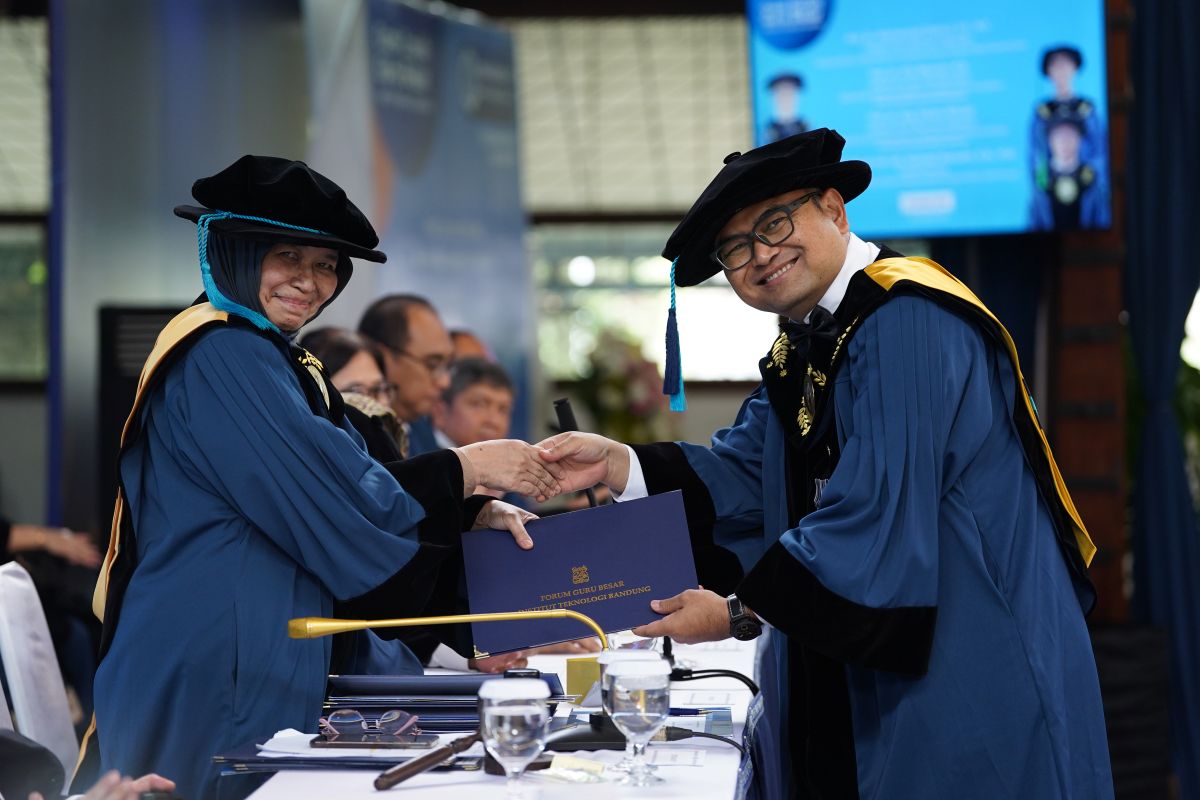
Prof. Dr. Mochammad Chaerul, S.T., M.T., is a Professor of Solid Waste Systems Engineering at ITB's Faculty of Civil and Environmental Engineering (FTSL). He earned his bachelor's and master's degrees in Environmental Engineering from ITB and obtained his doctoral degree from Okayama University, Japan.
He previously served as Head of the Environmental Infrastructure Engineering Study Program and Head of the Water Supply and Sanitation Infrastructure Management Study Program at FTSL ITB. Throughout his academic career, he has participated in 13 research grants, produced 63 scientific publications, carried out 12 community service activities, and contributed to 61 collaborative projects involving more than 50 institutions in Indonesia and abroad.
In recognition of his contributions, he received the Satyalancana Karya Satya 10-Year Service Medal from the President of the Republic of Indonesia in 2023 and an award from the Indonesian Minister of Transmigration in 2025 for his participation in the Patriot Expedition Team Program.
Beyond his academic activities, Prof. Chaerul humorously describes staying up late as his hobby, simply because sometimes it is necessary.