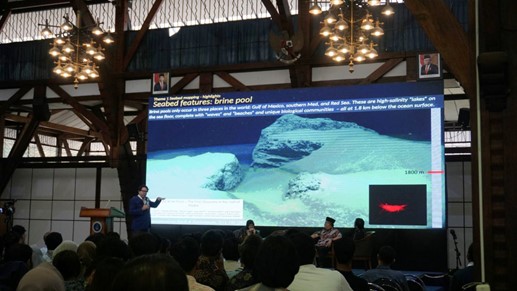
SITH ITB Lecturer and Alumni Join OceanX Deep-Sea Research Mission - BRIN Leg 2 in North Sulawesi
By Aura Salsabila Alviona - Bioteknologi, 2025
Editor M. Naufal Hafizh, S.S.
.jpg)
NORTH SULAWESI, itb.ac.id – The National Research and Innovation Agency (BRIN), in collaboration with the global ocean exploration organization OceanX, has resumed its ambitious mission titled "Indonesia Mission 2025 - Leg 2" in the waters of North Sulawesi. Taking place from January 5–24, 2026, this expedition targets one of the world's highest marine biodiversity regions, which remains largely unexplored.
Behind the sophistication of the research vessel RV OceanXplorer, equipped with facilities ranging from genetic laboratories to a survey helicopter, lies a fact that brings pride to the Bandung Institute of Technology (ITB). Of the 18 main researchers selected to sail and work directly aboard the OceanXplorer, four are part of the extended SITH ITB family.
They are Husna Nugrahapraja, Ph.D. (SITH ITB Faculty), Pipit Pitriana, M.Si. (Biology Alumna, 1998), Nur Fitriah Avianti (Microbiology Alumna, 2009), and Zen L. Siallagan (Biology Doctoral Alumnus, 2021).
A Firsthand Journey into the Darkness
One of the most fascinating aspects of the OceanXplorer mission is the use of submersibles capable of diving to depths of 1,000 meters. Husna Nugrahapraja, Ph.D., a lecturer from the Genetics and Molecular Biology Research Group at SITH ITB, received a rare opportunity to dive directly into the habitat he studies.
Speaking to international media, Dr. Husna admitted to feeling a bit nervous and anxious during his first descent in the submersible. He described the initial atmosphere at depth as a "very lonely" environment.
However, that nervousness quickly turned into awe. As sunlight vanished completely at a depth of 200 meters, Dr. Husna witnessed the phenomenon of "marine snow", flakes of organic material drifting down slowly like snow on the ocean floor. The scene became even more mesmerizing with the presence of bioluminescence, where deep-sea organisms emitted blue-white light resembling a galaxy of stars in total darkness.
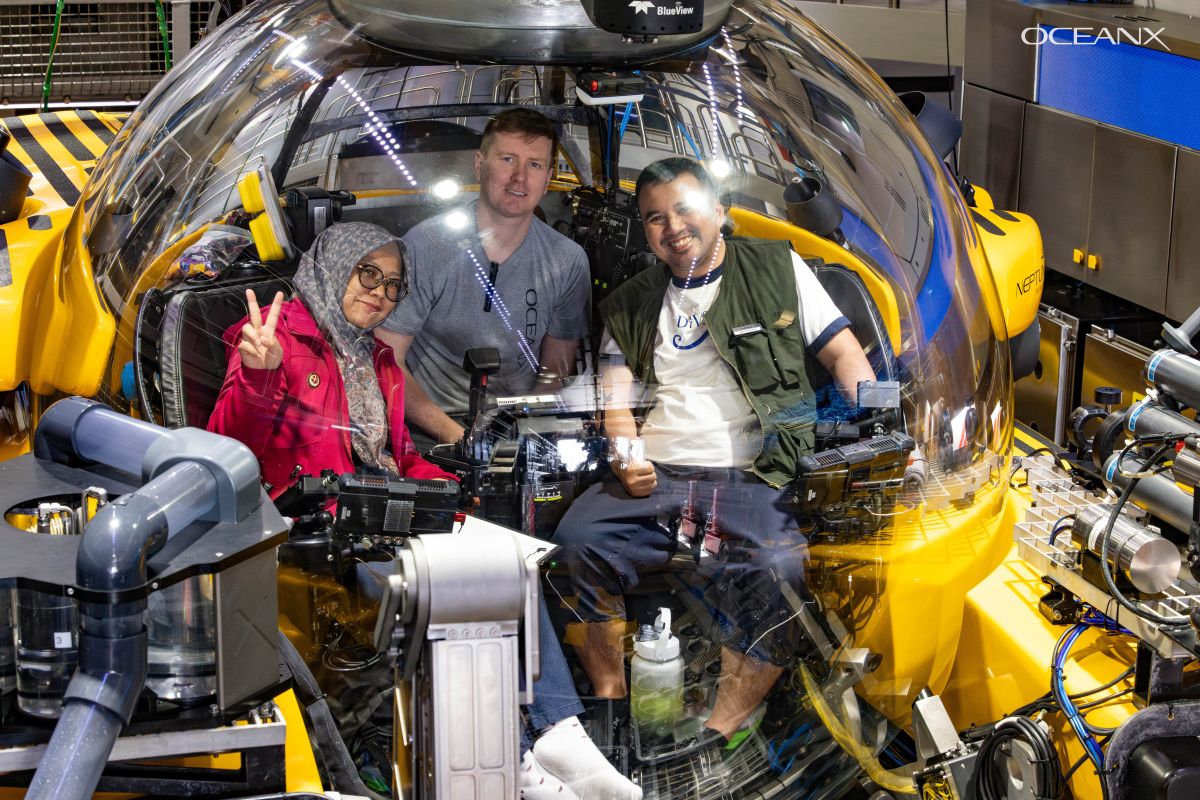
"Finally, we arrived at the seabed, where we could see many unique organisms," said Dr. Husna. According to him, this firsthand experience provided a truly different perspective compared to merely watching video footage from an ROV (Remotely Operated Vehicle).
At the Forefront of Uncovering Deep-Sea Biodiversity and Bioprospecting
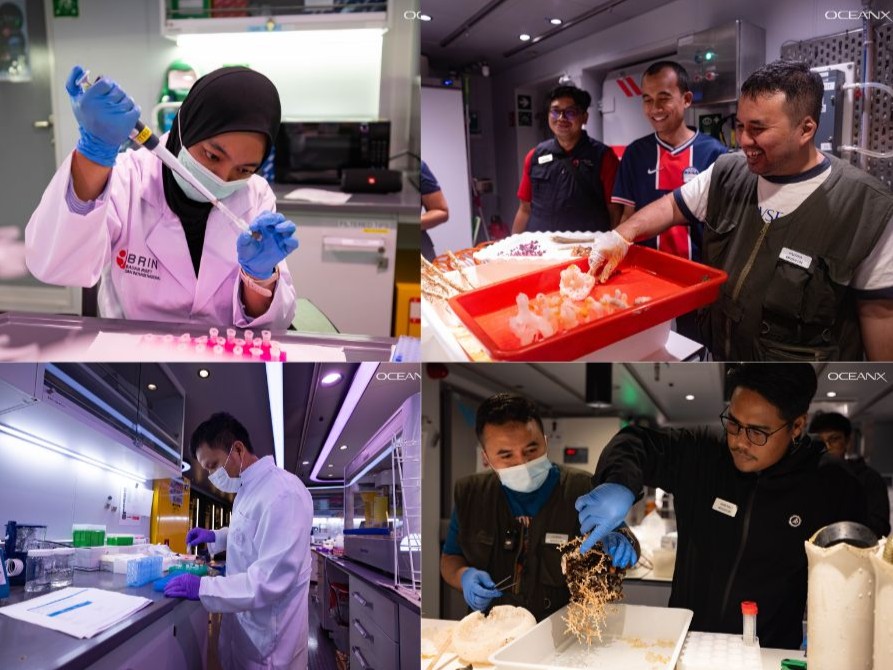
Dr. Husna’s role did not end with visual observation. Upon returning to the surface, he took on a vital role in the Wet Lab. Here, Dr. Husna integrated bioinformatics and genomics expertise to analyze the collected samples. Using cutting-edge DNA sequencing facilities onboard, genetic data from water and sediment samples could be dissected immediately without waiting to return to land.
"This is the busiest lab, where we collect all samples from the ROV and submersibles. Our main focus is to uncover the biodiversity and bioprospecting potential of these biological materials," he explained.
.jpg)
Alumni Roles: From Mission Command to Microbial Research
On the other hand, the contribution of SITH ITB alumni in this mission demonstrates crucial leadership roles. Pipit Pitriana, M.Si. (Biology Alumna, 1998) was entrusted with the responsibility of Chief Scientist. Pipit was responsible for unifying the various scientific disciplines of the research team to ensure mission targets were met inclusively.
Under her coordination, the team successfully identified fascinating specimens, including a "bone-white lobster" and pearl-sized barnacles, which Pipit believes could potentially be new species to science.
"Our Earth, our sea, is mostly deep sea. Yet, there is so little we know about its biodiversity," Pipit remarked.
Completing the research team, Nur Fitriah Avianti (Microbiology Alumna, 2009) and Zen L. Siallagan (Biology Doctoral Alumnus, 2021) worked intensively at the CTD (Conductivity, Temperature, Depth) station. Their research focused on mapping microbial life and biogeochemical cycles down to depths of 4,000 meters, a critical layer for understanding global ocean ecosystem dynamics.
The active participation of SITH ITB faculty and alumni in this global mission underscores the quality of Indonesian researchers in efforts to document Indonesia's hidden biological wealth at the bottom of the ocean.
Reporter: Aura Salsabila Alviona (Biotechnology, 2025)
.jpg)
.jpg)
.jpg)
.jpg)