UKM Gebrak ITB Brings Cupunagara Coffee to Bandung CFD, Expanding Market Access for Local Farmers’ Products
By Kayla Annisa Erian - Rekayasa Infrastruktur Lingkungan, 2023
Editor M. Naufal Hafizh, S.S.
.jpg)
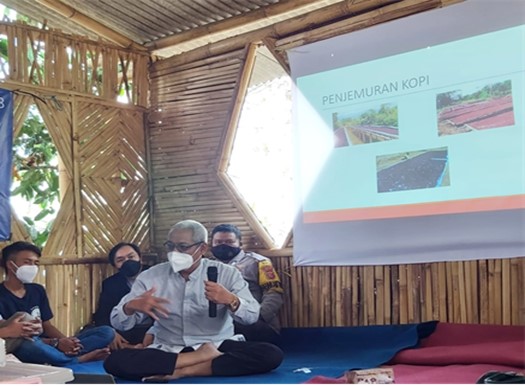
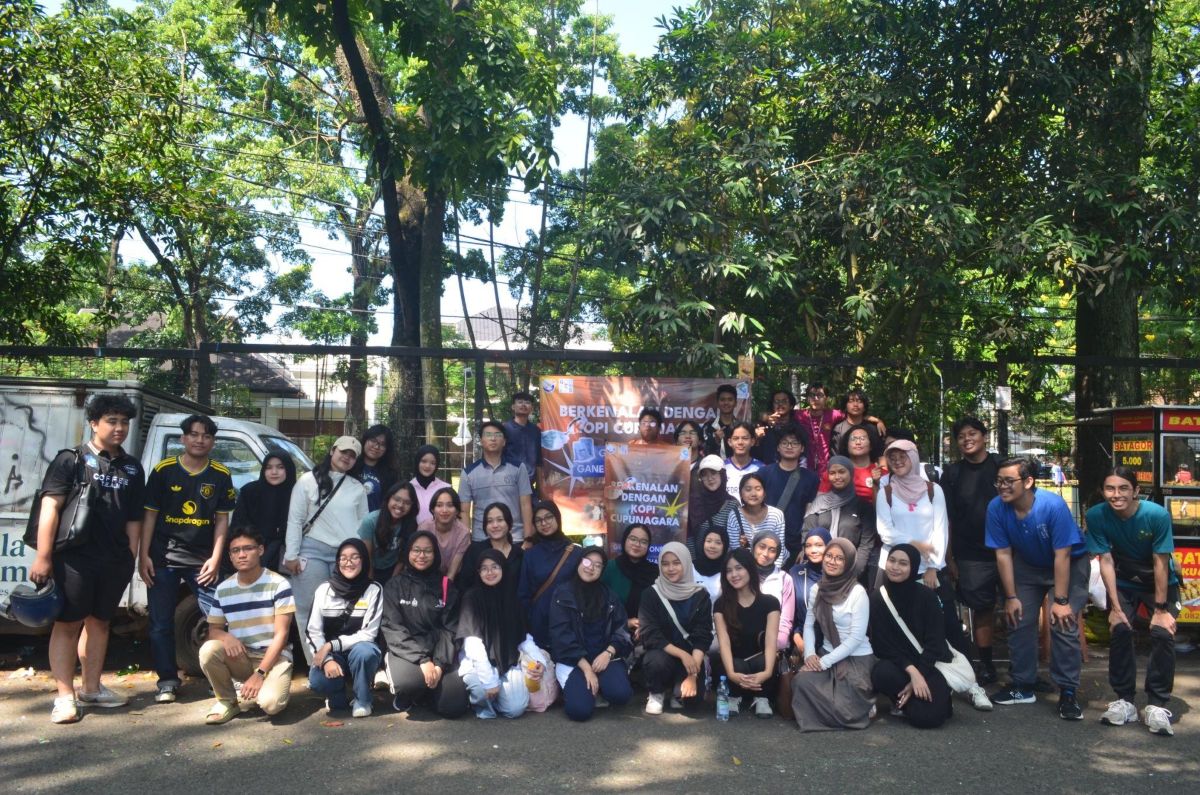
BANDUNG, itb.ac.id – Gebrak, a Student Activity Unit (UKM) at Institut Teknologi Bandung (ITB), introduced Cupunagara Coffee, a coffee product developed by the community of Cupunagara Village, Cisalak District, Subang Regency, West Java, to a wider consumer base through the “Kopi Cupunagara Goes to CFD Bandung” event on Sunday (May 3, 2026). The initiative aimed to address marketing challenges faced by Cupunagara coffee farmers and producers while providing Bandung residents with an opportunity to discover locally produced coffee firsthand.
For the Cupunagara community, expanding market access is essential, as the development of its coffee industry continues to face several constraints, including limited capital, technology, knowledge, and marketing capacity. Through the event at the Dago Car Free Day (CFD) in Bandung, Gebrak ITB brought Cupunagara Coffee closer to consumers through live brewing sessions, introductions to the coffee’s characteristics and processing methods, and direct product sales.
One of the products introduced was bottled milk coffee. Around 90 bottles were prepared for the event to gauge public response to Cupunagara Coffee. Direct interaction with consumers was expected to provide valuable insights into market acceptance.
The initiative reflects the broader effort to develop local products not merely as commodities, but as value-added products capable of reaching a wider range of consumers. Greater market access is expected to support the sustainable development of coffee as one of the key commodities produced by the Cupunagara community.
Getting to Know Cupunagara Coffee
Cupunagara Coffee is grown in an area located approximately 1,000–1,100 meters above sea level. Coffee cultivation began in Cupunagara Village in 2012 and has since become one of the commodities developed by the local community.
Currently, approximately 400 hectares of coffee plantations are managed by around 300 farmers. The coffee grown in the area is Arabica, comprising several varieties, including Sigararutang, Typica, Yellow Caturra, Lini S, and Ateng Super.
The coffee is not marketed solely as freshly harvested beans. The community has adopted various post-harvest processing methods, including natural, honey, full washed, and fermentation processes. After drying, the beans are roasted to different levels, ranging from light and medium to dark roast.
These processing methods form part of efforts to increase the added value of Cupunagara Coffee, allowing the products to offer a wider range of characteristics and reach broader markets.
As part of its development, the Cupunagara community has received assistance from Intan Taufik, S.Si., M.Si., Ph.D., a lecturer from the Microbial Biotechnology Research Group, School of Life Sciences and Technology (SITH), ITB. The assistance has helped strengthen the community’s knowledge and skills in coffee processing, enabling them to produce higher-value products.
Through Kopi Cupunagara Goes to CFD Bandung, visitors were not only able to purchase the products but also learn about the origin, characteristics, and processing of coffee cultivated by the Cupunagara community. The initiative also demonstrated the role of ITB students in supporting community empowerment, particularly by helping local products with strong development potential gain greater visibility and access to wider markets.
.jpg)

.jpeg)
.jpg)
.png)
.jpg)